
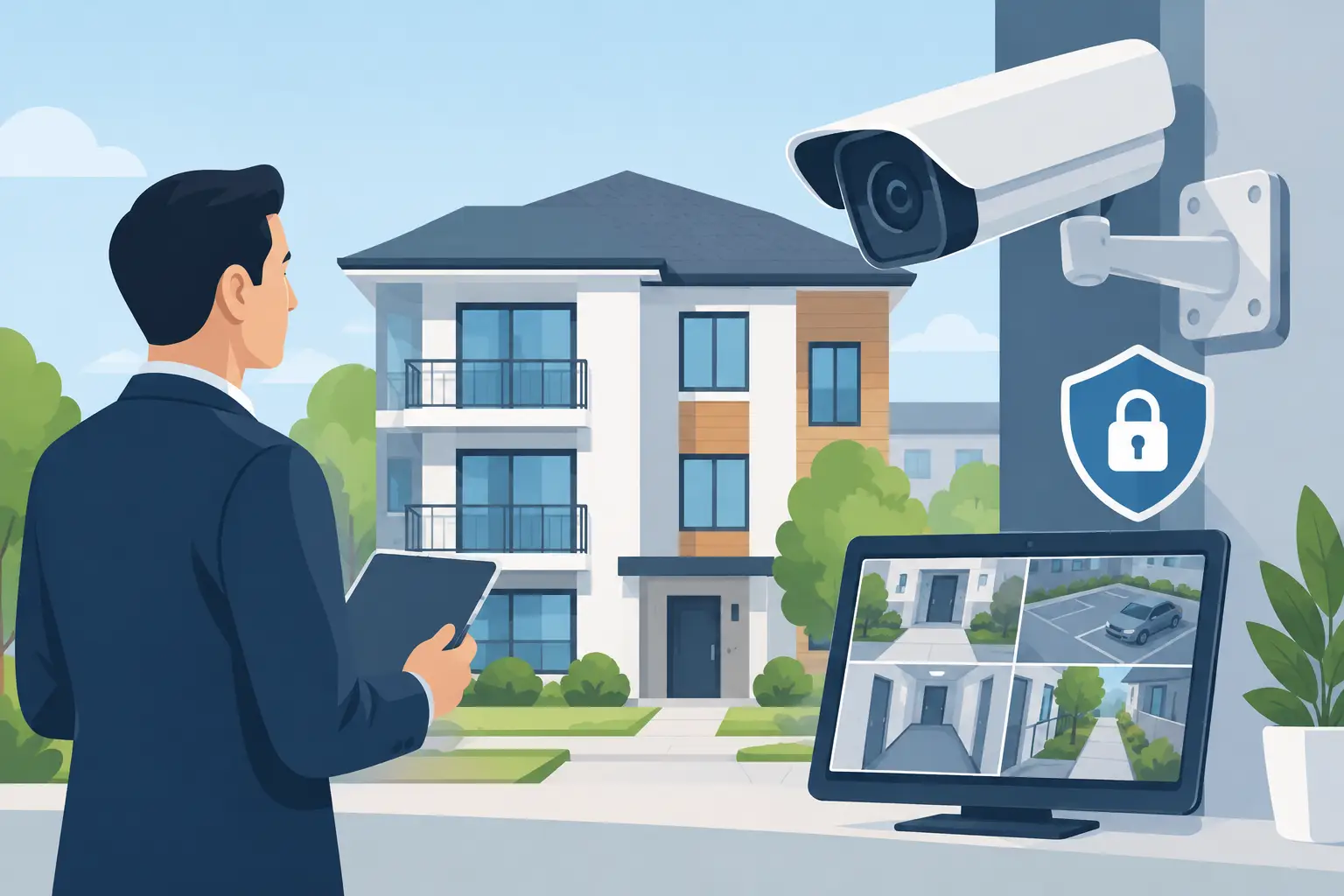
A camera over a shared entrance can help investigate vandalism, dumped rubbish, or repeated security concerns. A camera pointing toward a tenant’s front door or living space is a very different matter. So, can landlords install CCTV? In most cases, yes – but only where there is a genuine reason, the system is positioned carefully, and tenants’ privacy is respected.
For rental properties in England and Wales, landlords need to balance security with data protection and the tenant’s right to quiet enjoyment of their home. CCTV is not something to fit simply because it is available. It should solve a real problem and be installed in a way that is fair, proportionate, and clearly explained.
Can Landlords Install CCTV in Common Areas?
Landlords can usually install CCTV in shared or communal areas. This may include the main entrance to a block, shared hallways, parking areas, bin stores, bike storage, gated access points, and communal gardens. These are the places where a camera can reasonably help protect people and property without monitoring a tenant’s private home.
A landlord should be able to explain why each camera is needed. For example, a camera at a rear gate may be justified after repeated break-ins. One covering an entire shared courtyard may be reasonable where there have been incidents of antisocial behavior. A camera installed just to keep an eye on who comes and goes, with no specific security concern, is much harder to justify.
The system should record only what is necessary. That means choosing camera angles that cover entrances, paths, or vulnerable assets rather than windows, private patios, or neighboring homes. Modern CCTV cameras can be set up with privacy masking to block out parts of the image that do not need to be recorded.
CCTV Inside a Tenant’s Rented Home
Installing CCTV inside a rented house or apartment is generally a bad idea and will rarely be appropriate. Tenants are entitled to privacy in the property they rent. Cameras in living rooms, kitchens, bedrooms, bathrooms, or private hallways would be highly intrusive and could seriously breach that expectation.
Even in a house in multiple occupation, where some areas are shared, indoor cameras need exceptional care. Recording a shared entrance lobby may be easier to justify than recording a shared kitchen or lounge, where people should be able to go about daily life without being watched. Cameras must never be placed in bathrooms, bedrooms, or any area used for changing.
A landlord also should not use CCTV as a way to check whether tenants are following the tenancy agreement. Monitoring visitors, checking cleaning habits, or tracking when someone leaves for work is not a reasonable use of a security system.
Tell Tenants Before CCTV Is Installed
Clear communication matters as much as the equipment itself. Before installation, landlords should tell current tenants what is being proposed, why it is needed, where cameras will be located, and whether the system records continuously or only when motion is detected.
Visible signage is normally required where CCTV is in operation. Signs should make it clear that cameras are recording and identify the person or organization responsible for the system. They should be placed where people can see them before entering the monitored area.
It is also good practice to provide tenants with a short written CCTV policy. This does not need to be full of legal jargon. It should state the purpose of the cameras, the areas covered, who can view footage, how long recordings are kept, and how someone can request access to footage of themselves.
For a new tenancy, landlords can include basic CCTV information in the tenancy pack. For an existing tenancy, give proper notice and allow time for reasonable questions before work starts. Consent is not always the legal basis for using CCTV, but being open with tenants helps avoid disputes and shows that the system is being used responsibly.
Data Protection Rules Landlords Need to Consider
CCTV footage that identifies a person is personal data. Landlords who operate cameras outside a purely personal household setting will usually have responsibilities under UK data protection law. In practical terms, they need a valid reason to collect footage and must handle it securely.
Security and crime prevention can be legitimate reasons for using CCTV. However, the use of cameras still needs to be necessary and proportionate. If better locks, improved lighting, a secure gate, or an alarm would solve the issue with less impact on privacy, those options are worth considering first.
Access to recordings should be limited. The landlord, property manager, or another named person should be the only people able to view footage unless there is a genuine need to share it, such as providing evidence to the police or insurer. Footage should not be shared in a residents’ group chat, posted online, or used to embarrass someone.
Recordings should also be deleted when they are no longer needed. There is no one retention period that suits every property, but keeping routine footage forever is difficult to defend. Many systems can automatically overwrite old recordings after a set period, while allowing important clips to be saved separately following an incident.
Landlords should keep a simple record of why the cameras are in place, what areas they cover, who has access, and how long footage is retained. If the CCTV arrangement is extensive, particularly across a larger managed block, a more formal privacy assessment may be sensible before installation.
Avoid Audio Recording and Excessive Coverage
Audio recording is far more intrusive than video and is rarely necessary for a landlord CCTV system. Conversations can reveal private information that has nothing to do with security. Unless there is a very strong and documented reason, cameras should be set to record video only.
Coverage should also stop at the property boundary as far as reasonably possible. A camera may need to capture part of a public sidewalk or driveway to protect an entrance, but it should not be aimed into a neighbor’s garden, through their windows, or across a wider street without a clear reason. Careful positioning, narrower viewing angles, and privacy zones can prevent problems from the start.
The same principle applies to tenants’ own cameras. A tenant may want a doorbell camera or small security camera for their safety, but it should not create a nuisance or record more of a shared area than necessary. A clear conversation between landlord and tenant is usually better than finding out after a complaint has been made.
Installation Matters as Well as Compliance
A poorly fitted CCTV system can create problems even when the reason for installing it is sound. Loose cables, unreliable Wi-Fi coverage, badly positioned cameras, and poor nighttime image quality all reduce its value. There is little point recording an entrance if faces cannot be seen after dark or if the camera regularly drops offline.
For landlords, a professionally planned system can keep disruption low and avoid avoidable maintenance issues. The right setup may include hardwired cameras, secure recording equipment, motion alerts, suitable exterior lighting, and viewing access that is restricted to authorized users. In shared buildings, cable routes and equipment locations should be tidy, secure, and out of reach of tampering.
BS Electrical can advise local landlords and property managers on practical CCTV coverage, safe installation, and a setup that suits the property rather than overselling equipment. The aim should be straightforward: useful security, clear footage, and no unnecessary intrusion into tenants’ lives.
A Sensible Checklist Before Fitting CCTV
Before arranging an installation, ask four simple questions: What specific problem will this camera solve? Is there a less intrusive security measure that could work? Will the camera avoid private living areas and neighboring property? Can tenants clearly understand how the footage will be used?
If the answer to any of those questions is unclear, pause and adjust the plan. In more sensitive situations, such as a dispute with a tenant, a large block of apartments, or cameras that may capture a public area, independent legal or data protection advice is sensible.
Good landlord CCTV is not about watching tenants. It is about protecting a property and the people using it, with cameras placed only where they genuinely earn their keep.