
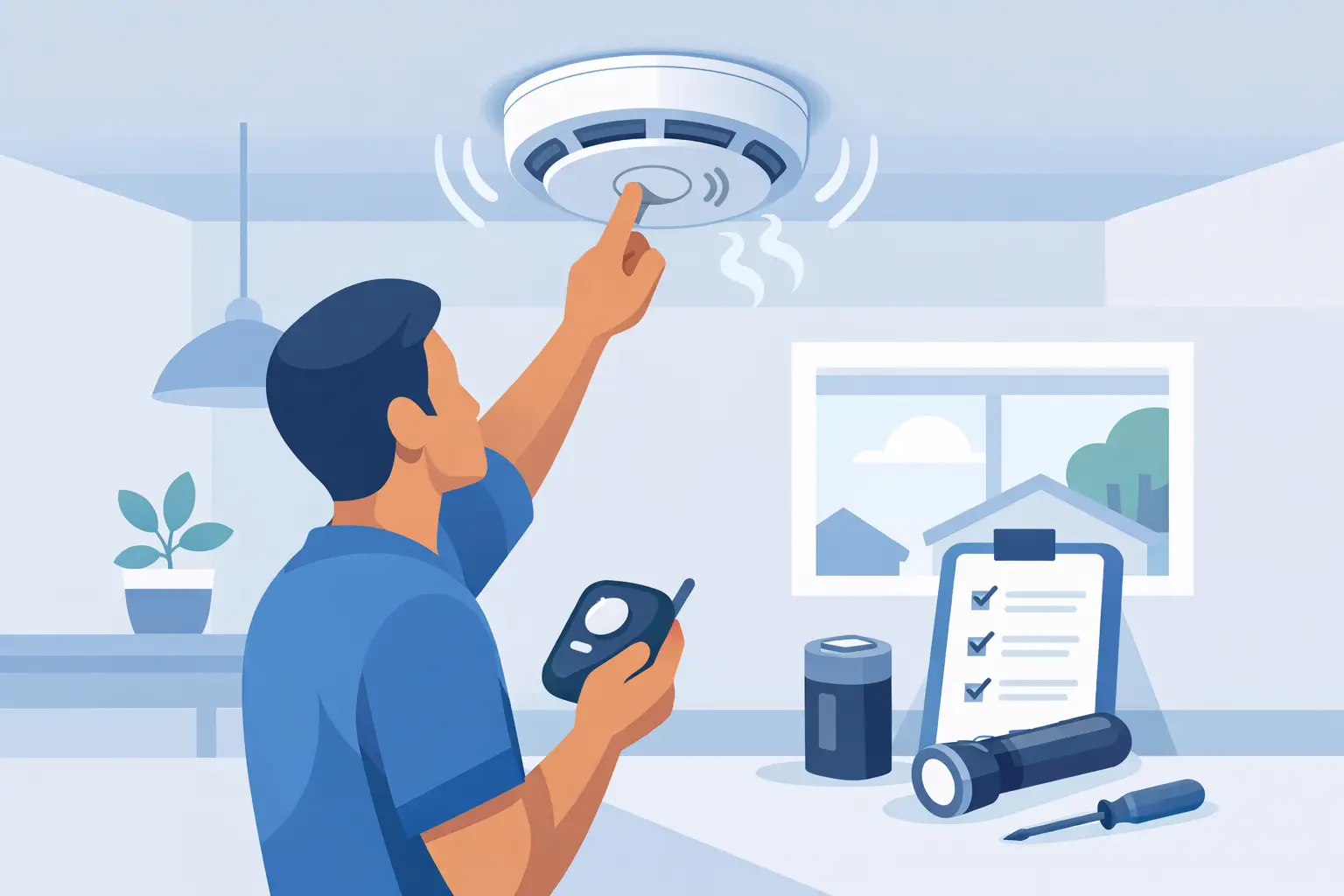
A smoke alarm is only useful if it can wake you when it matters. The good news is that learning how to test smoke alarms safely takes very little time, does not require specialist tools, and can give you real peace of mind. A quick monthly test is usually enough to confirm that the alarm has power, the sounder works, and your household can hear it clearly.
The key is testing the right way. Pressing the test button is safer and more reliable for routine checks than using candles, matches, or smoke from a fire. Those methods can damage the sensor, leave residue inside the unit, or create an unnecessary fire risk.
How to test smoke alarms safely
Start by letting everyone in the property know you are about to test the alarms. The sound can be loud and startling, particularly for young children, older relatives, pets, or anyone sensitive to loud noise. If your alarm system is monitored or connected to a building-wide fire panel, follow the provider’s procedure first so you do not accidentally trigger a callout.
Stand beneath the alarm and press and hold the test button. Depending on the model, you may need to hold it for a few seconds. A working alarm should produce a loud, clear sound. In an interconnected system, the other alarms in the home may sound too. That is a good sign, as it shows the units are communicating as intended.
Avoid standing directly below the alarm for longer than necessary. The sound level is designed to get attention during an emergency, so it can be uncomfortable at close range. Step back after pressing the button, and keep small children and pets away from the immediate area.
Release the button once you have heard the alarm. Most units stop straight away or within a few seconds. If an alarm continues sounding, check whether it has a hush or silence button. If you smell smoke, see signs of fire, or cannot identify why the alarm is sounding, treat it as a real emergency rather than assuming it is a test issue.
Test every alarm, not just the one in the hallway
It is easy to test the most visible alarm and forget the others. Walk through the property and test each unit individually, including alarms in hallways, landings, bedrooms, living areas, garages, and any separate outbuildings where alarms have been fitted.
For homes with interconnected alarms, testing one device may set off the full system. Even so, it is still worth checking the test button on every unit over time. This can help identify a faulty device, a weak battery, or an issue with the interconnection before it becomes a bigger problem.
For rental properties, landlords and property managers should keep a clear record of checks, battery changes, and replacement dates. Tenants should also know where the alarms are and how to report persistent chirping, faults, or accidental activation. A working smoke alarm is a shared safety responsibility, but electrical and fire alarm issues should be dealt with promptly by someone qualified to do the work.
Check whether everyone can hear it
A test is not only about whether the alarm makes noise. Ask someone to stand in bedrooms with doors closed while you test the system. Can they hear it clearly enough to wake them? This is particularly worth checking in larger homes, properties with thick walls, or homes where people use fans, hearing aids, white-noise machines, or other equipment at night.
If the sound is difficult to hear in sleeping areas, the answer may be better alarm placement, interconnected units, or additional warning devices. Do not simply move an alarm without considering the manufacturer’s instructions and the layout of the property. Positioning matters as much as the alarm itself.
How often should you test a smoke alarm?
For most homes, test each smoke alarm once a month. Pick a date that is easy to remember, such as the first day of the month or the day you receive a regular bill. A simple reminder on your phone makes the job far less likely to be missed.
You should also test alarms after a long period away from home, after decorating or dusty building work, after replacing batteries, and after any electrical work that may have affected a hardwired system. If an alarm has been covered during work to prevent dust entering it, uncover it as soon as the work is finished and test it before relying on it again.
Do not wait for an alarm to chirp before you pay attention. A chirp often means the battery is low, but it can also point to contamination, a loose connection, a fault, or an alarm that has reached the end of its service life.
What the test button does – and does not – prove
The test button checks that the alarm can receive power and produce a warning sound. On many modern alarms, it also checks key internal electronics. That makes it the correct routine test for homeowners.
However, it does not always prove that the sensing chamber will respond perfectly to smoke. Smoke detector test aerosols are available for more detailed checks, but they should be used carefully and only as directed by the manufacturer. In a commercial premises or a property with a more complex fire alarm system, functional testing and inspection are better handled as part of a planned professional maintenance routine.
Never test an alarm with an open flame, burning paper, a cigarette, or a candle. Aside from the obvious fire risk, these methods can clog or contaminate the sensor. Household sprays, steam, and cooking fumes are not reliable testing methods either. They may trigger an alarm, but they do not tell you whether the system is working properly.
If your smoke alarm does not sound
First, try pressing and holding the test button again for a few seconds. If there is still no sound, check the manufacturer’s instructions for the specific model. A battery-powered alarm may need a new battery fitted correctly, while a sealed-battery unit may need to be replaced when its battery reaches the end of its life.
For hardwired alarms, do not assume that changing a battery will solve the problem. They may have a battery backup, but a tripped circuit, loose connection, aging unit, or fault within the linked system could be involved. If multiple alarms are not responding, or an alarm has no obvious reason for failing, arrange for an electrician or fire alarm professional to inspect it.
Do not leave a non-working alarm in place and promise yourself you will deal with it later. Replace it promptly or get it checked. If you need to remove a unit temporarily while arranging a repair, make sure the property is not left without suitable warning coverage.
Battery changes, cleaning, and replacement dates
Follow the manufacturer’s battery guidance rather than relying on a one-size-fits-all rule. Some alarms use replaceable batteries, while others have sealed long-life batteries designed to last for the alarm’s working life. When replacing a battery, use the type specified by the manufacturer and test the alarm immediately afterwards.
Dust and insects can affect alarm performance, especially in loft spaces, garages, hallways near exterior doors, or properties undergoing renovation. A gentle vacuum around the vents using a soft brush attachment can help remove loose dust. Do not spray cleaners, paint, polish, or insect treatment directly onto the alarm.
Most smoke alarms need replacing after about 10 years, although the exact lifespan depends on the unit. Look for a manufacture or replacement date on the back or side of the alarm. If the date has passed, replacement is the sensible choice even if the test button still makes a sound. Sensors degrade over time, and a noisy alarm is not necessarily a dependable one.
When to call a professional
A straightforward monthly button test is something most homeowners can do themselves. It is time to call a professional when alarms keep chirping after a battery change, interconnected units do not all activate, hardwired alarms lose power, false alarms become frequent, or a commercial fire alarm system needs formal testing and maintenance.
The same applies if you are renovating, extending a property, converting a loft, changing the use of a room, or taking responsibility for a rental or business premises. The right alarm type, location, and wiring arrangement depend on the building and how it is used. Getting that part done properly is far better than guessing.
A monthly test takes less time than making a cup of coffee, but it could be one of the most worthwhile habits in your home or workplace. Set the reminder, listen for every alarm, and act quickly when one does not sound as it should.