
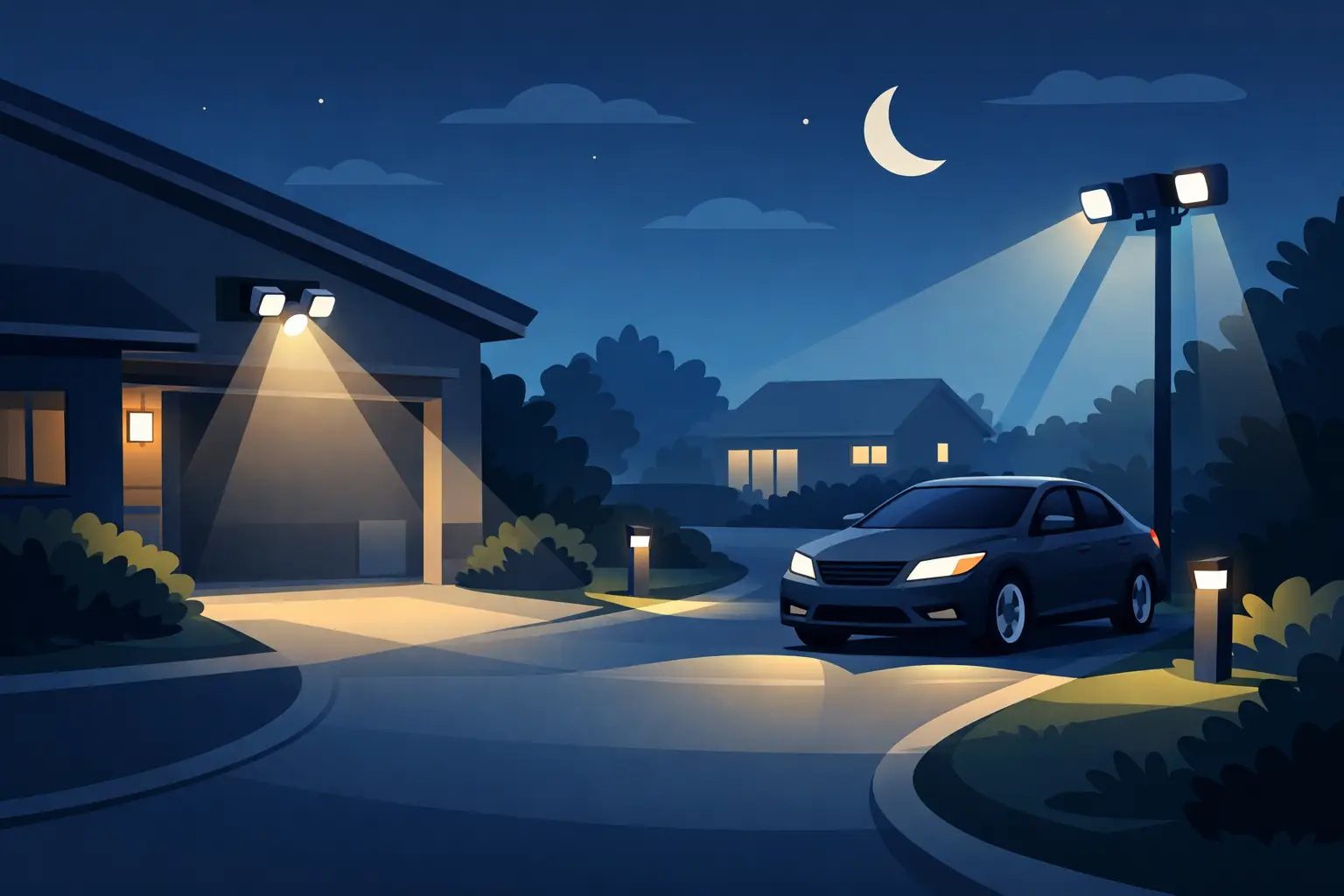
A dark driveway creates a problem before anyone reaches the front door. It can hide uneven paving, make parking more difficult, and give unwanted visitors a place to approach unnoticed. Well-planned security lighting for driveways gives you a clearer view of the area without turning your home, rental property, or business premises into a floodlit site.
The best setup is not simply the brightest one. It is lighting positioned to cover the right areas, controlled in a sensible way, and installed safely to stand up to the weather. A good electrician will look at how people and vehicles actually use the driveway, where shadows fall, and how the lighting will affect neighbors.
What driveway security lighting should do
Driveway lighting has two jobs. First, it should make the space safer for everyday use. You need to see the edge of the drive, gates, steps, parked vehicles, bins, and any changes in level when arriving home after dark.
Second, it should make the property less appealing to intruders. Sudden light can draw attention to movement around a vehicle, garage, side gate, or entrance. It also helps CCTV cameras capture clearer footage, particularly when a camera is covering the driveway or front approach.
That does not mean every fixture needs to be high-powered. A blinding floodlight can leave darker areas beyond its beam and may make a camera image worse by creating deep contrast. The aim is even, useful coverage where it matters most.
Choose the right type of security lighting for driveways
Most properties benefit from a combination of fixed exterior lighting and motion-controlled lights. The right choice depends on the size and layout of the driveway, the nearby road, and whether the area is used mainly for parking, walking, deliveries, or access to a garage.
Motion-sensor floodlights
A motion-sensor floodlight is often the main security fixture. It is a practical choice for a driveway entrance, garage wall, side passage, or rear access point. When the sensor detects movement, the light comes on for a set period, giving you visibility when you need it without leaving the fixture on all night.
Placement matters more than sheer brightness. A light mounted too low can be easily tampered with, while one installed too high may cast hard shadows directly below it. It should point down toward the driveway, not across the street or into bedroom windows. The sensor must also be positioned carefully so passing pedestrians, traffic, trees, or pets do not trigger it constantly.
Dusk-to-dawn lights
Dusk-to-dawn lighting turns on automatically when natural light fades and switches off in the morning. This works well for properties where a steady, welcoming level of light is more useful than sudden bursts of bright light.
For example, a lower-output wall light near the garage door or front path can stay on overnight, making the entrance easier to find and helping residents feel safer when returning late. It can also provide a consistent base level of light for a camera. The trade-off is that it uses more electricity than motion-only lighting, although modern LED fixtures keep running costs low.
Wall lights and bollard lights
Wall lights are useful beside a garage, gate, porch, or driveway-facing side wall. They can provide broad, comfortable coverage without the harsh appearance of a large floodlight. If they are installed at the right height, they also help define the route from the driveway to the entrance.
Bollard lights can work on larger driveways, private access roads, or commercial premises. They provide low-level guidance along the edge of a route, but they should not be relied on as the only security lighting. They light the ground well, yet do little to illuminate a person’s face or the wider approach to the property.
Smart controlled lighting
Smart exterior lighting can be useful if you want more control. Depending on the system, you may be able to adjust schedules, receive activity alerts, or turn lights on remotely when you are away. This can suit landlords, business owners, and homeowners who already use CCTV or alarm systems.
However, smart controls do not replace a properly planned electrical installation. The lights should still work reliably through local controls and sensors, rather than depending entirely on a phone app or unreliable wireless signal.
Where to place driveway lights
Start at the point where a vehicle or person enters the property. A sensor light covering the driveway entrance can alert you to movement early and help drivers see gates, walls, or tight turns. On a longer driveway, one fixture at the entrance may not be enough. A second light near the garage or front door can cover the final approach and reduce shadowed areas between the two.
The garage is another key position, especially if tools, bicycles, or vehicles are stored there. Lighting above or beside the garage door can make loading, unloading, and reversing safer. If there is a side gate or path leading to the back of the property, consider this separately. These routes are frequently overlooked, even though they can provide hidden access away from the front of the house.
Do not forget the path from the driveway to the door. A motion light may deter unwanted visitors, but a softer wall or porch light makes daily access safer for family members, guests, tenants, and delivery drivers. The two types can work together without making the front of the property overly bright.
Brightness, color, and glare
For most residential driveways, LED lighting is the sensible option. LEDs use less energy, last longer than older lamp types, and are available in many brightness levels. More lumens generally mean more light, but the fixture design and aiming angle are just as important.
A warm white light can make an entrance feel more comfortable, while a neutral white light often gives clearer detail around vehicles and gates. Very cool blue-white lighting can look harsh and is not always the best choice for a home. If you use CCTV, test the lighting with the camera after installation. A fixture that looks fine to the eye may cause glare, reflections, or washed-out footage at night.
Aim fittings downward and away from windows. This protects your own view as well as your neighbors’ privacy. If a driveway runs close to another property or a public road, shielded fittings and careful positioning are especially worthwhile.
Sensor settings make a real difference
A motion sensor that activates every few minutes quickly becomes an annoyance. It may also lead people to ignore the light when it comes on. During installation, the detection range, sensitivity, and run time should be adjusted for the actual site.
A short run time may be enough for a small driveway where someone walks straight from the car to the house. A longer period makes sense where people need to unload equipment, open gates, or walk along a path. In most cases, a setting of a few minutes is practical. The goal is for the light to come on promptly when someone enters the area and switch off after they have gone.
Seasonal changes can affect sensors. Growing shrubs, moving branches, frost, and parked vehicles may alter what the sensor detects. It is worth checking the system occasionally rather than assuming it will perform perfectly forever.
Professional installation is worth it
Exterior electrical work has to cope with rain, cold weather, moisture, and accidental damage. The fitting itself needs to be suitable for outdoor use, but so do the cable routes, connections, switches, and controls. A poor connection or unsuitable enclosure can allow water in and create a fault when you need the lighting most.
A professional installation also means considering the existing electrical circuit, protective devices, cable protection, and safe mounting points. This is particularly important for older properties, shared rental buildings, and commercial sites where the electrical system may have been altered over time.
BS Electrical can assess the layout of your driveway and recommend a practical setup that suits the property and budget. For customers across Teesside, that means straightforward advice, tidy workmanship, and lighting installed properly the first time.
The most useful driveway lighting is the kind you barely have to think about: it comes on when needed, helps you see clearly, supports your wider security measures, and lets you get home with a little more peace of mind.