
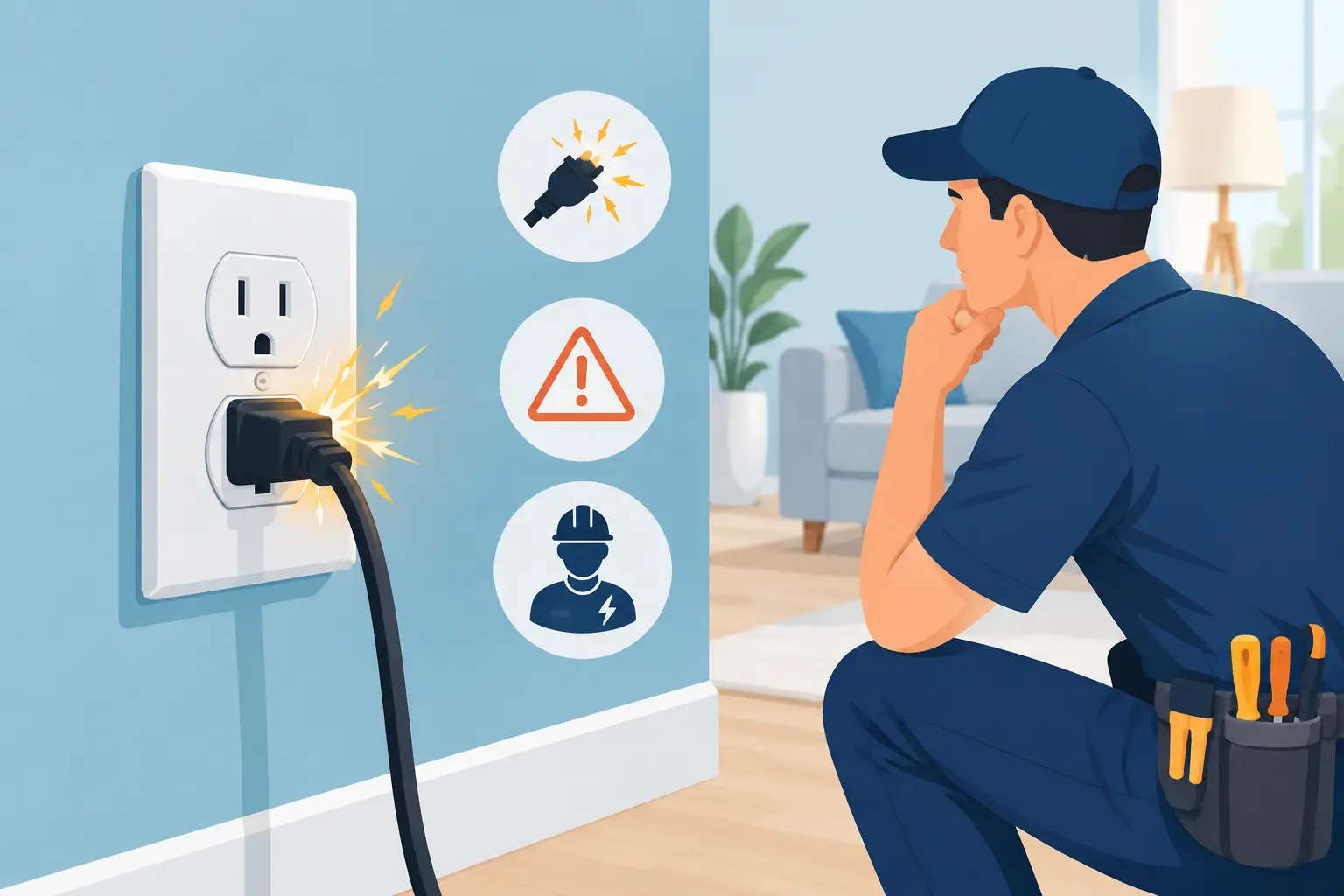
A tiny blue flash when you plug in a vacuum or phone charger can be unsettling, and it is one of the most common reasons people ask why sockets spark. A brief, one-off spark is not always a sign of a serious fault. But repeated sparking, heat, buzzing, burning smells, or damage around an outlet should never be ignored.
Electricity is not something to guess at. Knowing the difference between a normal connection spark and a warning sign can help you act quickly, protect your property, and avoid a small electrical issue becoming a costly repair.
Why sockets spark when you plug something in
A socket can spark when electricity jumps across a tiny gap between the plug prongs and the contacts inside the outlet. This is known as an arc. It often happens at the exact moment a plug is inserted or removed, particularly when the appliance is switched on and ready to draw power.
High-demand appliances are more likely to create a small flash. Vacuums, space heaters, hair dryers, kettles, microwaves, and power tools all pull more electrical current than a phone charger or lamp. If you plug one in while it is switched on, the connection is made under load, which can produce a quick spark.
A small blue or white spark that happens once, with no noise, odor, heat, or visible damage, may simply be part of making the connection. Even then, it is good practice to switch an appliance off before plugging it in or unplugging it. This reduces wear on both the plug and the outlet contacts.
The concern starts when the spark is large, yellow or orange, happens regularly, continues after the plug is in place, or comes with other signs that something is wrong.
When a sparking socket is a warning sign
A sparking outlet can point to a loose connection, worn internal contacts, damaged wiring, or an overloaded circuit. These faults can create heat inside the outlet or behind the wall, where you may not see the problem developing.
Older outlets can lose their grip over time. If a plug feels loose, falls out easily, or needs to be held in a certain position to work, the internal contacts may be worn. A loose connection creates resistance. Resistance creates heat, and heat can cause arcing and damage the outlet further.
Damage to the plug, cord, or appliance can also be the cause. Frayed cables, bent prongs, cracked plug tops, and cheap or overloaded extension leads all raise the risk of a poor connection. In some cases, the outlet is fine but the appliance itself has a fault and is causing the spark.
Pay close attention if you notice any of the following:
- A burning smell, smoke, crackling, popping, or buzzing from the outlet
- Discoloration, scorch marks, melted plastic, or a hot outlet faceplate
- A spark every time you use the outlet, even with different appliances
- Tripped breakers, flickering lights, or loss of power on the same circuit
Any one of these signs warrants a professional electrical inspection. If an outlet is smoking, actively sparking, or showing signs of fire, move away from the area, turn off power at the breaker only if it is safe to do so, and contact emergency services.
Could the appliance be the problem?
Before assuming the outlet has failed, think about whether the issue follows one particular appliance. If a single toaster, charger, or power tool sparks in multiple outlets, stop using it. Do not keep testing it around the home or business.
Check the plug without touching any damaged metal parts. Look for black marks, loose prongs, splits in the cable insulation, or signs that the plug has overheated. These can indicate internal damage that is not safe to repair with tape or a temporary fix.
On the other hand, if several different appliances spark when used in one outlet, the outlet or circuit is more likely to be at fault. This is especially true if plugs feel loose or the outlet has been painted over, cracked, or damaged by impact.
Extension cords and multi-plug adapters deserve extra care. They are useful for temporary, light-duty use, but they are not a solution for a lack of outlets. Connecting high-load appliances through an extension lead or overloading a power strip can overheat cables and connections. A properly installed additional outlet is the safer long-term answer.
What to do if an outlet sparks
Your next step depends on what you see and hear. If there was one small flash and everything appears normal, switch the appliance off before removing the plug. Hold the plug itself rather than pulling on the cord. Avoid using the outlet again if you are unsure about its condition.
If the spark was large, repeated, noisy, or accompanied by heat or a smell, stop using the outlet immediately. Turn off the relevant breaker if you can clearly identify it and can reach the electrical panel safely. Do not remove the outlet cover, push objects into the socket, spray anything into it, or attempt a repair yourself.
For landlords and property managers, a report of a sparking outlet should be treated as a priority maintenance issue. Occupants may understandably continue using the outlet if it still appears to work, but visible sparking is not a fault to leave until the next routine visit. Quick fault finding can prevent damage and help keep the property safe.
In a commercial setting, isolate the outlet where possible and make staff aware that it should not be used. Portable appliances, kitchen equipment, office extension leads, and workshop tools can all place different demands on a circuit. An electrician can identify whether the issue is a worn outlet, a faulty appliance, a circuit loading problem, or a wiring fault further back in the installation.
How an electrician finds the cause
A proper inspection goes beyond replacing a scorched outlet faceplate. The visible outlet may be where the problem appears, but the source could be a loose terminal, deteriorated cable, damaged connection, or an overloaded circuit elsewhere.
An electrician will first assess the outlet, plug, and connected appliance for obvious signs of damage. They can then test the circuit and connections, check the condition of the wiring, and confirm that protective devices are operating as they should. If the outlet needs replacing, it should be done with the power safely isolated and the connections checked before it is put back into service.
The right repair depends on the cause. It may be as straightforward as replacing a worn outlet or damaged accessory. In older properties, recurring faults can reveal broader issues such as aging wiring, inadequate circuits for modern electrical demand, or a consumer unit that needs attention. There is no benefit in fitting a new outlet if the underlying connection remains unsafe.
Can you prevent sockets from sparking?
You cannot prevent every tiny connection spark, particularly with appliances that draw a high startup current. You can reduce the risk of harmful sparking by switching appliances off before connecting them, using good-quality plugs and extension leads, and replacing damaged cords promptly.
Avoid forcing plugs into outlets, overloading adapters, or using loose outlets simply because they still provide power. Keep electrical outlets dry and free from dust or debris, particularly in kitchens, garages, workshops, and rental properties where equipment is used heavily.
If your home has old outlets, frequent tripping, flickering lights, or circuits that struggle with everyday appliances, it is worth arranging an electrical safety check. Regular inspections are practical preventive maintenance, not an unnecessary expense. They give you a clear picture of the condition of the installation before faults become urgent.
A socket that gives one faint flash may not need an emergency callout. A socket that is hot, noisy, damaged, or repeatedly sparking needs professional attention. When in doubt, leave it switched off and have it checked properly. That simple decision can protect your equipment, your property, and the people using it.