
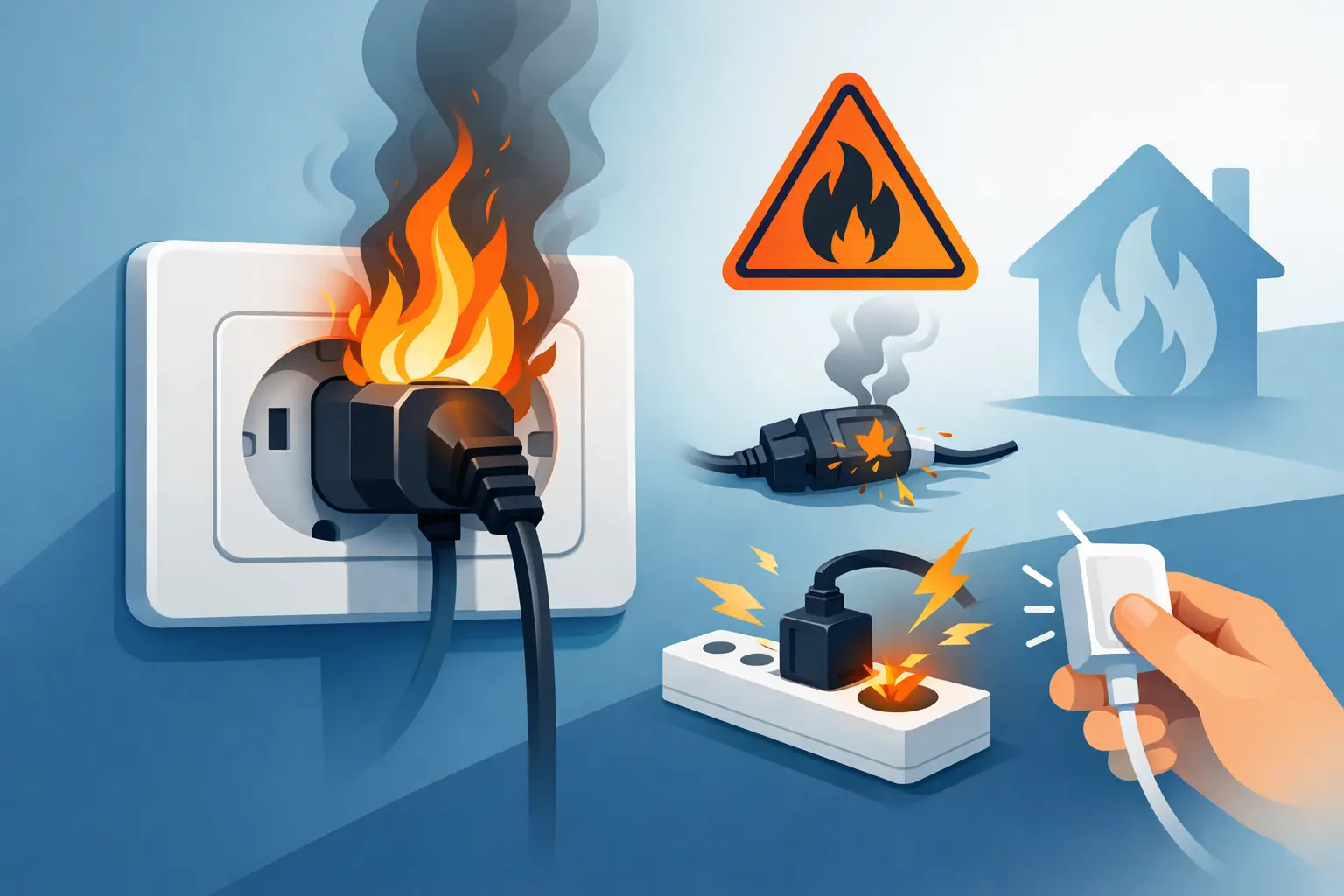
A phone charger that feels hot at the wall, a plug that no longer sits firmly, or a faint burning smell are not things to put off until later. Are plug sockets a fire risk? They can be, but a properly installed, undamaged outlet used within its limits should not be a danger. The risk usually starts when there is a fault, damage, loose wiring, or too much demand on one point in the electrical system.
For homeowners, landlords, and business owners, the sensible approach is simple: take warning signs seriously, stop using anything that appears unsafe, and have the cause checked properly. Electrical faults are often hidden behind the faceplate, where a quick visual check cannot tell the full story.
When can plug sockets become a fire risk?
An outlet can become a fire risk when electricity is forced through a poor connection. Loose terminals, worn contacts, damaged cables, or failing internal parts create resistance. Resistance creates heat, and repeated overheating can damage insulation, scorch the outlet, and in serious cases ignite nearby materials.
Overloading is another common cause. It is not always the outlet itself that is at fault. A single outlet may be serving several high-demand appliances through an extension lead or power strip, while the circuit supplying it is already carrying a heavy load. Portable heaters, kettles, microwaves, hair tools, tumble dryers, and workshop equipment can all draw significant power.
Older properties may have additional issues. Outlets can look fine on the outside while the wiring behind them has deteriorated, connections have loosened over time, or the circuit no longer suits how the property is used. This is particularly relevant in homes that have gained more appliances, home-office equipment, or electric heating over the years without an electrical upgrade.
Warning signs you should never ignore
A socket outlet should stay cool, hold a plug securely, and work without smell, noise, or discoloration. If it does not, stop using it until it has been inspected. A warm plug after a long period of use can sometimes be explained by the appliance, but an outlet that is hot to the touch is not normal.
Look out for these signs:
- Brown marks, melting, cracking, or discoloration around the outlet or plug
- A burning smell, buzzing, crackling, or popping sound
- Plugs that feel loose, fall out, or need to be held at an angle to work
- Flickering power, intermittent operation, or a circuit breaker that trips repeatedly
- Sparks when plugging in or unplugging equipment, especially if this happens more than once
- A warm wall plate, warm plug, or heat coming from an extension lead
A brief, tiny spark can occasionally occur as a high-load appliance is switched on or off. That does not automatically mean there is a fault. However, frequent sparking, large sparks, burn marks, or any smell of burning needs attention. The same applies if a breaker trips. Resetting it once may restore power, but repeatedly resetting a breaker without finding the cause is not a fix.
The problem may be the appliance, not the outlet
Before assuming the outlet is faulty, consider what is plugged into it. A damaged appliance cord, crushed cable, poor-quality charger, or faulty extension lead can overheat and create a fire risk even when the fixed wiring is sound.
Try not to test a suspected faulty outlet by plugging in more appliances. Instead, unplug the item carefully if it is safe to do so. If the plug or outlet is hot, discolored, smoking, or making noise, switch off the circuit at the electrical panel if you can do so safely and arrange an urgent inspection. Do not touch exposed wires or remove the outlet cover yourself.
For landlords and business owners, it is worth keeping an eye on portable equipment too. Staff may bring in chargers, heaters, and extension leads that have seen better days. A safe fixed installation can still be compromised by damaged plug-in equipment.
Extension leads and adapters need sensible use
Extension leads are useful for temporary needs, but they are not a substitute for enough properly positioned outlets. Daisy-chaining power strips or extension leads – plugging one into another – increases the chance of overload and can hide the amount of power being taken from a single wall outlet.
High-wattage appliances should normally be plugged directly into a wall outlet where possible. Avoid running extension leads under rugs, through doorways, or where furniture can crush them. Cables need room to release heat and should be checked regularly for cuts, kinks, loose plug pins, or damaged insulation.
It also pays to be cautious with cheap adapters and multi-plug accessories. If an accessory feels loose, gets hot, or has no clear safety markings, replace it rather than taking a chance. A replacement is far cheaper than dealing with damage from an electrical fire.
Why loose connections are a serious issue
Many outlet faults happen out of sight. Every time a plug is inserted and removed, the contacts inside the outlet experience wear. Over time, they can lose their grip. Loose terminals behind the outlet can also develop through age, poor installation, vibration, or previous alterations.
The danger is that a loose connection may still work well enough to power an appliance. That can give a false sense of security while heat builds gradually at the point of failure. By the time scorch marks appear, the outlet and wiring may already have sustained damage.
This is why a replacement faceplate is not always the whole answer. A qualified electrician should inspect the wiring, connections, circuit protection, and the condition of the outlet itself. If there is heat damage, the affected cable may need attention too.
What to do if you suspect an outlet fault
If an outlet shows clear signs of overheating, disconnect any appliance if it is safe to do so and leave the outlet unused. Switch off the relevant circuit at the electrical panel if there is heat, smoke, burning odor, or visible damage. If there is an active fire, call emergency services immediately and do not use water on an electrical fire.
For less urgent concerns, such as a loose outlet or a plug that does not fit properly, arrange an electrical inspection soon rather than waiting for the problem to worsen. Avoid temporary fixes such as tape, forcing a plug into place, or continuing to use a power strip because it seems to work. Electrical faults rarely improve on their own.
A professional inspection can establish whether the issue is limited to one outlet, caused by an appliance, or part of a wider problem with the circuit. This matters in older homes, rental properties, and commercial spaces where the electrical installation may have been altered over several years.
Are plug sockets a fire risk in older properties?
They can be, especially where outlets, wiring, or electrical panels have not been checked for a long time. Age alone does not make an installation unsafe, and many older properties have been well maintained. The question is condition, capacity, and whether the system still matches modern electrical use.
Warning signs across more than one room – frequent tripping, flickering lights, multiple loose outlets, or a lack of outlets leading to heavy extension-lead use – are worth investigating. A full electrical safety inspection provides a clearer picture than replacing individual outlets one at a time.
If a property needs more capacity, updated circuit protection, or new outlets in practical locations, addressing it properly can reduce reliance on adapters and help prevent future faults. It is a more considered investment than repeatedly dealing with small symptoms.
A small check can prevent a larger problem
Most outlets will give some indication when something is wrong. The key is not to normalize the signs. Heat, burning smells, loose plugs, repeated tripping, and damaged accessories are all reasons to stop and get professional advice.
At BS Electrical, the focus is on finding the cause, explaining the options clearly, and carrying out work properly the first time. If an outlet in your home, rental property, or workplace does not look or feel right, treating it early is the safest and most cost-effective next step.