
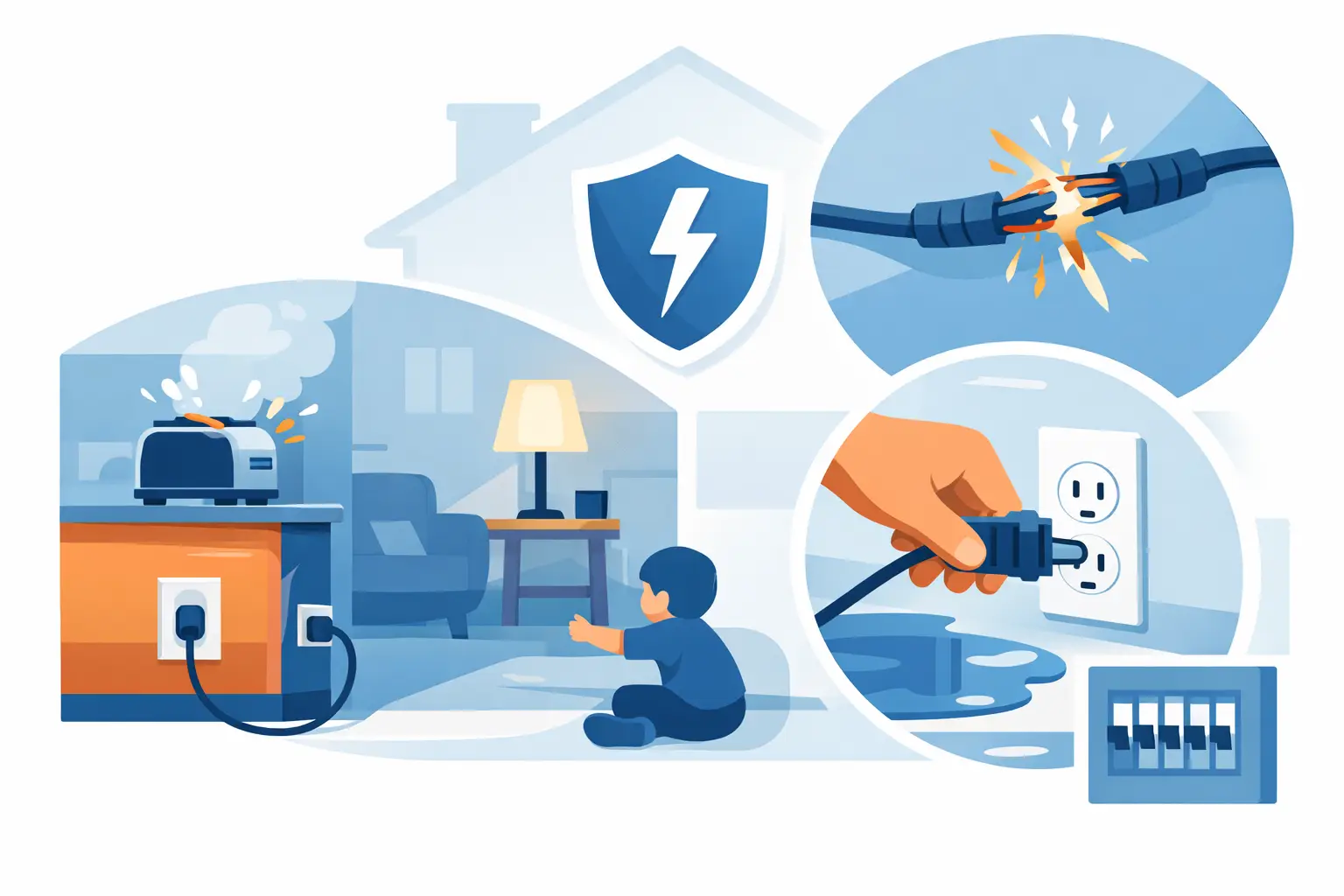
You usually do not get much warning before an electrical problem becomes a real one. A warm outlet, a breaker that trips twice in a week, or lights that flicker when the microwave starts can all seem minor until they are not. That is why a good home electrical safety guide matters – not as a scare tactic, but as a practical way to protect your property, the people in it, and your peace of mind.
For most homeowners, landlords, and small property managers, the challenge is not knowing every electrical rule. It is knowing what is normal, what is not, and when a quick fix stops being sensible. Electricity is one of those areas where getting the job done properly the first time is usually cheaper than dealing with damage later.
What a home electrical safety guide should actually help you do
A useful guide should make day-to-day decisions easier. It should help you spot early signs of trouble, avoid common habits that overload circuits, and understand when to bring in a qualified electrician rather than guessing.
That matters because not every issue looks dramatic. Some electrical faults build up quietly. Loose connections can generate heat for a long time before they fail. Older consumer units may still work, but they may not offer the level of protection expected in a modern home. Damaged accessories, poor DIY changes, and overloaded extension leads often sit in plain sight for months.
The goal is not to make you suspicious of every switch. It is to help you notice patterns that should not be ignored.
The warning signs people often put off
The most common electrical risks in homes are also the easiest to brush aside. A single blown bulb is usually nothing serious. But repeated lamp failures in the same fitting can point to a wiring issue, a poor connection, or the wrong lamp type for the fixture.
Tripping breakers are another one. If a breaker trips once after too many appliances are used at the same time, that may simply be an overloaded circuit. If it keeps happening under normal use, the fault may be in the circuit, an appliance, or the protective device itself. Resetting it again and again is not a solution.
You should also take burning smells seriously, especially near outlets, panels, or light fittings. If something smells hot or looks discolored, stop using that circuit or appliance and get it checked. Buzzing sounds, crackling behind walls, and switches that feel warm are all signs that need proper attention.
Flickering lights sit in a gray area. Sometimes the cause is simple, like a loose lamp. Sometimes it is a sign of a loose connection, voltage fluctuation, or an overloaded circuit. If the flicker happens in several rooms or whenever larger appliances turn on, it is worth investigating.
Outlets, cords, and extension leads
A lot of home electrical safety comes down to basic use. Extension leads are helpful, but they are not meant to act as permanent wiring. If one extension lead has your TV, internet router, phone charger, air fryer, and portable heater all plugged into it, that setup needs a rethink.
High-wattage items such as space heaters, microwaves, kettles, and tumble dryers should never be treated casually. These appliances draw a lot of power, and they should be used on suitable circuits with good condition outlets. Daisy-chaining power strips is one of the quickest ways to create unnecessary heat and fire risk.
Cords matter too. If a cable is frayed, crushed by furniture, trapped under carpet, or warm to the touch, replace it or stop using the appliance. Running cables under rugs may make a room look tidier, but it also traps heat and hides damage.
Child safety is part of the same conversation. If young children are in the property, outlet covers and sensible cable management make a difference. That said, covers are not a substitute for making sure the installation itself is safe.
Kitchens, bathrooms, and outdoor areas need more care
Water and electricity are an obvious bad combination, but the details matter. Kitchens and bathrooms see heavy appliance use, moisture, and frequent wear on switches and outlets. Outdoor equipment has the added risk of weather exposure and accidental damage.
In kitchens, watch for outlets close to sinks, damaged appliance cords, and overuse of countertop adapters. In bathrooms, any issue with lights, extractor fans, shaver points, or switches should be treated carefully because moisture changes the risk level.
Outside, problems often start with convenience. An indoor extension lead used in the yard, a cracked outdoor fitting, or power to a shed installed years ago without much thought can all become hazards. Garden lighting, hot tubs, outdoor sockets, and EV charging points all need the right design and protection. This is one area where cutting corners rarely stays cheap.
Older homes need a closer look
Not every older home is unsafe, but older wiring deserves respect. Properties that have had multiple owners, extensions, or piecemeal renovations often end up with a mix of old and new electrical work. That does not automatically mean there is a problem, but it does mean assumptions are risky.
If your home still has very old wiring, dated fuse protection, limited outlets, or signs of previous DIY changes, a professional inspection is sensible. The same goes for landlords between tenancies or anyone buying a property with unclear electrical history.
A modern household puts more demand on circuits than homes did years ago. Home offices, larger kitchen appliances, entertainment systems, EV chargers, and security equipment all add load. Sometimes the issue is not that the system has failed. It is that the property has outgrown it.
DIY has limits, and electricity finds them quickly
There is nothing wrong with being practical around your own property. Replacing a lamp, testing a device, or checking a tripped breaker is one thing. Altering fixed wiring without the right knowledge is another.
The trouble with electrical DIY is that mistakes are not always obvious straight away. A connection can appear to work while still being loose, overloaded, or non-compliant. That is why jobs such as new circuits, panel work, rewiring, outdoor power, and fault finding are best left to a professional.
It also saves time. Many callouts start with a small issue that became a bigger one after trial and error. Honest advice early on often costs less than repair work after damage is done.
A simple home electrical safety guide for regular checks
You do not need to inspect your home like an electrician every weekend. A basic routine a few times a year is enough for most properties.
Walk through each room and pay attention to anything that looks scorched, cracked, loose, or discolored. Test light switches and outlets that feel different from usual. Notice whether any breakers trip repeatedly or whether lights dim when appliances start. Check visible cords for wear, especially near plugs.
Look at areas that get overlooked – utility rooms, garages, loft spaces, and outdoor accessories. These are often where ad hoc additions and older fittings hide. If a landlord or property manager is responsible for multiple units, keeping a simple record of recurring electrical issues can help spot patterns before they become expensive.
If your panel is unlabeled or badly labeled, that is worth fixing. In an emergency, knowing what each breaker controls saves valuable time.
When to call an electrician right away
Some jobs can wait for a convenient appointment. Others should not. If you smell burning, see signs of melting, lose power to part of the house without a clear reason, get shocks from switches or appliances, or have water near electrical fittings, stop and get professional help.
The same applies after flooding, storm damage, or accidental drilling into a wall where cables may be present. If you have just moved into a property and notice a lot of adapters, inconsistent workmanship, or mystery switches that do not seem to control anything, it is sensible to have the system checked rather than guessed at.
For homeowners and landlords in the North East, that often means using a local contractor who can respond quickly, explain the issue clearly, and sort the work without fuss. BS Electrical takes that kind of straightforward approach because most people do not want a lecture – they want the problem found, explained properly, and fixed safely.
Safety is not only about faults
Good electrical safety is also about planning. If you are renovating, adding outdoor features, upgrading lighting, or installing an EV charger, safety starts with proper design and load assessment. It is much easier to do electrical work at the right stage than to retrofit around avoidable shortcuts.
There is always a balance between budget, urgency, and long-term value. Sometimes a repair is the right call. Sometimes replacing an outdated board, upgrading a circuit, or rewiring part of the property makes more sense. The right answer depends on the age of the installation, the condition of the components, and how you actually use the building.
A safe home does not need to be perfect. It does need to be taken seriously. If something feels off electrically, trust that instinct and have it looked at before it turns into a bigger job.