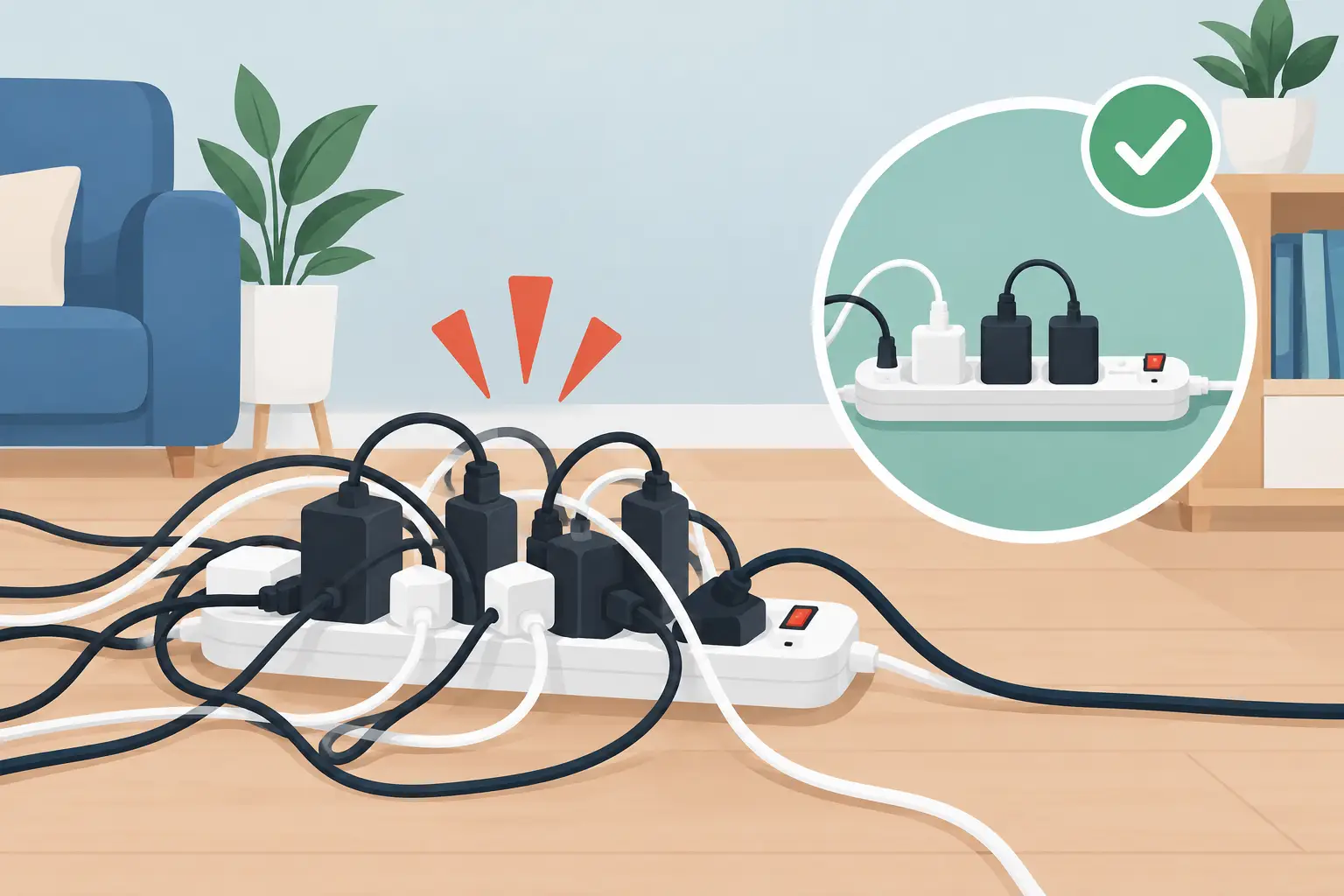
A single extension lead powering a lamp and phone charger is unlikely to cause trouble. The risk changes quickly when that same lead is asked to run a heater, kettle, microwave, tools, or several office devices at once. So, can extension leads overload? Yes. When too much electrical demand is placed on the lead, plug, or outlet, parts can overheat and create a genuine fire risk.
Extension leads are useful for temporary access to power. They are not designed to replace properly installed outlets, nor should they become a permanent solution to a room that does not have enough sockets. Knowing where the limits are helps you use them safely and spot when it is time to get the problem checked properly.
Can Extension Leads Overload?
An extension lead can overload when the combined power demand of everything plugged into it is higher than the lead, plug, outlet, or circuit can safely handle. The cable may get hot, the plug can overheat, or the fuse may blow. In some cases, the breaker trips before damage occurs. That is a safety feature, not an inconvenience to work around.
The problem is not simply the number of items plugged in. A lead with four or six sockets can be perfectly safe when it powers low-demand equipment such as a router, monitor, phone charger, or table lamp. One high-demand appliance, however, can use more power than several smaller devices combined.
Portable heaters, electric showers, kettles, air fryers, tumble dryers, washing machines, and power tools are common examples of equipment that should be treated with care. These appliances draw a substantial amount of current, particularly while heating up or starting.
Why Overloads Happen at Home and Work
Overloading often starts with a practical issue: there are not enough wall outlets where they are needed. A home office grows over time, a workshop needs more tools, or a business adds printers, screens, chargers, and kitchen equipment. An extension lead appears to be the quick answer.
Trouble can also develop when extension leads are connected together. This is often called daisy-chaining. Each additional lead adds another plug and connection point, creating more opportunities for loose contacts, damaged cables, and heat buildup. It also makes it easy to lose track of the total load.
A cable left tightly wound on a reel is another frequent issue. When current passes through a coiled cable, heat cannot escape as effectively. A reel that is safe at a lower load while wound up may have a higher rating only when fully unwound. Always check the label on the reel and unwind it fully before using high-demand equipment.
Damaged or poor-quality leads add further risk. A split cable sheath, bent plug pins, loose socket, scorch mark, or cracked casing is reason enough to stop using it. Do not rely on tape as a repair. Replace the lead or have the fault assessed by a qualified electrician.
How to Work Out Whether a Lead Is Being Overloaded
The simplest way to judge the load is to look at the power rating, shown in watts, on each appliance label. Add the wattage of everything likely to run at the same time. Then compare that total with the extension lead’s stated maximum rating.
For a typical 230-volt domestic supply, a 13-amp extension lead may be marked for a maximum of around 3,000 watts. That figure is a ceiling, not a target. It assumes the lead is in good condition, correctly fused, fully unwound if on a reel, and used within the manufacturer’s instructions.
For example, a 2,000-watt heater and a 2,200-watt kettle should not share the same standard extension lead. Together, they demand far more than the lead is likely designed to carry. By contrast, a 10-watt LED lamp, 65-watt laptop charger, and 15-watt phone charger place a relatively small load on it.
Be aware that a product’s label may state either watts or amps. The basic calculation is watts divided by volts equals amps. If you are unsure about the figures, do not guess, especially with heating appliances, kitchen equipment, commercial machinery, or tools. A local electrician can advise on the correct setup and whether additional outlets or a dedicated circuit are needed.
Warning Signs You Should Never Ignore
Electrical overloads do not always cause an immediate trip. Sometimes the first sign is heat at the plug, outlet, or cable. If you notice a hot plug, turn the appliance off, unplug it when safe to do so, and do not use that lead again until the cause has been identified.
Watch for these warning signs:
- A plug, cable, extension socket, or wall outlet feels warm or hot
- The breaker trips or a fuse blows repeatedly when equipment is used
- There is a burning smell, buzzing sound, discoloration, or visible scorching
- Plugs sit loosely in the extension lead or outlet
- Lights flicker when a particular appliance starts up
A tripping breaker can result from an overloaded circuit, a faulty appliance, or a wiring issue. Resetting it once may be reasonable after unplugging the equipment and checking for obvious damage. Repeatedly resetting it without finding the cause is not. That can allow a fault to worsen.
Safer Ways to Use Extension Leads
Use an extension lead for a temporary purpose, and choose one that is suitable for the environment and expected load. A lightweight indoor lead is not appropriate for outdoor work, garages, damp areas, or heavy tools. For those jobs, use equipment designed for tougher conditions and keep connections dry and protected.
Plug high-demand appliances directly into a wall outlet whenever possible. Avoid using one extension lead for multiple heaters or kitchen appliances. Never run cables under carpets, through doorways where they can be crushed, or across walkways where they can be tripped over. The cable insulation can be damaged without anyone noticing.
It also helps to keep the lead visible. If it is buried behind furniture, under rugs, or tangled with other cables, signs of overheating may go unnoticed. Before using it, check the cable along its full length and make sure the plug, sockets, and casing are secure.
For businesses, landlords, and property managers, extension leads deserve the same common-sense attention as any other electrical equipment. A lead used daily at a desk, reception area, workshop, or communal space gets more wear than one used occasionally. Regular visual checks and clear rules on daisy-chaining can prevent avoidable faults.
When More Outlets Are the Better Answer
If you rely on extension leads every day, the issue may not be the lead itself. It may be that the room needs more properly located outlets. This is particularly common in older homes, home offices, retail spaces, kitchens, and commercial work areas where electrical needs have changed over the years.
Installing additional outlets can be a safer and more practical long-term solution. It reduces cable clutter, lowers the temptation to overload one point, and makes the space easier to use. In some cases, the circuit itself may also need checking to make sure it can support the added demand.
BS Electrical provides straightforward fault finding, outlet installations, upgrades, and safety checks for homes and businesses across Middlesbrough, Teesside, and the wider North East. The aim is not to make a small issue sound complicated. It is to identify what is causing the problem and put it right properly the first time.
If an extension lead feels hot, keeps tripping the breaker, or has become a permanent fixture in a busy room, stop treating it as a minor annoyance. A quick professional check can give you a safer, tidier, and more reliable way to power the space.