
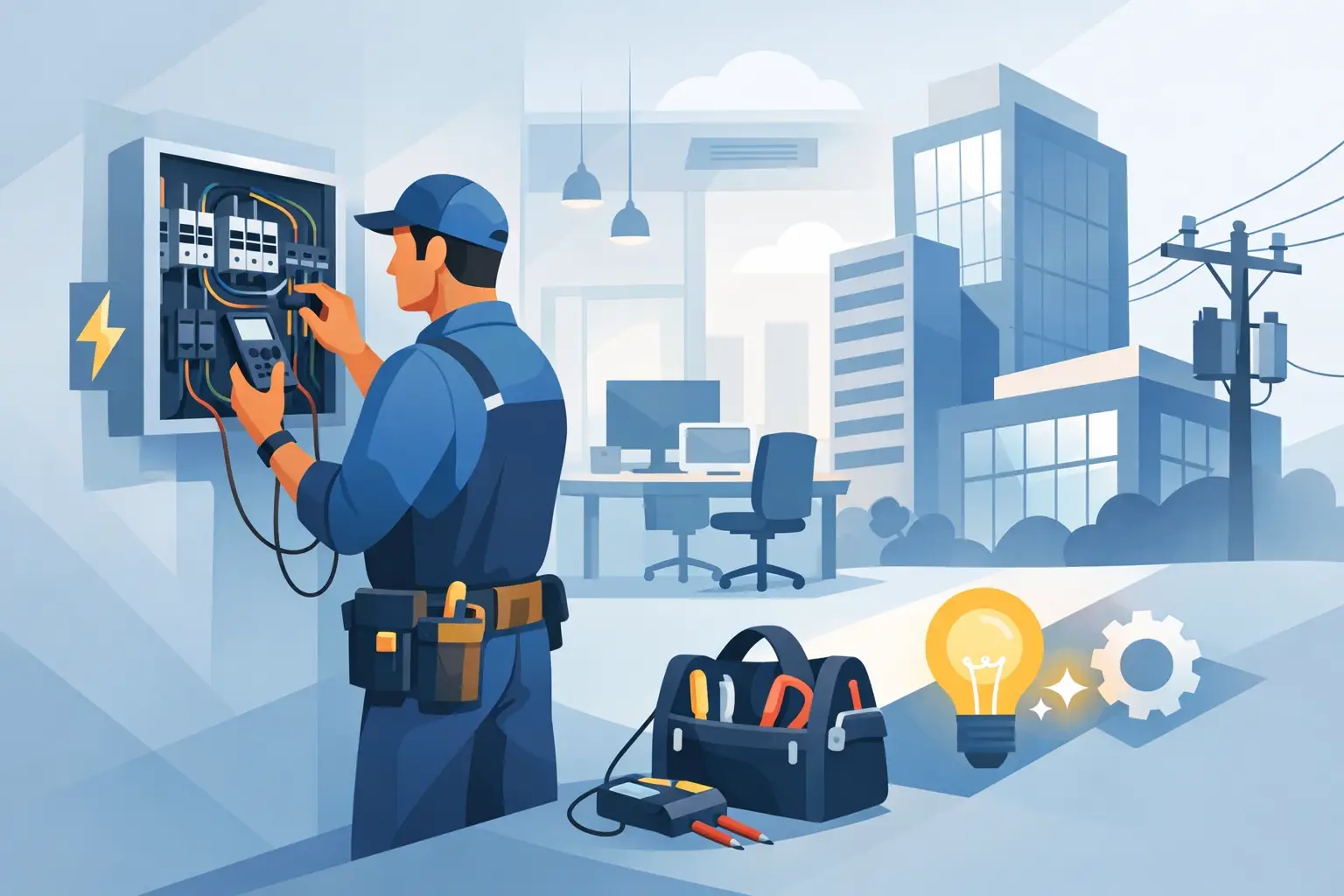
A flickering light in one office might seem minor. A tripping breaker in the server room, overheated outlet in the kitchen, or emergency lighting that fails a test is not. Electrical maintenance for office buildings is less about reacting to obvious faults and more about catching small problems before they interrupt work, create safety risks, or turn into expensive repairs.
For office managers, landlords, and business owners, the challenge is usually the same. You need the building to stay operational, you need staff safe, and you need work carried out without unnecessary disruption. That means electrical maintenance is not just a box to check. It is part of running a reliable workplace.
Why electrical maintenance for office buildings matters
Office buildings put electrical systems under steady daily strain. Lighting runs for long hours, HVAC equipment cycles on and off, kitchen appliances draw heavy loads, computers and monitors stay plugged in all day, and security systems need dependable power around the clock. Even a modest office can place real demand on circuits, boards, outlets, and cabling.
The problem is that wear does not always announce itself clearly. Loose connections can build heat quietly. Aging breakers may still function, but not as they should. Outlets can become damaged through repeated use. Lighting may deteriorate slowly enough that no one reports it until productivity starts to suffer.
Good maintenance helps reduce downtime, improve safety, and extend the life of the system. It also gives you a clearer picture of whether your electrical setup still matches the way the office is actually being used. That matters because many buildings evolve over time. Extra desks get added, small meeting rooms become equipment rooms, and temporary setups become permanent.
What office electrical maintenance usually includes
The exact scope depends on the building, its age, and how it is used. A small office suite will not need the same level of attention as a multi-floor commercial property with heavy equipment, access control, and emergency systems. Still, most maintenance work focuses on the same core areas.
Distribution boards and breakers
The panel is where many hidden issues begin to show. A proper inspection checks for signs of heat damage, wear, loose terminations, labeling issues, and overloaded circuits. If breakers are tripping regularly, that is not something to ignore or simply reset. Repeated tripping points to a fault, overloaded circuit, or equipment issue that needs proper investigation.
Lighting systems
Office lighting affects more than visibility. Poor lighting can strain staff, create uneven working conditions, and make the workspace feel neglected. Maintenance may include replacing failed fittings, checking switches and controls, testing emergency lighting, and identifying upgrades that lower energy use. In some offices, switching older fittings to LED makes sense. In others, the issue is not efficiency but poor layout or inconsistent coverage.
Outlets, switches, and local wiring
These are the parts of the system staff use every day, so they often show wear first. Cracked faceplates, loose sockets, scorch marks, buzzing switches, or outlets that no longer hold a plug securely should all be checked promptly. They may seem minor, but they can indicate deeper problems behind the surface.
Emergency and safety systems
Many office buildings rely on powered fire alarms, emergency lighting, door access systems, CCTV, and intruder alarms. These need to function when required, not just appear fine during normal use. Regular testing and inspection helps make sure critical systems do their job when it counts.
Common warning signs you should not ignore
Some electrical problems build slowly, while others give you a clear signal that action is needed. If lights flicker in one area, outlets feel warm, breakers trip often, or staff rely on extension cords because there are never enough outlets, the system may no longer suit the load being placed on it.
There are also less obvious signs. If one part of the office regularly loses power, if certain equipment causes nuisance trips, or if your maintenance records are thin and nobody is quite sure when the building was last inspected, it is worth getting a proper assessment. In commercial spaces, uncertainty is rarely a good sign.
Smells matter too. A burning smell near outlets, panels, or electrical equipment should always be treated seriously. The same goes for buzzing sounds, discolored fittings, or visible damage. These are not maintenance jobs to put off until next quarter.
Planned maintenance beats reactive callouts
Waiting until something fails usually costs more. It can also create more disruption than the repair itself. If a fault takes out lighting, key sockets, IT equipment, or access control during the working day, the real cost includes lost time, staff disruption, and possible business interruption.
Planned maintenance gives you more control. Work can be scheduled around office hours, issues can be prioritized, and smaller defects can be resolved before they become larger ones. It also helps with budgeting. Instead of dealing with one surprise after another, you get a more realistic view of what needs attention now and what can be planned for later.
That said, not every office needs the same schedule. A newer building with lighter use may need a different approach than an older property with years of additions and alterations. This is one of those areas where it depends on the building, not just a generic timeline.
Electrical maintenance and office upgrades often go together
Maintenance sometimes uncovers a simple repair. Other times, it shows that the office has outgrown parts of its electrical setup. That is common in buildings where occupancy has increased or technology use has changed.
An office that once had a few desktop computers may now support dual-monitor workstations, charging stations, printers, air conditioning units, kitchen appliances, and security systems all at once. If the original layout did not account for that, staff often fill the gap with extension leads and adaptors. That is usually a sign the space needs improvement, not another temporary fix.
In those cases, a practical electrician will not push unnecessary work, but they should be honest about when repairs are only delaying a bigger issue. Additional outlets, lighting upgrades, a fuse board update, or partial rewiring may be the better long-term option if the current setup is stretched.
Choosing the right contractor for office electrical maintenance
For business owners and property managers, reliability matters as much as technical skill. You need someone who turns up when agreed, communicates clearly, works safely, and understands that commercial jobs are often about minimizing disruption as much as solving the electrical issue itself.
That means looking for an electrician who can assess the building properly, explain findings in plain language, and separate urgent defects from advisory items. You do not want vague warnings or overblown sales talk. You want a clear picture of what is wrong, what needs doing now, and what can be scheduled sensibly.
Local service can make a real difference here. A contractor who works regularly with nearby businesses tends to understand the pressures of keeping offices running and responding quickly when faults happen. BS Electrical takes that straightforward approach – honest advice, practical solutions, and work done properly the first time.
A sensible approach to electrical maintenance for office buildings
The best maintenance plan is one that fits the building you actually have, not the one you wish you had. Start with the condition of the existing system, the age of the property, the type of equipment in use, and any history of faults or alterations. From there, you can decide what needs regular inspection, what should be upgraded, and what simply needs closer monitoring.
If your office has recurring problems, visible wear, or growing electrical demand, it is better to deal with it early. Electrical systems rarely improve with age or heavier use. Small defects become larger ones, and temporary solutions have a way of sticking around far too long.
A well-maintained office does not just stay safer. It works better day to day, gives staff fewer problems to work around, and saves you from dealing with preventable breakdowns at the worst possible moment. If something in your building has been getting ignored because it still sort of works, that is usually the right place to start.