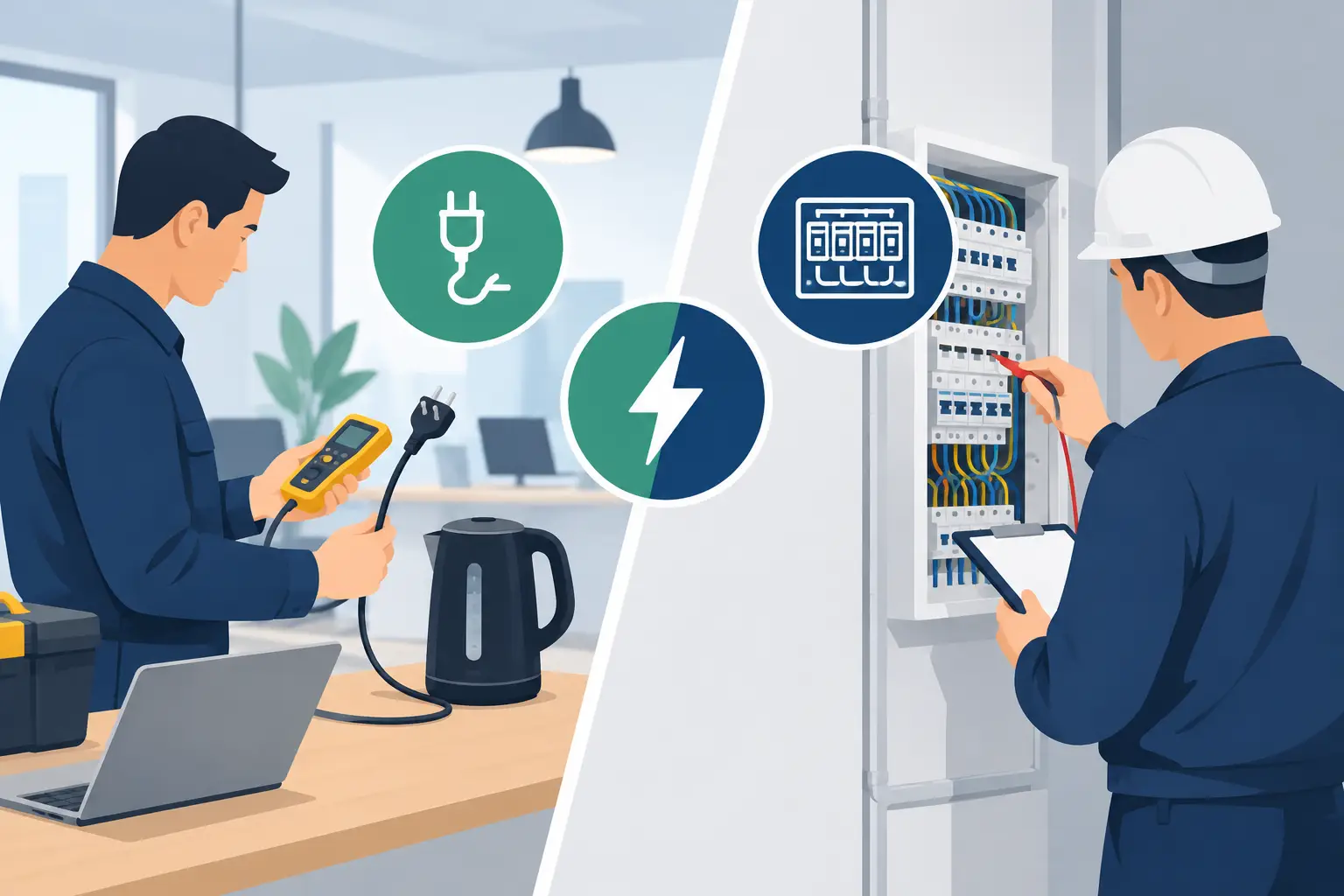
A kettle in the staff kitchen, a bank of computers, an extension lead behind the reception desk, and the wiring hidden above the ceiling all present different electrical risks. That is why commercial PAT testing versus EICR is not really an either-or choice for most businesses. They inspect different parts of your electrical system, and one cannot replace the other.
For business owners, landlords, and property managers, the goal is simple: keep people safe, prevent avoidable disruption, and have clear records showing that electrical safety has been handled properly. Knowing the difference makes it far easier to plan inspections sensibly rather than paying for the wrong service or leaving a gap in your safety checks.
What commercial PAT testing checks
PAT stands for Portable Appliance Testing. Despite the name, it is not limited to items you carry around. In a commercial setting, PAT testing applies to electrical equipment that plugs into a socket or is connected by a flexible lead.
This can include computers, monitors, printers, kettles, microwaves, fans, phone chargers, extension leads, power strips, cleaning equipment, and hand tools. In a workshop, salon, retail unit, office, or rental property, the number of appliances can add up quickly.
A competent electrician will normally begin with a visual inspection. This is often where problems are found: cracked plugs, damaged cables, loose connections, overloaded adapters, or equipment used in conditions it was not designed for. Where appropriate, electrical tests are then carried out to check that an appliance is safe to remain in service.
Each item is recorded, usually with a pass or fail result and a label or identifier. Failed equipment should be taken out of use until it is repaired or replaced. The test record gives the business a practical appliance register and evidence of ongoing maintenance.
PAT testing is especially useful where equipment is moved regularly, used by several people, exposed to wear, or brought onto site by staff and contractors. A quiet office with mostly new, fixed IT equipment may need a different testing schedule than a busy kitchen, construction site, or care setting. The level of risk should guide the frequency, not a one-size-fits-all annual date.
What an EICR checks
An Electrical Installation Condition Report, usually called an EICR, looks at the fixed electrical installation. In plain terms, this means the parts of the system that supply electricity around the premises rather than the appliances you plug in.
An EICR can cover the consumer unit or distribution boards, circuits, wiring, switches, sockets, lighting, protective devices, earthing, bonding, and signs of damage or deterioration. It is designed to identify faults that may lead to electric shock, fire, or loss of power.
During the inspection, the electrician assesses the condition of the installation and carries out testing where needed. Some circuits may need to be isolated briefly, so businesses should plan the visit around trading hours, IT systems, refrigeration, alarms, or other essential equipment. A good electrician will discuss this before work starts rather than leaving you with an unexpected shutdown.
The report records observations using condition codes. Some findings need urgent attention, while others may be recommendations for improvement. The key point is that an unsatisfactory EICR should not be ignored. Any remedial work should be completed promptly, with clear evidence of what has been repaired.
Commercial PAT testing versus EICR: the key difference
The simplest way to separate the two is this: PAT testing looks at the item plugged in, while an EICR looks at the electrical system supplying the socket.
A PAT test may confirm that a printer, extension lead, or microwave is safe. It does not confirm that the socket circuit, protective device, or wiring behind the wall is in good condition. On the other hand, an EICR may confirm that the fixed installation is satisfactory, but it will not test every laptop charger, vacuum cleaner, or piece of portable equipment in use.
This distinction matters after an incident. If a staff member receives a shock from damaged equipment, an EICR alone may not show that the appliance had been maintained. If a circuit keeps tripping due to a wiring fault, PAT records will not identify the cause. Both checks have a role, but their priority and frequency depend on the property and how it is used.
Do businesses need both?
In many commercial premises, yes. But the right approach is based on risk, not on buying inspections for the sake of it.
A small office might arrange periodic EICR inspections for its fixed installation and maintain a sensible PAT program for shared appliances, extension leads, and frequently handled equipment. A restaurant may need closer attention because of heat, moisture, heavy appliance use, and the consequences of losing power during service. A landlord with a furnished commercial unit may need to consider both the building installation and any appliances they supply.
Businesses also have a general duty to maintain electrical systems so they are safe. Insurers, clients, landlords, and health and safety processes may ask for up-to-date reports as part of that evidence. Exact requirements can vary according to the premises, lease terms, industry, and equipment in use, so it is worth checking the obligations that apply to your business rather than relying on a rule of thumb.
An EICR is generally carried out at longer intervals unless there is a change of use, damage, major alteration, or a concern with the installation. PAT testing intervals can vary much more because a heavily used extension lead carries a different risk from a rarely moved desktop monitor. Visual checks by staff between formal inspections are also valuable. If a cable is damaged, it should be removed from use immediately, not left until the next scheduled visit.
Common mistakes that leave safety gaps
One common mistake is treating PAT labels as a guarantee that everything electrical on site has been checked. A label only relates to the individual appliance and the date it was tested. It says nothing about the circuit it is connected to.
Another is assuming a satisfactory EICR means every piece of equipment is safe forever. Appliances can be damaged the day after testing, particularly in busy shared spaces. Staff should know to report frayed leads, hot plugs, burning smells, repeated tripping, broken sockets, and equipment that behaves unusually.
Businesses can also create problems by relying too heavily on extension leads and power strips. They are useful when used properly, but they are not a permanent substitute for enough fixed outlets. Daisy-chaining adapters, overloading a strip, or running cables across walkways can introduce both electrical and trip hazards.
Finally, do not let paperwork become the whole safety plan. Reports are valuable, but they should lead to action. Keep records organized, resolve failed items and coded observations, and review your arrangement when you move premises, alter the layout, add high-load equipment, or change how the space is used.
Planning inspections with minimal disruption
The easiest way to manage electrical safety is to build it into normal property maintenance. Keep an inventory of supplied appliances, record purchase dates and repairs, and identify equipment that gets the hardest use. This helps an electrician test efficiently and helps you spot items that may be better replaced than repaired.
Before an EICR, identify anything that cannot lose power without planning, such as servers, payment systems, refrigeration, security equipment, or machinery. Before PAT testing, make sure equipment is accessible and staff know whether they need to save work or disconnect personal devices. Clear preparation keeps the visit focused and reduces downtime.
For commercial properties across Middlesbrough, Teesside, and the wider North East, BS Electrical can help you understand what is being tested, what the findings mean, and what needs doing next. The right inspection should leave you with practical answers, not a confusing report and more unanswered questions.
Electrical safety is not about chasing certificates. It is about knowing that the wiring in the walls and the equipment in people’s hands are being looked after properly, before a small fault becomes a costly interruption.