
When a staff member leaves and takes a key with them, the problem is not just the missing key. It is the question of who can still get into your office, when they can get in, and how much it will cost to put that right. A door access control system for offices gives you a much cleaner way to manage entry without relying on copied keys, guesswork, or constant lock changes.
For many offices, security is only part of the reason to install access control. The bigger benefit is control. You decide who gets in, which doors they can use, and at what times. That matters just as much for a small office with a few employees as it does for a larger building with multiple teams, shared areas, and regular visitors.
Why offices are moving away from traditional keys
Keys are simple, but they are also easy to lose, copy, and pass around. Once that happens, there is very little visibility. You cannot see who used a key, and you cannot quickly remove access without changing locks.
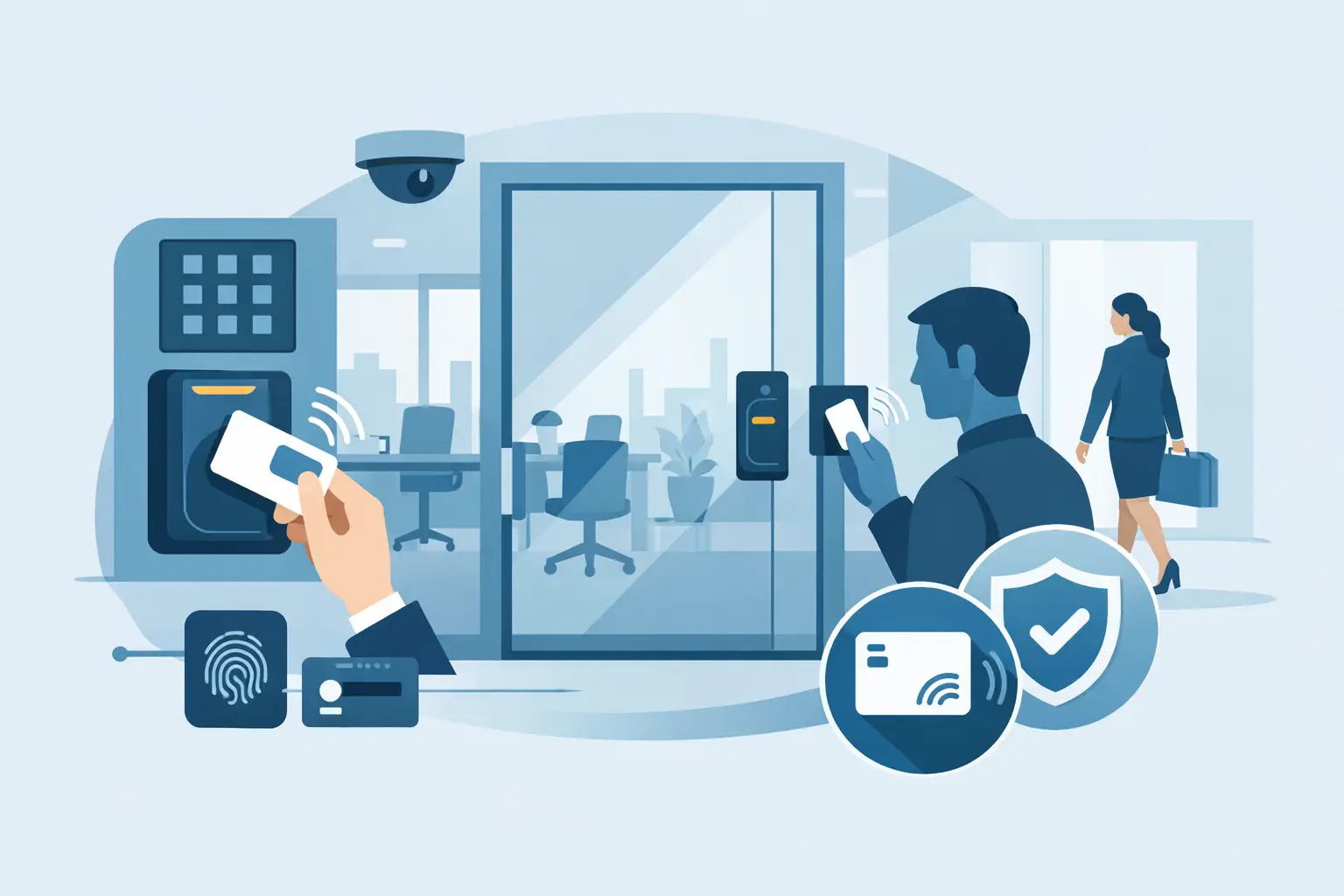
An office door access control system gives you a more practical setup. Staff can use key cards, fobs, PIN codes, or mobile credentials depending on the system. If someone leaves, their access can usually be removed without replacing hardware across the building. That saves time, reduces disruption, and gives business owners and property managers a lot more confidence.
There is also the everyday convenience factor. Busy offices often deal with deliveries, visitors, cleaners, contractors, and employees arriving at different times. A controlled entry setup helps keep the front door secure without turning daily access into a hassle.
What a door access control system for offices actually does
At its most basic level, the system controls who can open a door. That sounds straightforward, but the real value is in how flexible it can be.
A well-planned system can allow different permissions for different people. Management might have access to all areas, while general staff can only enter the main office and shared rooms. Storage areas, server rooms, stock rooms, and back-office spaces can be restricted to the right people only.
Many systems also record entry activity. That means there is a clear log showing when doors were accessed and by whom. For some businesses, that is useful for security. For others, it is just helpful when trying to sort out practical issues such as out-of-hours access, contractor visits, or recurring door misuse.
Not every office needs the same level of control. A single-door setup for a small business will look very different from a multi-door system across several departments. The right choice depends on the building, the number of users, and how the space is used day to day.
Choosing the right office door access control system
The best system is not always the most advanced one. It is the one that suits the building and does the job reliably.
For a smaller office, a single entry door with a keypad or fob reader may be enough. It keeps access simple and removes the need for multiple physical keys. For larger offices, it often makes sense to separate access across main entrances, internal secure doors, and staff-only areas.
There is also the question of how people will use it. Fobs and cards are familiar and easy to issue. PIN codes can work well, but they rely on users not sharing them. Mobile-based access can be convenient, though some businesses prefer a more straightforward option that every staff member can use without extra setup.
This is where a proper site assessment matters. Door type, foot traffic, fire safety requirements, power supply, and locking hardware all affect what can be installed and how well it will perform. A good installer will not just recommend a product. They will look at how your office runs in real life.
Security is only one part of the picture
A lot of office owners start looking at access control after a security concern. Maybe keys have gone missing, maybe too many people can reach sensitive areas, or maybe there is no clear process for visitors arriving out of hours.
Those are valid reasons, but access control also helps with routine management. It makes opening and closing more straightforward. It reduces the chance of doors being left unsecured. It can also support other building systems, especially where offices already have CCTV, intruder alarms, or intercoms in place.
When systems are planned properly, they work together better. For example, a front-door entry panel can allow staff to manage visitors without leaving their desks, while CCTV gives a visual record of arrivals. That kind of setup is not just for large corporate sites. Small and medium-sized offices benefit from it as well, especially where there is regular foot traffic.
Common mistakes to avoid
One of the biggest mistakes is choosing a system based only on price. Cost matters, of course, but cheap hardware that fails regularly or does not suit the building can become expensive very quickly. If staff are struggling with entry or doors are not locking as they should, the whole point of the system is lost.
Another common issue is poor planning. Some businesses install access control on the main entrance but leave internal risk points unsecured. Others overcomplicate things with permissions nobody can manage properly. In both cases, the system ends up causing frustration rather than solving problems.
There is also the question of future growth. If your business adds staff, changes layout, or takes on another office area, can the system adapt? It is worth thinking one step ahead rather than installing something that only works for the next six months.
Installation matters as much as the equipment
Even a good system can let you down if it is fitted poorly. Office access control is not just about mounting a reader on the wall. It involves power, cabling, door hardware, safe operation, and making sure the setup works properly with the building.
That is especially important on commercial sites where compliance, reliability, and day-to-day usability all matter. Doors need to release correctly, secure correctly, and function safely during normal use and emergency situations. A rushed installation can create more problems than it fixes.
This is why many businesses prefer to work with a local contractor who understands both the electrical side and the practical side. You want someone who can assess the site properly, explain the options in plain English, and install a system that works without unnecessary extras.
A practical fit for small and medium offices
Not every office needs gates, turnstiles, or a complex networked security setup. In fact, many smaller businesses simply need a reliable way to control the front door and protect a few key internal spaces.
That might mean restricting access to an admin room, keeping a records area secure, or making sure only staff can get through a rear entrance. In a shared office building, it might also help separate private business space from common areas.
The right door access control system for offices should feel like a sensible upgrade, not an overblown project. It should make the building easier to manage, not harder.
When it is time to consider an upgrade
If you are still relying on a handful of copied keys, now is probably the time to review your setup. The same applies if staff turnover has made access difficult to track, if certain doors are being left unsecured, or if you have no clear record of who is entering specific areas.
Access control is also worth considering during office refurbishments, electrical upgrades, or when adding CCTV or alarm systems. It is often more efficient to plan everything together rather than bolt security changes on later.
For businesses that want a straightforward, dependable setup, the priority should be clear advice and proper installation rather than flashy features. BS Electrical works with offices that need practical security solutions done properly, first time, with honest guidance and no unnecessary fuss.
A good access control system should give you fewer headaches, not more. If it helps your staff feel safer, keeps your building better protected, and saves you from chasing keys and changing locks, it is doing exactly what it should.