
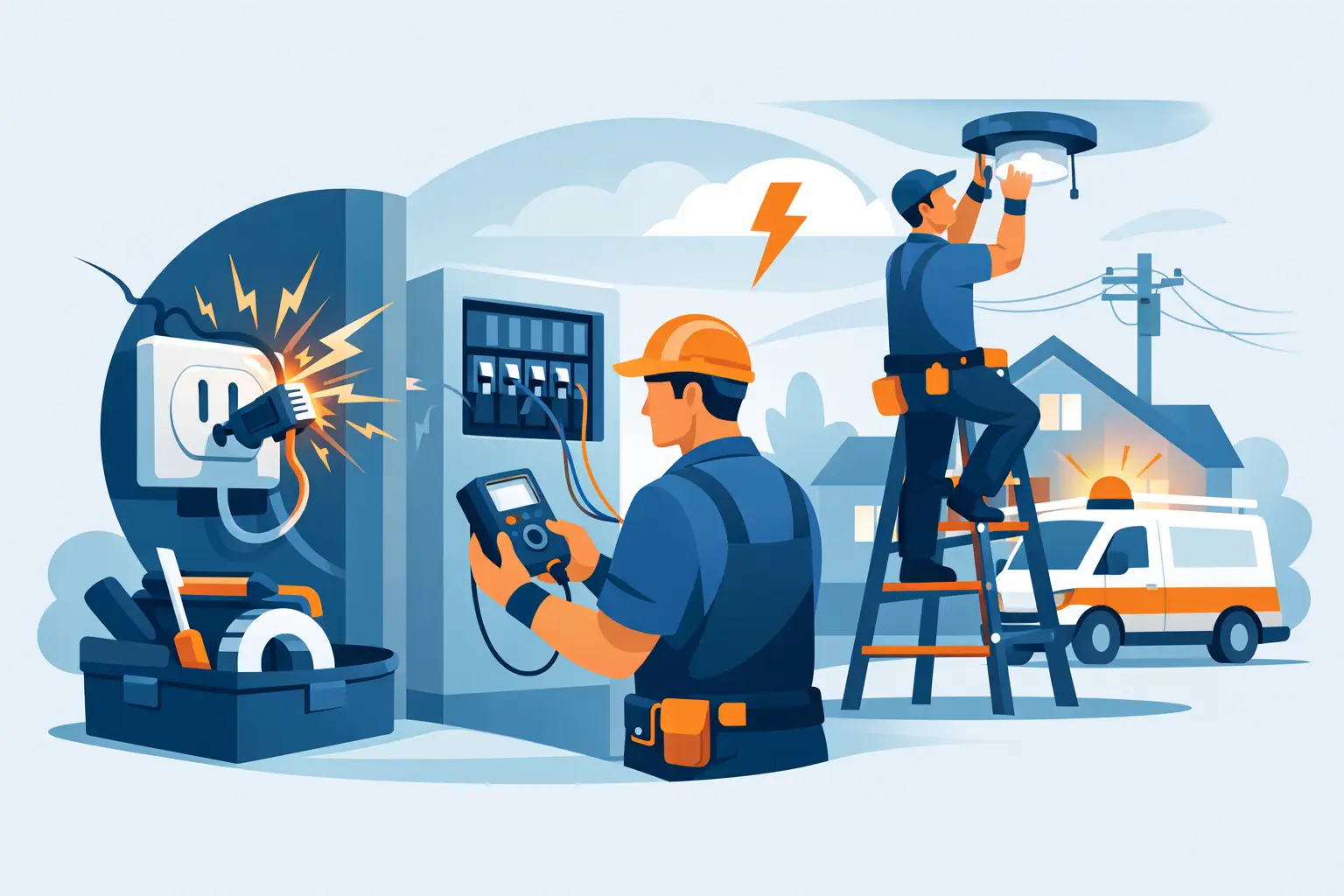
A burning smell near an outlet, a fuse board that keeps tripping, lights flickering for no clear reason – these are not jobs to leave until Monday. When you need an emergency electrical repairs service, speed matters, but so does getting the fault diagnosed properly. A quick fix that ignores the real cause can leave you in the same position a few days later, or worse.
For homeowners, landlords, and business owners, electrical faults tend to show up at the worst possible time. The freezer stops overnight. Part of the property loses power before tenants move in. A shop cannot open because lighting or sockets have failed. In those moments, what people want is simple: someone local who answers the phone, turns up when they say they will, and makes the issue safe without unnecessary fuss.
What counts as an electrical emergency?
Not every electrical issue is an emergency, but some are clear warning signs that need urgent attention. If you have burning odors, smoke, buzzing from sockets or switches, exposed wiring, repeated tripping, partial power loss, or signs of overheating around your panel or outlets, it is time to act. Water damage near electrical fittings is another one that should never be ignored.
There is also a middle ground where the situation depends on the property and how it is being used. A single dead outlet in a spare room may be inconvenient rather than urgent. The same fault in a kitchen, office, or retail space could stop normal use of the building. That is why a good emergency electrician will ask practical questions first, not just promise a fast arrival.
Why emergency electrical repairs service needs proper fault finding
In an emergency, people understandably focus on the visible problem. The breaker tripped. The lights went out. A socket stopped working. But the visible problem is often just the symptom.
A circuit breaker usually trips for a reason. It may be overloaded, but it may also be reacting to a short circuit, a damaged appliance, moisture getting where it should not, or deterioration in the wiring itself. Resetting it again and again without checking the cause is not a solution. It can actually make the situation riskier.
The same goes for flickering lights. Sometimes it is a simple fitting issue. Sometimes it points to loose connections, failing components, or an overloaded circuit. In older properties especially, a small fault can reveal a wider issue that has been building for some time.
That is the difference between a basic callout and a reliable emergency electrical repairs service. The job is not only to restore power or replace a damaged part. It is to identify what failed, why it failed, and whether anything else needs attention to keep the property safe.
What to do before the electrician arrives
The safest first step is usually to stop using the affected circuit or appliance. If a socket is hot, buzzing, or showing scorch marks, leave it alone. If a particular appliance seems to be causing the problem, unplug it only if it is safe to do so. If there is any sign of burning, smoke, or active sparking, switch off power at the main panel if you can do that safely.
Avoid DIY investigation beyond the basics. You should not remove covers, touch exposed wiring, or keep resetting breakers to see if the issue clears. Electrical faults do not improve with guesswork.
It helps to make a note of what happened and when. Did the fault start after using a certain appliance? Did one area lose power or the whole property? Were there storms, water leaks, or recent renovation work? These details can save time when the electrician arrives and speed up the repair.
Common emergency callouts in homes and businesses
A lot of urgent electrical callouts are more common than people think. Faulty sockets and switches are high on the list, especially where wear and tear has built up over time. Tripping circuits are another regular issue, particularly in kitchens, rental properties, and older buildings where electrical demand has changed over the years.
Fuse board problems also come up often. Sometimes the panel is doing its job and protecting the property from a fault elsewhere. Other times, the board itself is outdated or has components that need replacement. If the system is no longer suitable for the way the property is used, a repair may solve the immediate issue while a longer-term upgrade is recommended.
In commercial premises, lighting failures, damaged cables, and power loss to key equipment can quickly become costly. For landlords and property managers, emergency repairs often involve making a property safe for tenants first, then planning any larger remedial work once the immediate risk is under control.
The value of a local electrician in an emergency
When power is out or something smells like it is overheating, people do not want to wait in a national call center queue. They want a local tradesperson who knows the area, understands the types of properties nearby, and can give a realistic arrival time.
That local knowledge matters more than it might seem. Homes and business units across places like Middlesbrough, Teesside, and the wider North East can vary a lot in age, layout, and previous electrical work. A contractor used to working in the area is often better placed to spot recurring issues, whether that is aging wiring in older homes, overloaded circuits in extended properties, or recurring faults in busy commercial spaces.
A local service also tends to be more accountable. You are not dealing with an anonymous booking system. You are dealing with a business that relies on reputation, repeat work, and straightforward communication. That usually means clearer advice, fairer pricing, and a stronger focus on getting the job done properly the first time.
What a good emergency visit should look like
A proper emergency response should start with safety. The first priority is to assess the risk, isolate the fault if needed, and make the affected area safe. After that comes diagnosis and repair.
In some cases, the full repair can be completed there and then. A damaged socket can be replaced. A fault can be traced to an appliance. A failed component can be changed and the circuit tested. In other cases, the right short-term step is to make the system safe, restore partial power where possible, and return with parts or additional time for a more involved repair.
That does not mean the service has fallen short. It means the electrician is being honest about what is possible without cutting corners. Emergency work is about safe, practical decision-making, not rushed promises.
Emergency electrical repairs service and older systems
Older electrical systems often sit quietly in the background until an urgent fault forces a closer look. That does not always mean a full rewire is needed, but it can mean the property is overdue for upgrades.
If emergency faults keep returning, the issue may be bigger than a single damaged accessory. Repeated tripping, unreliable circuits, and overloaded boards can all point to a system that no longer matches modern demand. Homes now power more devices than they did years ago, and many commercial spaces have adapted over time without the electrical side being fully updated.
An honest electrician should tell you where the line is between repair and replacement. Sometimes a targeted fix is all that is needed. Sometimes spending a bit more on a board upgrade, rewiring work, or improved circuit design saves money and stress over the long run.
Choosing the right company when the pressure is on
In an emergency, it is easy to focus only on who can come fastest. Response time matters, but it should not be the only thing you look at. You also want clear communication, full insurance, practical experience, and someone who explains the issue in plain English.
That is especially true if you are responsible for other people, such as tenants, staff, or customers. You need confidence that the work is safe, compliant, and carried out with respect for the property. A good contractor will not bury you in jargon. They will tell you what has happened, what they have done, and whether anything else needs attention.
For local customers, that is where a business like BS Electrical stands out. The appeal is not flashy sales talk. It is dependable service, honest advice, and repairs handled by someone who understands both the technical side and the practical reality of your day being thrown off by an electrical fault.
When urgent repairs become a chance to prevent the next one
The best emergency repair is the one that solves today’s problem and helps stop the next one. Once the immediate fault is fixed, it is worth asking whether the issue points to a broader maintenance need. That might be an electrical safety inspection, replacing worn fittings, upgrading a fuse board, or checking circuits in a property that has changed use over time.
That follow-up step is often what separates a temporary fix from real peace of mind. If your electrics have given you one warning, it is sensible to listen to it.
When something goes wrong, the right response is not panic and it is not guesswork. It is getting a trusted local electrician involved quickly, making the property safe, and dealing with the cause before it turns into a bigger problem.