
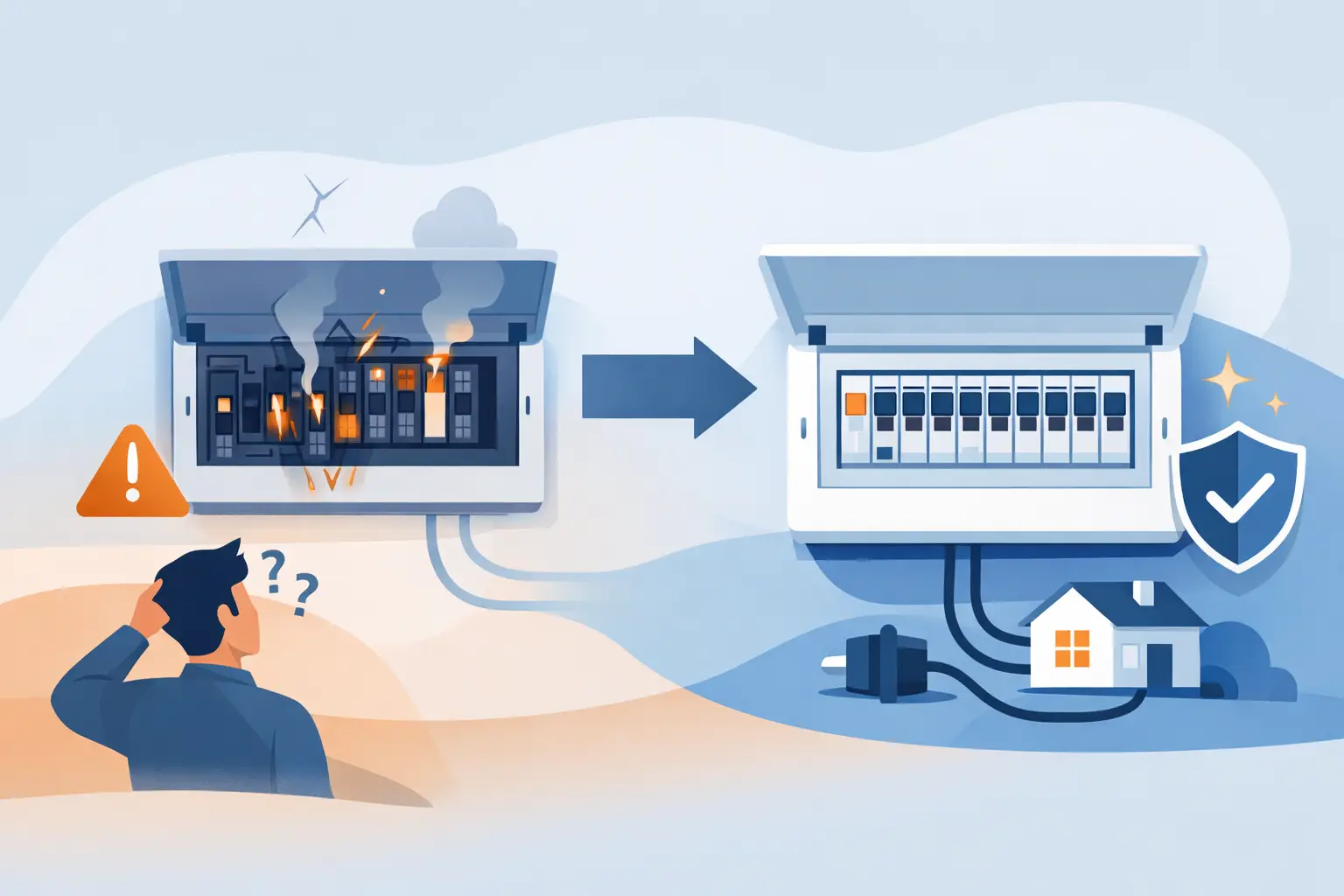
You usually do not think about your fuse board until the power cuts out, a breaker keeps tripping, or an electrician opens the cover and gives you that look. That is often how people first notice the signs you need a new fuse board. It sits quietly in the background, but it plays a big part in keeping your property safe.
For homeowners, landlords, and small business owners, an aging or faulty fuse board is not just an inconvenience. It can affect safety, insurance, day-to-day reliability, and whether your electrical system is still fit for how you use the building now. A modern setup can handle today’s demand far better than an older board designed for a very different time.
What a fuse board actually does
Your fuse board, also called a consumer unit or breaker panel, is the control point for your property’s electrical circuits. It distributes power around the building and is designed to cut the supply quickly if a fault is detected. That quick shut-off helps reduce the risk of electric shock, overheating, and fire.
Older boards often relied on basic fuses and had less protection built in. Newer fuse boards are designed to react faster and provide better fault protection across individual circuits. That does not mean every older board needs replacing straight away, but it does mean age, condition, and performance matter.
1. Your breakers trip again and again
One of the clearest signs you need a new fuse board is frequent tripping. If the same circuit keeps cutting out, there may be a fault on that circuit, but the board itself can also be part of the problem.
Sometimes the issue is straightforward. You may be overloading a circuit with too many appliances. In other cases, repeated tripping points to worn components, poor circuit separation, or a board that is no longer coping well with the electrical demand placed on it.
A good electrician will not just swap the board without checking the cause. Tripping is a warning sign, not a diagnosis on its own. Still, if it happens regularly, it should not be ignored.
2. You still have an old-style fuse box
If your property still has a traditional fuse box with rewirable fuses, that is one of the strongest signs you need a new fuse board. These older setups were common years ago, but they offer less protection and are far less convenient than modern breaker systems.
They can also make fault finding slower and less precise. Instead of a breaker simply switching off, an older fuse may need replacing manually, and that is not ideal when you want a safer, more reliable system.
Age alone does not always mean immediate danger, but old fuse boxes often come up during property inspections because they fall short of current expectations for electrical safety. If you are a landlord or planning to sell, that can quickly become an issue worth dealing with sooner rather than later.
3. There are signs of heat, burning, or damage
A fuse board should never show signs of scorching, melted plastic, burning smells, or buzzing noises. If it does, stop treating it as a minor electrical nuisance. Those are signs something may be overheating or arcing, and that can become dangerous fast.
Sometimes the damage is visible on the outside. Other times, the warning signs are more subtle, like a faint burning smell near the board or crackling when circuits are under load. Either way, this is not a wait-and-see situation.
In some cases, the problem may be a loose connection or a failing component rather than the entire board. But if the unit is damaged, outdated, or already showing heat stress, replacement is often the sensible long-term fix.
4. You are adding new circuits or upgrading the property
A fuse board that was fine ten or twenty years ago may no longer be suitable if the property has changed. Kitchen upgrades, electric showers, home offices, EV chargers, air conditioning, workshops, and extension work all add extra demand.
If you are planning improvements, an electrician may recommend a new fuse board to make sure the system can be expanded safely and brought up to a better standard at the same time. This is especially common in older homes where the original electrical setup was designed for far fewer appliances.
This is one of those cases where it depends on the broader condition of the installation. Sometimes a board still has capacity and proper protection. Sometimes it is already stretched, and adding more to it is not the right move.
5. Your lights flicker or power feels unreliable
Flickering lights do not always mean you need a new fuse board. The cause could be anything from a loose connection to a faulty fitting or an issue with a specific circuit. But when power problems happen across different parts of the property, the fuse board becomes one of the places an electrician will want to inspect.
You might notice lights dimming when appliances switch on, sockets that stop working intermittently, or certain circuits behaving unpredictably. These symptoms can point to faults within the board, aging protective devices, or connections that have deteriorated over time.
The key point is this: if your electrical system feels unreliable, it needs proper testing. Guesswork is not enough when safety is involved.
6. It fails an inspection or gets flagged on a report
For landlords, buyers, and business owners, this is often when the issue becomes impossible to ignore. An electrical inspection may flag the fuse board as outdated, lacking modern protection, poorly labeled, damaged, or unsuitable for continued use.
That does not always mean the whole property is unsafe, but it does mean the board is no longer meeting the standard expected for a safe and dependable installation. If you have been given a report with observations about the consumer unit, it is worth getting clear advice on whether repair or replacement is the better option.
A replacement can often solve several issues at once, especially if the existing board has multiple shortcomings rather than one isolated fault.
7. You have no RCD protection
If your fuse board does not have RCD protection, that is another major sign you need a new fuse board. An RCD is designed to cut power quickly if it detects certain dangerous faults, helping reduce the risk of electric shock.
Many older boards do not include this level of protection, or they only provide limited coverage. That can leave circuits without the safeguards now expected in modern installations.
This matters even more in properties with outdoor sockets, kitchens, bathrooms, garages, or any area where the risk is higher. If your board does not provide proper protection where it should, replacement is often the most practical answer.
When a repair might be enough
Not every fuse board problem means a full replacement. A single faulty breaker, a loose connection, or a clearly identified issue on one circuit may be repairable if the rest of the board is in good condition and still suitable for the installation.
That is why a proper inspection matters. Honest advice should come first. A decent electrician should tell you if a repair is enough, and they should also tell you when replacing the board is the smarter investment rather than patching an old system that is already past its best.
Why replacement is often worth it
A new fuse board is not only about compliance. It can make your electrical system safer, easier to manage, and more dependable day to day. Faults are easier to identify, circuits can be better organized, and you get protection that is more in line with how modern properties are actually used.
For landlords, it can help support safer tenancies and smoother inspections. For homeowners, it offers peace of mind. For businesses, it reduces the chances of nuisance outages disrupting work.
If you are already dealing with repeated faults, upcoming renovation work, or an inspection report that raises concerns, replacing the board can be more cost-effective than repeatedly paying for small fixes on an outdated unit.
What to do if you suspect your fuse board is outdated
If any of these signs sound familiar, the next step is simple: have the system checked by a qualified electrician. Do not remove covers, do not try to diagnose it yourself, and do not ignore warning signs like heat damage or recurring trips.
A proper assessment should look at the board itself, the condition of the circuits, the level of protection in place, and whether the setup matches the needs of the property. For local customers across Teesside and the North East, BS Electrical takes a straightforward approach – honest advice, clear pricing, and work done properly the first time.
Electrical problems rarely improve by being left alone. If your fuse board is showing its age, getting it checked now can save you a much bigger problem later.