
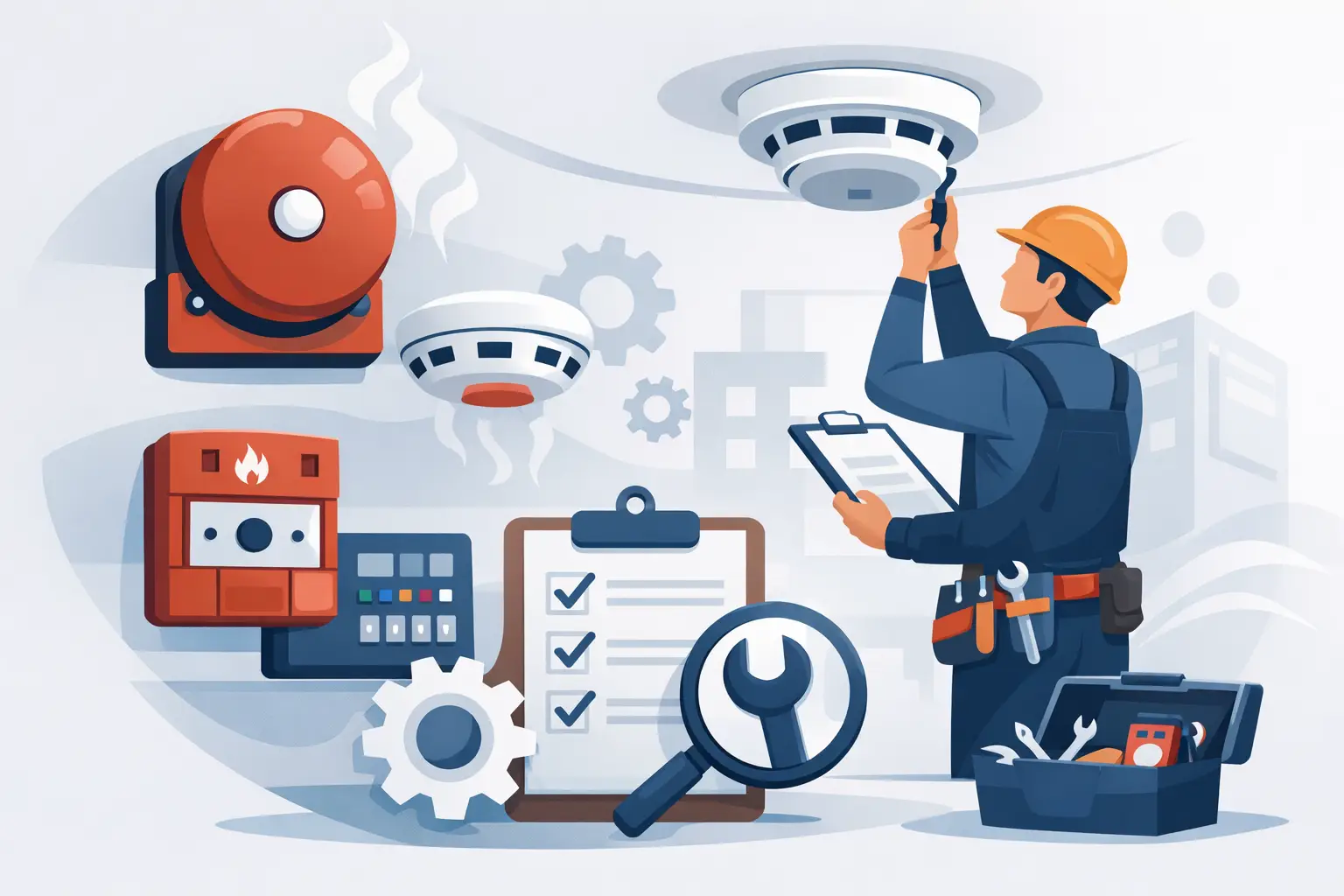
A fire alarm that stays quiet during a real emergency is worse than no alarm at all because it gives people a false sense of security. That is why fire alarm maintenance requirements matter so much. Whether you own a home, manage rental property, or run a small business, the system needs more than a quick glance at the control panel.
For most people, the hard part is not understanding that maintenance matters. It is knowing what actually needs to be done, how often, and where the line is between a simple user check and work that should be handled by a qualified professional. The answer depends on the type of property, the system installed, and how heavily the building is used.
What fire alarm maintenance requirements usually involve
At a practical level, fire alarm maintenance requirements are about making sure the system can detect a fire, warn occupants quickly, and keep working when it is needed most. That includes checking detectors, sounders, batteries, control equipment, manual call points where fitted, and any connection to monitoring or other safety systems.
Maintenance is not just about finding faults after they appear. It is also about spotting early signs of wear, damage, contamination, low battery backup, or poor detector performance before they become a safety issue. Dust, decorating work, accidental knocks, moisture, and age can all affect reliability.
There is also a records side to it. In many settings, especially commercial properties and rentals, it is not enough to say the alarm was tested. You need a clear record of when checks were carried out, what was found, and what action was taken.
Why maintenance is different for homes, rentals, and businesses
A single-family home with a few interconnected smoke alarms has very different needs from a shop, office, or apartment building with a full fire alarm panel. That sounds obvious, but it is where many people get caught out. They assume the same routine applies everywhere.
In a home, maintenance is often fairly straightforward. You should test alarms regularly, replace batteries where required, keep sensors free from heavy dust build-up, and replace units when they reach the end of their service life. If alarms are hardwired and interconnected, faults should be checked properly rather than ignored because one chirping or flashing unit can affect confidence in the whole system.
In rental property, landlords usually have a higher level of responsibility because they are expected to provide working life safety equipment and keep it in proper order. That means testing between tenancies, responding quickly to reported faults, and making sure alarms are suitable for the layout and use of the property.
In commercial premises, the expectation is higher again. A business owner or responsible person may need regular scheduled inspection, testing, record keeping, and prompt repair of faults. If the system protects staff, customers, stock, or shared premises, routine maintenance is part of basic risk control, not an optional extra.
The checks most property owners can handle
There are some routine tasks that owners, managers, or occupants can usually do themselves. The most common is a simple functional test. That means pressing the test button on an alarm or carrying out a basic user test on the system in line with the manufacturer instructions and site procedures.
A visual check also goes a long way. Look for anything obvious such as physical damage, warning lights showing a fault, missing detector covers, loose fittings, or devices that have been painted over during redecoration. It happens more often than people think, and paint or heavy dust can stop a detector from doing its job properly.
You should also pay attention to nuisance alarms. One false activation may be a minor issue. Repeated false alarms usually point to a problem with detector location, contamination, environmental conditions, or a failing device. Ignoring that pattern is a mistake because people start treating alarms as background noise.
When professional fire alarm maintenance is the safer option
Once you move beyond simple user tests, professional maintenance becomes the sensible route. A trained engineer can test devices more thoroughly, inspect the panel, check battery condition and charging, confirm detector response, and identify faults that are not visible day to day.
This matters even more in commercial buildings or larger residential properties where multiple devices, zones, sounders, and backup power supplies are involved. If part of the system is isolated, out of service, or not communicating properly, that may not be obvious to someone without the right experience.
A professional service also helps with consistency. Jobs get logged, faults are documented properly, and any repairs or recommendations are clear. For landlords and businesses, that paper trail can be just as important as the physical test itself.
Common issues that affect compliance and reliability
One of the biggest problems with fire alarms is neglect that builds up slowly. The system appears fine because nothing dramatic has happened, but over time batteries weaken, detectors get dirty, labels fade, and faults are left unaddressed.
Another common issue is using the wrong type of detector in the wrong place. A smoke alarm too close to a kitchen or bathroom may cause repeated false alarms. Move it without proper thought, though, and you may reduce coverage where it is actually needed. Good maintenance includes reviewing whether the system still matches the space.
Property changes can also create problems. A room gets converted into an office, storage area, or bedroom. A wall is added. A ceiling is lowered. These changes can affect alarm coverage, audibility, and access to devices for testing. Maintenance is not only about the equipment staying functional. It is also about whether the system still suits the building as it is now used.
Fire alarm maintenance requirements and record keeping
Record keeping sounds like admin, but it serves a real purpose. If a fault keeps appearing, maintenance records help show whether it is a recurring issue, a failed repair, or a new problem. They also help demonstrate that checks were carried out at sensible intervals.
For landlords, property managers, and business owners, written records can provide reassurance if questions ever arise about whether the system was being maintained properly. A notebook, digital log, or service report can all work if the information is clear and consistent.
The useful details are simple: date of test or service, what was checked, whether the alarm sounded as expected, any faults found, and what action followed. If a device was replaced, battery changed, or repair recommended, that should be noted too.
How often should a fire alarm be checked?
This is where people often want a one-size-fits-all answer, but it depends on the system and the building. A homeowner with basic alarms will not have the same routine as a warehouse, retail unit, or multi-occupancy property.
As a rule, regular user testing is sensible, and professional inspection should be scheduled often enough to keep the system dependable and to meet the needs of the property. High-use or higher-risk buildings may need more frequent attention than low-risk settings. If the alarm protects sleeping occupants, the margin for error is smaller.
The safest approach is to follow the manufacturer guidance for the equipment installed and, where relevant, arrange maintenance based on the type of premises and your responsibilities as owner, landlord, or employer. If you are unsure, getting the system assessed properly is usually cheaper than dealing with a preventable failure later.
What to expect from a proper maintenance visit
A proper maintenance visit should be more than a quick button press and a signature. The engineer should inspect the main parts of the system, test operation, identify faults or areas of concern, and explain anything that needs repair or replacement in plain language.
You should also expect honesty. Sometimes the fix is small, such as a battery issue, a contaminated detector, or a device nearing end of life. Sometimes the bigger issue is that the existing setup is outdated or no longer right for the building. A good contractor will tell you the difference instead of pushing unnecessary work.
For local property owners, that straightforward approach matters. If you are calling someone into your home, rental, shop, or office, you want clear advice, fair pricing, and work done properly the first time. That is the kind of no-nonsense service BS Electrical aims to provide.
The cost of putting it off
Skipping maintenance can save a little money in the short term, but it increases the chance of false alarms, system faults, tenant complaints, business disruption, and worst of all, an alarm that fails when people need warning. The real cost is not only financial. It is the risk that a basic safety system cannot be trusted.
If your fire alarm has not been checked in a while, has recurring faults, or you are not sure whether the current setup still fits the property, it is worth dealing with now rather than after a problem forces the issue. Peace of mind usually starts with knowing the alarm will do its job when the building cannot afford a second chance.