
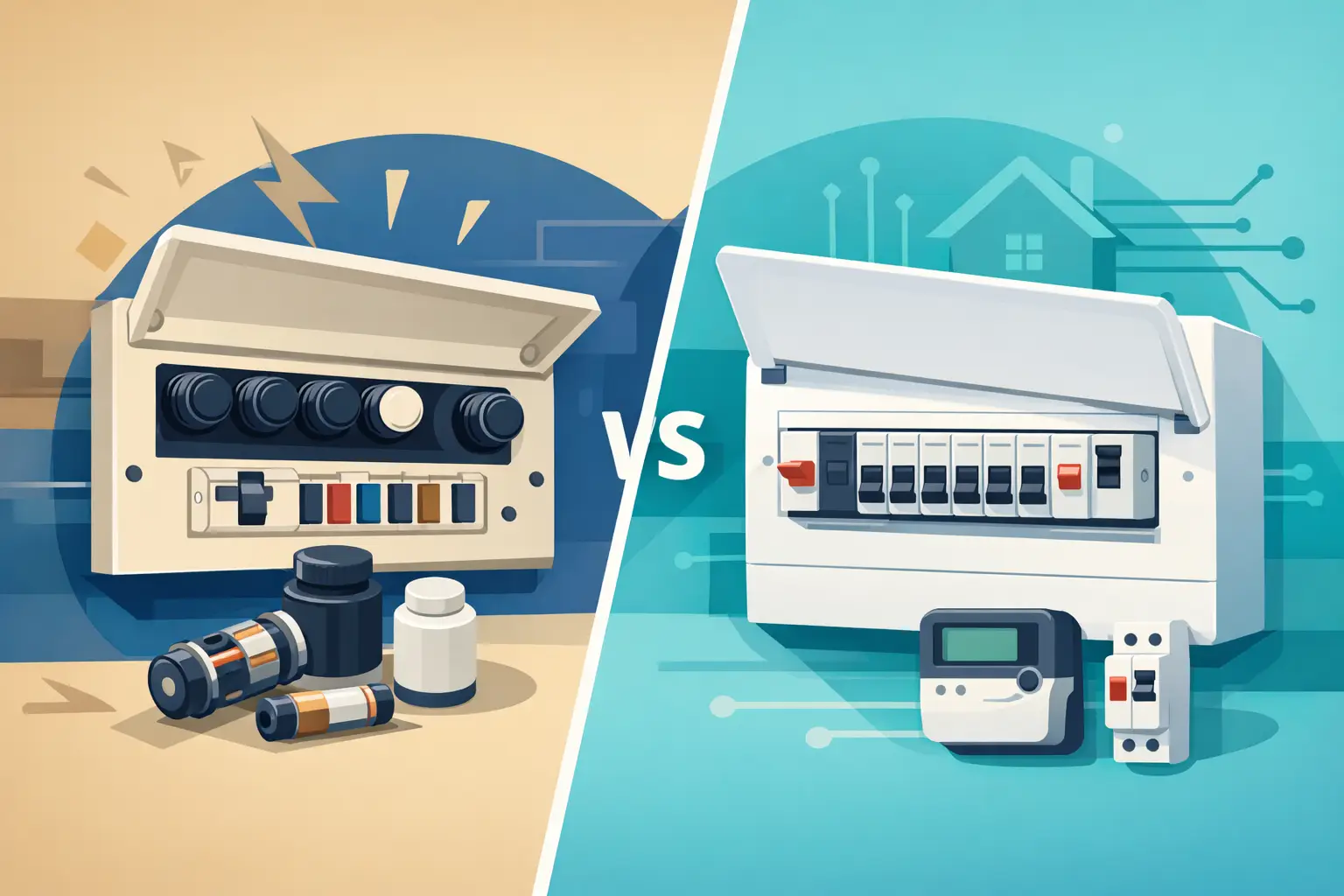
If an electrician tells you your panel needs attention, the phrase fuse board vs consumer unit can sound more complicated than it really is. In plain terms, people often use both names to talk about the main electrical distribution point in a property. The difference is usually about age, design, and safety features rather than two completely separate systems.
For homeowners, landlords, and business owners, that difference matters because older equipment may still work while falling short of modern safety expectations. If you have flickering circuits, nuisance tripping, or an old unit with rewirable fuses, it is worth understanding what you are actually looking at before deciding on a repair or replacement.
Fuse board vs consumer unit: what is the difference?
A fuse board is the older term many people still use. In older properties, it often refers to a unit that uses traditional fuses. These fuses are designed to break the circuit if there is too much current, helping prevent overheating and fire risk. Once a fuse blows, it usually needs replacing before power is restored.
A consumer unit is the more modern name for the same general part of the electrical system. Instead of older fuse wire or cartridge fuses, most modern consumer units use circuit breakers and additional safety devices. These can trip faster, be reset more easily, and offer better protection against electric shock and certain fault conditions.
So when people ask about fuse board vs consumer unit, the honest answer is that they both refer to the box that controls and protects your circuits. The real distinction is that a fuse board usually suggests an older setup, while a consumer unit usually means a newer, upgraded version with better safety built in.
Why newer consumer units are considered safer
The biggest improvement in a modern consumer unit is not just convenience. It is the level of protection it can provide.
Older fuse boards were built for the standards of their time, but electrical demand has changed. Homes now run more appliances, more electronics, and often more high-load equipment than they did decades ago. A modern consumer unit is designed to cope with those demands more effectively while also reducing risk.
Many newer units include residual current protection, which helps cut power quickly if a fault is detected that could otherwise lead to electric shock. They also use miniature circuit breakers, which can be reset after a trip instead of needing a fuse replaced. Some setups include surge protection too, which can help protect sensitive equipment from voltage spikes.
That does not mean every old fuse board is immediately dangerous. Some older installations are still functioning. The issue is that functioning and meeting current safety expectations are not always the same thing. A system can appear to work normally while still lacking protections now considered standard.
How to tell what you have
You do not need to be an electrician to spot a few basic signs.
If your unit has old-style fuse carriers, visible fuse wire, or ceramic fuses, you are likely dealing with an older fuse board. If your circuits are controlled by switch-like breakers that can be flipped back on after tripping, you probably have a consumer unit.
You may also notice labeling that looks dated, a wooden backing board, or signs that the unit has been altered over the years. In some cases, the box itself may not be the only concern. Older wiring, poor additions, or a mix of old and newer components can all affect safety.
The safest way to know for sure is to have it inspected. A proper electrical inspection can tell you whether the setup is in good condition, whether it is suitable for current use, and whether an upgrade is recommended.
When a fuse board upgrade makes sense
There is no one-size-fits-all answer here. Some properties need an upgrade urgently. Others simply benefit from one as part of planned maintenance or renovation work.
If you are adding new circuits, installing an EV charger, updating a kitchen, converting a loft, or carrying out a rewire, an older fuse board may not be suitable for the new demand. In those cases, replacing it with a modern consumer unit often makes practical sense as well as improving safety.
Landlords should also pay attention. Rental properties need electrical systems that are safe and properly maintained. An outdated board does not automatically fail an inspection, but if it lacks key protections or shows signs of wear, replacement may be the smarter long-term option.
For business owners, downtime matters just as much as safety. Older boards can be harder to maintain, slower to fault-find, and less reliable under modern use. A newer consumer unit can make future maintenance more straightforward and reduce disruption when issues do happen.
Warning signs you should not ignore
Sometimes the need for action is fairly obvious. If circuits trip regularly, fuses blow often, or parts of the system feel warm, there may be an overload or a fault that needs attention.
Other signs are less dramatic but still worth checking. Buzzing sounds, scorch marks, a burning smell, missing blanks, cracked casings, or outdated labeling should never be brushed aside. If the board looks messy or has had multiple additions over time, it may not be as safe or organized as it should be.
Age on its own is not the only factor, but it does matter. If the unit has not been assessed in many years, especially in an older property, it is sensible to get it looked at rather than waiting for a problem.
Repair or replace?
This is where a lot of people want a simple yes or no, but it depends on the condition of the installation.
If the issue is a single faulty breaker in an otherwise modern, compliant consumer unit, repair may be the right route. If the board is old, lacks modern protection, has signs of wear, or is undersized for the property, replacement is usually the better investment.
A good electrician should explain the reason clearly. You should know whether the recommendation is based on safety, capacity, condition, compliance, or a mix of those factors. Honest advice matters here because not every fault means you need a full replacement, but equally, patching up an outdated board is not always the cheapest option in the long run.
What happens during a consumer unit replacement?
Most people worry this job will be more disruptive than it actually is. In most cases, the old unit is removed, the circuits are tested and identified, and the new consumer unit is installed and properly connected. Once fitted, the system is tested to confirm everything is operating safely.
The power will need to be off during the work, so some planning helps, especially in homes or business premises where power is needed throughout the day. A professional electrician should explain the process beforehand, keep disruption sensible, and leave the installation clearly labeled and tidy.
In some properties, replacement can also reveal other issues such as old wiring defects or circuits that need further attention. That is not a sign the upgrade was unnecessary. It usually means the new testing has identified problems that were already there but had gone unnoticed.
Fuse board vs consumer unit: the cost question
Cost matters, and most customers want to know whether an upgrade is worth paying for now or whether they can leave it a bit longer.
The answer depends on the size of the property, number of circuits, condition of the wiring, and whether any extra work is needed at the same time. A straight replacement is simpler than a job where old wiring needs correction or new circuits are being added.
What is worth keeping in mind is the value beyond the upfront price. A modern consumer unit can improve safety, make faults easier to isolate, support future upgrades, and give you more confidence that the system is fit for current use. That is especially relevant if you are buying, selling, renovating, or renting out a property.
For local customers who want straight answers, this is the sort of job where practical advice counts for a lot. A trusted contractor such as BS Electrical will usually tell you whether your existing setup is serviceable, whether replacement is advisable, and what the job would involve without dressing it up.
If you are unsure what is installed in your property, do not guess and do not wait for a failure to force the issue. A quick inspection can give you a clear picture, and that peace of mind is often worth more than the box on the wall itself.