
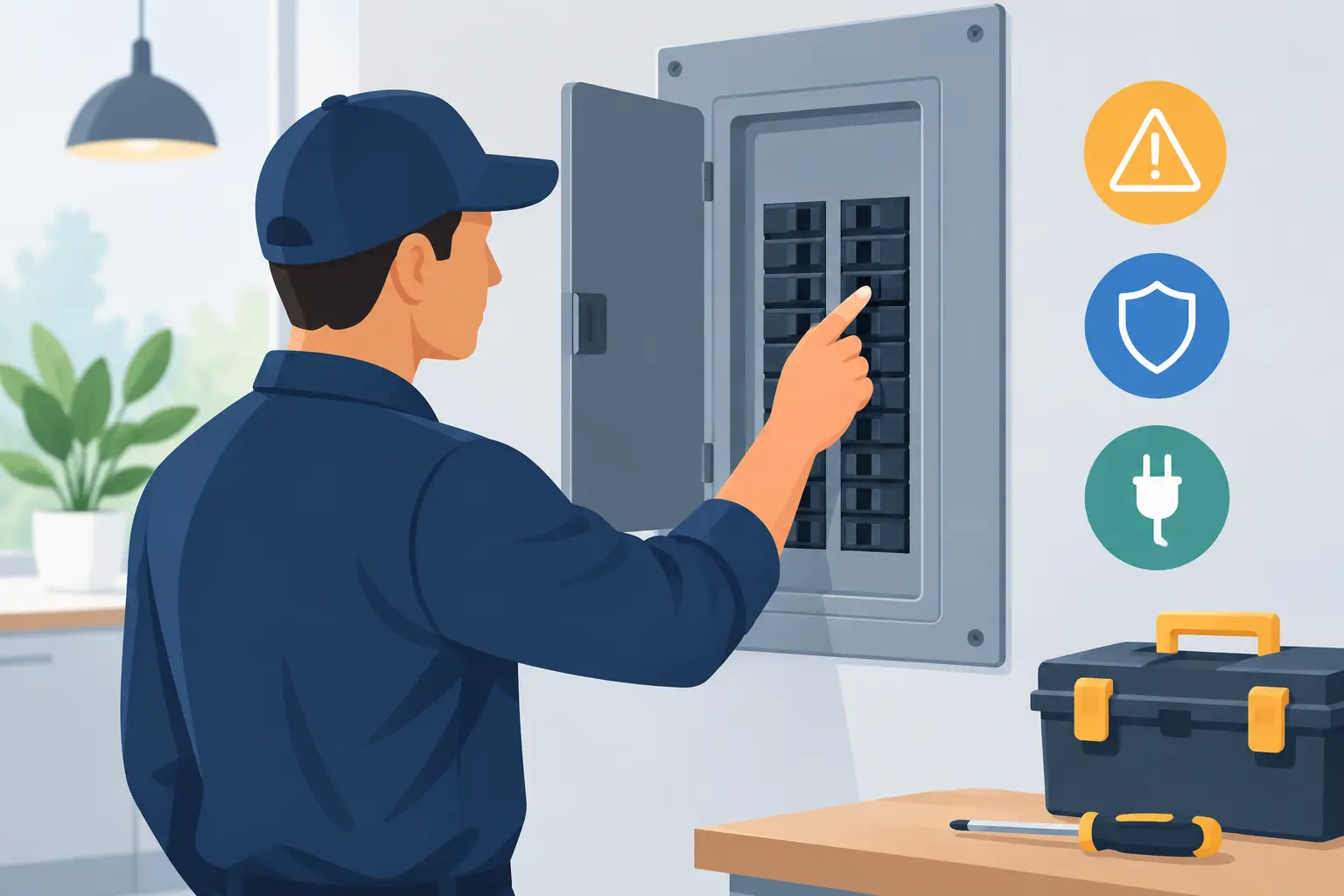
A breaker that trips once may be a simple overload. A breaker that keeps tripping is your electrical system telling you something needs attention. Knowing how to troubleshoot tripping breakers can help you narrow down the cause without taking risks, protect your appliances, and know when it is time to bring in a qualified electrician.
The key is not to keep forcing the breaker back on. Circuit breakers are designed to cut power when they detect a fault, overload, or possible shock hazard. Resetting one without checking what caused the trip can turn a small problem into damaged wiring, a ruined appliance, or a fire risk.
Start by Identifying What Tripped
Go to your breaker panel and look for the switch that has moved to the middle position or fully to OFF. Some breakers have a clear trip indicator, while others can look only slightly out of line with the rest. To reset it properly, move it firmly all the way to OFF first, then back to ON.
Before doing that, take a moment to identify what lost power. Was it one bedroom, the kitchen outlets, the garage, or the entire property? Did the trip happen when you switched on a specific appliance, ran several items at once, or during bad weather? Those details make fault finding much quicker.
If the main breaker has tripped and the whole building has lost power, do not assume it is a routine overload. Check whether nearby properties are also without power, as this may be a utility supply issue. If the problem is limited to your property and the main breaker will not stay on, leave it off and call an electrician.
How to Troubleshoot Tripping Breakers Safely
Start with the safest possible test. Switch off or unplug everything on the affected circuit before resetting the breaker. That includes obvious items such as lamps and appliances, but also phone chargers, extension cords, outdoor equipment, and anything hardwired that you can safely switch off at its local control.
Once the circuit is clear, reset the breaker once. If it stays on, reconnect items one at a time. Pause after each item is switched back on. If the breaker trips when a particular appliance is plugged in or turned on, stop using that appliance until it has been repaired, replaced, or checked by a competent professional.
If the breaker trips immediately with everything unplugged, the fault is more likely to be in the wiring, an outlet, a light fitting, a fixed appliance, or the breaker itself. That is not a DIY repair. Keep the breaker off and arrange for professional testing.
Never remove the cover of the breaker panel, touch exposed conductors, or try to replace a breaker yourself. There can still be live parts inside the panel even when an individual breaker is switched off.
The Most Common Reasons a Breaker Trips
A tripping breaker usually falls into one of four categories:
- Overload: Too many appliances are drawing power from one circuit at the same time.
- Short circuit: A live wire touches a neutral wire or another conductive part, creating a sudden surge of current.
- Ground fault: Electricity takes an unintended path to ground, often through damaged wiring, moisture, or a faulty appliance.
- Arc fault: Damaged or loose wiring creates sparking that can generate heat inside walls, outlets, or connections.
An overload is usually the simplest issue to spot. Kitchens, utility rooms, garages, workshops, and home offices are common trouble spots because they often have power-hungry equipment running together. A microwave, kettle, toaster oven, and portable heater on the same circuit can push it beyond its capacity. The fix may be as straightforward as spreading appliances across different circuits, but repeated overloads can also show that the property needs additional circuits or an electrical upgrade.
A short circuit or ground fault can be less obvious. You may notice a burning smell, buzzing, a discolored outlet, a damaged cord, a warm switch plate, or a breaker that trips as soon as it is reset. Water is another common cause, especially in bathrooms, kitchens, garages, basements, outdoor outlets, and areas where plumbing has leaked.
Check the Appliances Before Blaming the Wiring
Portable appliances cause a fair number of breaker trips. Inspect the plugs and cords on anything connected to the affected circuit. Look for crushed cables, split insulation, bent plug pins, scorch marks, loose connections, or signs that an extension cord has overheated.
Pay particular attention to equipment that creates heat or uses a motor. Space heaters, air fryers, washing machines, dryers, refrigerators, power tools, vacuum cleaners, and older kitchen appliances can all develop faults that trip a breaker. An appliance that works intermittently is not necessarily safe. If it trips the circuit once, do not keep testing it repeatedly.
Extension cords and power strips deserve a close look too. They are useful for temporary needs, but they are not a solution for a lack of outlets. Daisy-chaining power strips, running cords under rugs, or using undersized extensions for heaters and large tools can cause overheating long before a breaker trips.
Do Not Forget GFCI Outlets
In many homes, outlets in damp or high-risk areas are protected by GFCI outlets. These have TEST and RESET buttons and are designed to shut off power quickly if they detect a ground fault. A tripped GFCI can make several outlets appear dead, even if the breaker itself has not tripped.
If outlets have stopped working in a bathroom, kitchen, garage, basement, laundry area, or outdoors, check for a nearby GFCI outlet that needs resetting. It may be located in another room or area of the property. Reset it only if the area is dry and there are no signs of damage. If it trips again, leave it off and get it checked.
When a Tripping Breaker Is an Urgent Problem
Some warning signs mean you should stop troubleshooting and act quickly. Turn off power to the affected circuit if you can do so safely, keep people away from the area, and call an electrician promptly if you notice:
- A burning smell, smoke, sparks, or crackling noises
- A hot breaker panel, outlet, switch, or plug
- Melted plastic, discoloration, or scorch marks
- Water around electrical equipment or outlets
- Repeated trips with no appliances connected
- Flickering lights or shocks from switches and appliances
If there is smoke or fire, leave the property and contact emergency services. Do not use water on an electrical fire. A breaker trip can be an early warning, and it is always better to treat electrical warning signs seriously.
Older Properties and Growing Power Demands
Older homes are often more likely to experience nuisance trips, but the breaker is not always the problem. The original electrical system may have been designed for a much smaller load than a modern household uses. Home offices, induction cooking, EV charging, air conditioning, workshops, and extra entertainment equipment all add demand.
The right solution depends on the cause. Replacing a worn outlet may solve one fault. Adding a dedicated circuit may be the sensible answer for a new appliance. In other cases, damaged cable, outdated protective devices, or a crowded panel needs a more thorough repair or upgrade. Simply fitting a larger breaker to stop trips is dangerous unless the circuit wiring is rated for it, which is why this decision must be made by an electrician.
For landlords and business owners, recurring trips should be documented rather than ignored. Note the date, area affected, equipment in use, and what happened just before the power went off. This gives an electrician a useful starting point and helps show whether the issue is isolated or becoming more frequent.
Get the Fault Found Properly
A breaker that trips once after a clear overload may not need anything more than better use of the circuit. A breaker that trips repeatedly, trips without a clear reason, or is accompanied by heat, damage, or flickering needs professional fault finding.
BS Electrical provides straightforward electrical testing and repairs for homeowners, landlords, and businesses across Middlesbrough, Teesside, and the wider North East. The aim is to find the actual cause, explain the options clearly, and carry out only the work that is needed.
Leave a circuit off when it is showing signs of a fault. A few hours without one outlet or appliance is far safer than repeatedly resetting a breaker and hoping the problem goes away.