
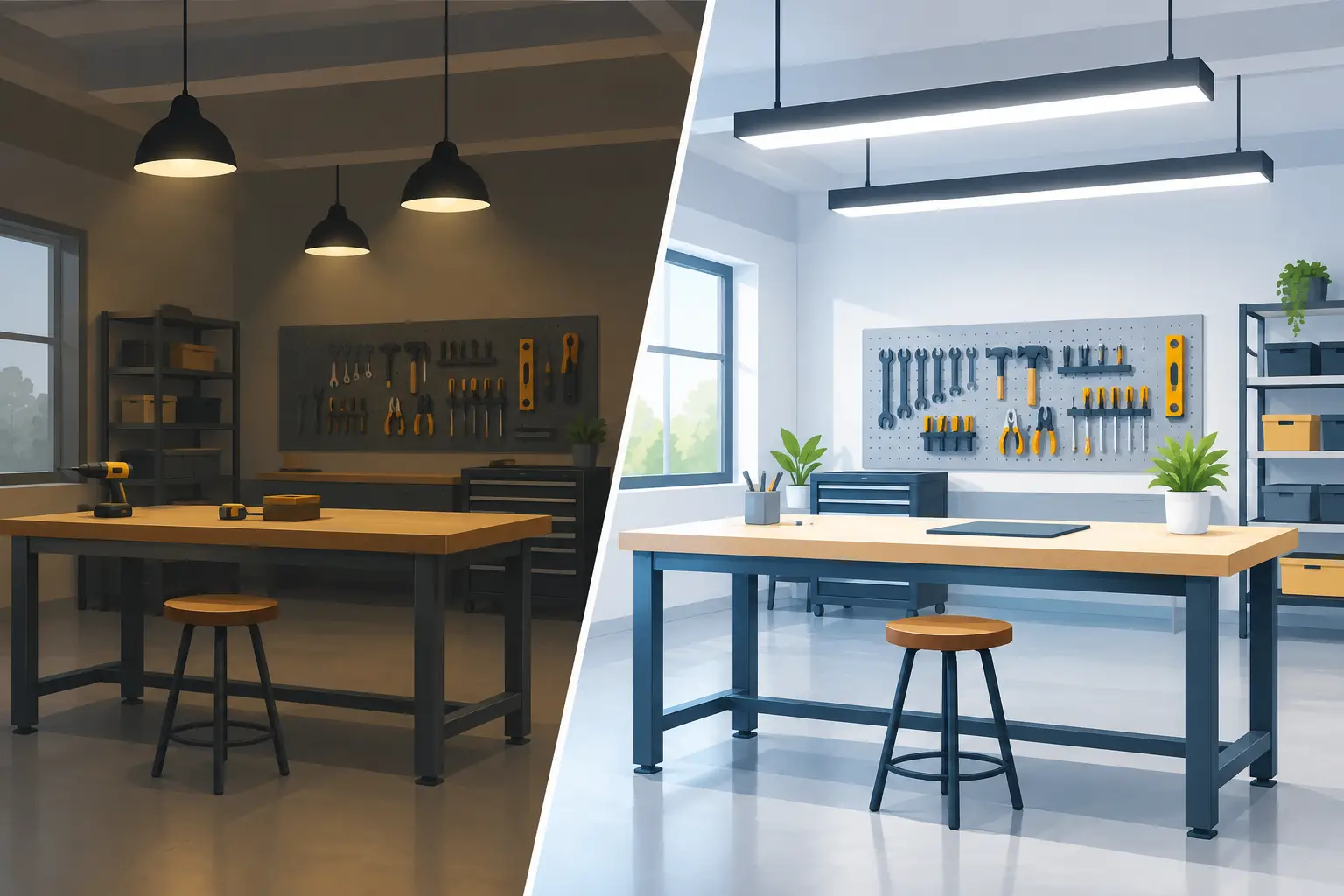
Poor shop lighting costs more than many owners realize. It can make detailed work harder, hide hazards, put staff and customers off, and add unnecessary expense to every electricity bill. Knowing how to upgrade shop lighting starts with looking beyond a few dim fittings and planning light around the work that actually happens in the space.
Whether you run a retail unit, garage, warehouse, salon, workshop, or small office, the right lighting should make the premises feel safer, cleaner, and easier to use. A well-planned upgrade does not have to mean a major disruption, but it does need to be designed and installed properly.
Start by identifying what is not working
Walk through the shop at different times of day and ask staff where lighting causes problems. You may find dark aisles, glare at counters, shadows over workbenches, flickering fixtures, or areas that rely too heavily on daylight. These are useful signs that the layout, not just the bulbs, needs attention.
Older fluorescent tubes, halogen spotlights, and worn-out fittings often use more power than necessary and produce uneven light. They may also take time to reach full brightness, hum, flicker, or need frequent lamp changes. Replacing a failed bulb can help temporarily, but it will not fix a lighting design that no longer suits the premises.
Think about the purpose of each area. A stockroom needs clear, broad visibility. A checkout area needs bright but comfortable light for staff and customers. A workshop may need stronger, more focused lighting for accurate tasks. Retail displays often benefit from accent lighting that brings out products without creating harsh reflections.
How to upgrade shop lighting with a clear plan
The best approach is to separate general lighting from task and feature lighting. General lighting provides the everyday level of brightness across the room. Task lighting supports specific jobs, such as reading labels, preparing orders, repairing equipment, or working at a desk. Feature lighting draws attention to displays, signage, or important customer areas.
A lighting upgrade should begin with a proper assessment of the space, including ceiling height, room size, natural light, fitting locations, wiring condition, and how the area is used. It is tempting to simply replace existing fixtures in the same positions, but that can repeat the problems you already have.
For example, a row of old fluorescent lights may have been installed when a workshop had a different layout. If benches, shelving, machinery, or counters have moved, the light should move with them. A professional electrician can advise on fitting placement and check whether the existing circuits are suitable for the new load and controls.
Before committing to a design, consider these practical questions:
- Are there areas where staff need to see fine detail or operate equipment safely?
- Do customers need clear, welcoming light near entrances, displays, and payment areas?
- Are shelves, counters, or machinery casting shadows where people work?
- Would separate switching allow unused areas to be turned off?
- Is emergency lighting required or already due for inspection and maintenance?
Answering these questions early helps prevent wasted money on fittings that look good but do not do the job.
Choose LED fittings that suit the space
For most shops and commercial work areas, LED lighting is the sensible starting point. LEDs use less electricity than many older lighting types, last longer, and come on at full brightness straight away. Over time, lower energy use and fewer replacement lamps can make a noticeable difference to operating costs.
However, LED is not one single product. The fitting type matters. LED panels can work well in offices, salons, and retail spaces with suspended ceilings because they give an even spread of light. Linear LED battens are a practical choice for stockrooms, garages, utility areas, and workshops. High-bay fittings may be more suitable where ceilings are high, while track lights or adjustable spotlights can work well for product displays.
Brightness is measured in lumens, not just watts. A higher wattage does not automatically mean better lighting, especially with modern LED fittings. The goal is enough useful light on the working surface, with good coverage across the room and without excessive glare.
Color temperature also changes how a shop feels. Warm white light can create a relaxed, welcoming atmosphere in customer-facing spaces. Neutral white is often a good all-around choice for retail and offices. Cooler white light can suit garages, workshops, and stock areas where a crisp, alert feel is useful. The right choice depends on the work, finishes, products, and natural light already in the space.
Do not overlook glare, shadows, and color quality
Brighter is not always better. A very powerful fitting in the wrong position can create glare on screens, polished counters, glass displays, or vehicle bodywork. It can also leave darker areas around shelving and equipment. Good shop lighting is about control and consistency, not simply adding more fixtures.
Color rendering is another detail worth considering. This affects how accurately colors appear under artificial light. In clothing stores, salons, food areas, paint shops, and anywhere products are selected by color, poor color rendering can make items look different from how they appear in daylight. Choosing suitable fittings can make displays more appealing and help customers make confident decisions.
For detailed tasks, it may be worth adding dedicated task lights instead of over-lighting the whole room. This gives staff the visibility they need while keeping energy use sensible. It also makes it easier to adjust the setup if workstations change later.
Add controls that reduce wasted energy
A lighting upgrade is a good time to improve how lights are controlled. One switch for an entire shop is simple, but it often means lights remain on in empty stockrooms, staff areas, or back offices.
Dividing the system into zones gives you more control. Front-of-house lighting, work areas, storage rooms, exterior lighting, and display lighting can operate separately. This allows you to light the parts of the premises that are in use without leaving every fixture running all day.
Motion sensors can be useful in low-traffic spaces such as restrooms, storage rooms, corridors, and service areas. Daylight sensors may help where large windows or skylights provide enough natural light for part of the day. Timers can also make sense for signage, exterior lights, and areas with predictable opening hours.
There is a trade-off. Sensors are not ideal everywhere. In a quiet office or behind a counter, a sensor may switch lights off while someone is sitting still. The controls should match how people use the area, not just what appears cheapest on paper.
Check the electrical installation before fitting new lights
New lighting should never be treated as a purely cosmetic job. Existing wiring, circuits, switches, and protective devices need to be suitable and safe. Older commercial properties may have outdated fittings, damaged cables, overloaded circuits, or alterations made over many years.
A qualified electrician can inspect the installation before work begins and identify anything that needs attention. This is particularly important when changing a large number of fittings, adding new circuits, installing emergency lighting, or fitting controls and external lights.
Emergency lighting deserves special attention in shops and business premises. It should provide a safe route out if normal lighting fails, with suitable coverage at escape routes, changes in level, exits, and safety equipment. Requirements vary depending on the building and its use, so this should be assessed as part of the overall job rather than added as an afterthought.
Plan the work around your business hours
For a busy shop, downtime matters. A good installation plan should consider when the space is least disruptive to work in, whether areas can be completed in stages, and how stock, displays, and equipment will be protected.
In some cases, lighting can be upgraded section by section outside normal trading hours. In others, a short closure may be the safer and faster option. The right choice depends on access, ceiling height, the amount of rewiring required, and whether other electrical work is being carried out at the same time.
Ask for a clear scope of work before the project starts. It should cover the fittings being installed, any wiring or switching changes, testing, cleanup, and what happens to the old fixtures. An honest quote should make it clear where the budget is going, rather than leaving you guessing after work has begun.
Get the job done properly from the start
The cheapest fitting is not always the most affordable option once energy use, replacement frequency, light quality, and installation costs are considered. A poorly planned upgrade can leave you with bright spots, dark corners, irritating glare, and controls nobody uses. Spending a little time on the design usually pays back every working day.
For businesses across Middlesbrough, Teesside, and the wider North East, BS Electrical provides practical lighting upgrades that consider safety, energy use, and how your premises operate. The aim is straightforward: lighting that works properly, looks right, and is installed with care.
If your shop feels dim, uneven, or more expensive to run than it should be, start with a walkthrough of the space and a clear conversation about what needs to improve. The right upgrade should make the working day easier long before you notice the saving on the bill.