
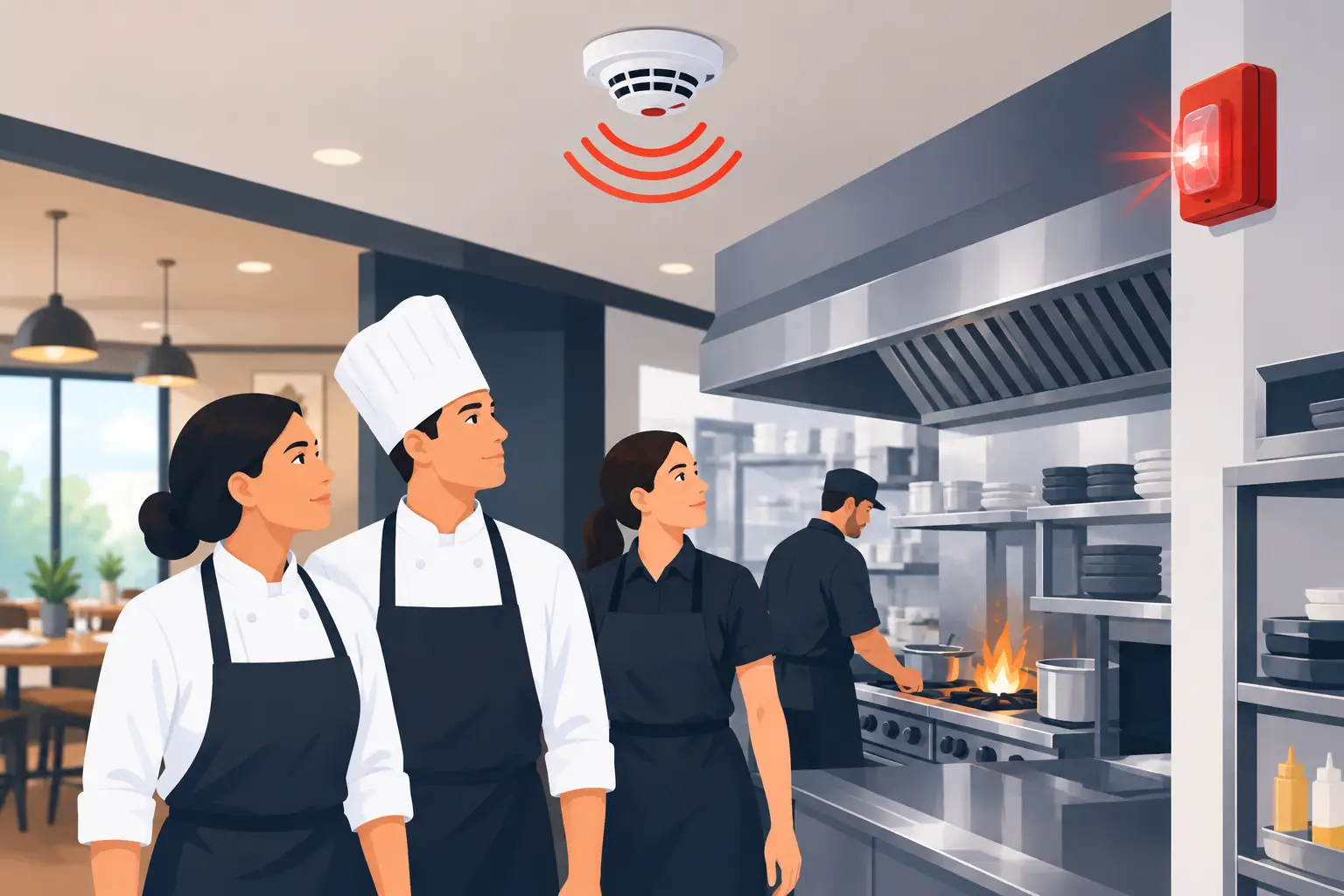
A busy kitchen can go from normal service to a serious incident in seconds. Grease buildup, high heat, overloaded equipment, and open flames all raise the stakes. Restaurant fire alarm systems give staff and guests the early warning they need to get out safely, while helping owners protect the premises, equipment, and continuity of the business.
For a restaurant owner, this is not simply a box-ticking exercise. A poorly planned system can cause repeated false alarms during service, disrupt customers, and lead staff to ignore a warning when it really matters. The right setup needs to suit the building, the kitchen operation, and the way the restaurant is used every day.
What a Restaurant Fire Alarm System Needs to Do
A fire alarm system should detect signs of fire quickly, warn everyone in the building clearly, and allow a safe response. In a small café, that may be relatively straightforward. In a larger restaurant with a commercial kitchen, storage rooms, staff areas, multiple floors, and separate customer spaces, it takes more careful planning.
The system usually includes detectors, manual call points, audible alarms, control equipment, and emergency lighting where required. Depending on the premises, it may also need to connect with other safety measures, such as automatic door releases, smoke control equipment, or remote monitoring.
The goal is early warning without unnecessary disruption. That balance matters in hospitality settings, where steam, cooking fumes, and high temperatures are part of normal daily operation.
Heat Detectors and Smoke Detectors Have Different Jobs
Smoke detectors are often suitable in dining rooms, hallways, offices, and other areas where smoke should never be present. They can identify a developing fire early, which can make a major difference to evacuation and damage limitation.
Commercial kitchens are different. Standard smoke detectors placed too close to cooking areas can activate because of steam or fumes, creating false alarms that interrupt service and undermine confidence in the system. Heat detectors are commonly more suitable in these locations because they respond to a rapid rise in temperature or a set heat level rather than everyday cooking smoke.
This does not mean every kitchen needs the same equipment. A small coffee shop kitchen, a takeaway with fryers, and a full-service restaurant each have different risks. A proper survey should consider the cooking methods, extraction system, layout, occupancy, and escape routes before any devices are selected.
Planning Restaurant Fire Alarm Systems Around Real Risks
A good installation starts with the building, not with a one-size-fits-all package. The areas with the highest fire risk are often obvious, but they still need to be assessed properly. Cooking equipment, electrical distribution boards, extraction canopies, dry goods storage, waste areas, and delivery routes can all affect the design.
The kitchen deserves close attention. Fryers, grills, ovens, microwaves, and refrigeration equipment can each introduce electrical or heat-related risks. Extraction systems also need regular cleaning and maintenance, because grease accumulation can allow fire to spread through ductwork. A fire alarm cannot replace good kitchen housekeeping, safe equipment use, or a suitable suppression system where one is needed. It is one part of a wider fire safety plan.
Escape routes must also be considered. Guests may not know the layout of the building, particularly in a crowded restaurant or a venue with toilets, private dining rooms, or an upstairs seating area. Alarm sounders need to be heard in all occupied spaces, including back-of-house areas where staff may be working with noisy equipment.
For some premises, visual warning devices may be appropriate too. These can help in loud environments or where there are people who may not hear an audible alarm clearly. What is required will depend on the building and its fire risk assessment.
Avoiding False Alarms Without Cutting Corners
False alarms are more than an inconvenience. They can mean lost bookings, interrupted meals, stressed staff, and an unnecessary response from emergency services. Repeated activations can also lead to complacency, which is the last thing any restaurant needs during a genuine emergency.
Most false alarms come down to poor detector choice, poor positioning, contamination, or a lack of maintenance. Installing a smoke detector directly outside a busy kitchen door, for example, may seem sensible at first glance but can cause repeated problems when steam escapes during peak service.
The answer is not to remove detectors or disable parts of the system. It is to use suitable detection methods in the right locations and keep the equipment maintained. A competent electrician can review a troublesome setup and recommend practical changes without compromising safety.
Consider the Whole Building, Not Just the Kitchen
A restaurant can have risks beyond the cooking line. Electrical faults in storage rooms, overloaded outlets behind the bar, laundry equipment, charging devices, and decorative lighting can all cause problems if they are not installed and maintained correctly.
Older properties can present further challenges. Wiring may have been altered over the years, extensions may have been added, and fire alarm devices may no longer match the current layout. If walls have moved, seating areas have changed, or a former storage room is now in use by staff, the existing system may need reviewing.
Regular electrical inspection and sensible upgrades go hand in hand with fire protection. Finding damaged wiring, loose connections, or overloaded circuits early helps reduce the chance of an electrical fire in the first place.
Testing and Maintenance Keep the System Reliable
An alarm system is only useful if it works when needed. Restaurants should have a clear routine for checking the system and recording tests. Staff need to know what the alarm sounds like, where manual call points are located, and what to do when an alarm activates.
Weekly user checks are common practice and normally involve testing a different manual call point each time, where safe to do so. The test should be recorded, along with any faults or issues found. This simple routine can identify a silent sounder, a fault indication, or a damaged call point before it becomes a bigger problem.
Periodic professional servicing is also essential. A qualified contractor can inspect detectors, control panels, batteries, sounders, wiring, and system operation. They can clean or replace components where required and check that the system is still suitable for the premises.
Do not wait until a fault light appears on the panel. Batteries age, detectors collect dust and grease, and small issues can develop quietly. Planned maintenance is generally far less disruptive and less costly than an emergency callout during a busy evening service.
Questions to Ask Before Installation or Upgrade
Before agreeing to a new fire alarm installation, restaurant owners should expect clear answers. The contractor should explain why particular detector types are being used, how alarms will be heard throughout the property, and what testing and servicing will be needed afterward.
It is also worth asking whether the system can accommodate future changes. If you are planning to extend the kitchen, add more covers, convert an upstairs room, or install new access control equipment, planning ahead can avoid unnecessary rework later.
Price matters, but the cheapest quote is not always the best value. A system that is poorly designed, difficult to maintain, or prone to false alarms can cost more over time. Look for a contractor who surveys the premises, communicates clearly, and gives straightforward advice based on the actual risks in your restaurant.
Practical Fire Alarm Support for Restaurants
At BS Electrical, we take a practical approach to fire alarm work for local businesses. That means looking at how your restaurant operates, identifying the areas that need protection, and fitting equipment that works properly without making day-to-day service harder than it needs to be.
Whether you are opening a new venue, refurbishing an existing restaurant, or dealing with an older alarm system that needs attention, getting the setup checked by an experienced professional can provide real peace of mind. A well-maintained system will not stop every fire risk, but it gives people the warning that can protect lives when every second counts.