
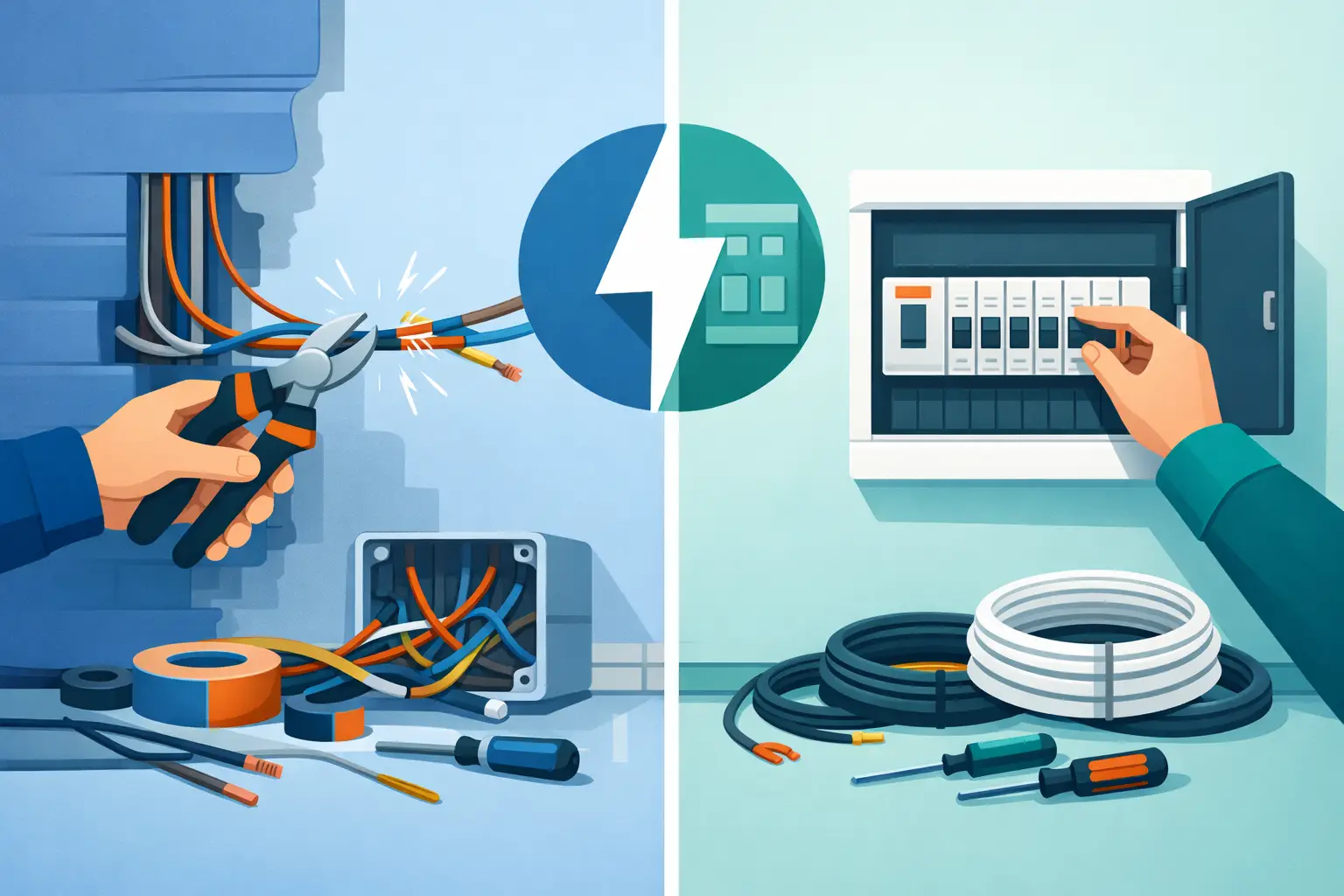
A modern consumer unit can make an older electrical installation safer, but it cannot fix worn-out cables hidden behind the walls. That is why the question is not simply whether you need a rewire or new consumer unit. It is whether the condition of the whole installation supports the upgrade you have in mind.
For homeowners, landlords, and business owners, getting this right avoids spending money on work that only solves part of the problem. A proper assessment gives you a clear answer, explains the options in plain English, and helps you plan the work around your property and budget.
Rewire or New Consumer Unit: The Key Difference
A consumer unit, sometimes called a fuse board or breaker panel, is the control center of your electrical system. It distributes electricity around the property and contains protective devices designed to shut off the supply quickly if a fault is detected. Replacing an old-style fuse board with a modern consumer unit can improve protection and make the installation easier to manage.
A rewire is much more involved. It means replacing some or all of the fixed wiring, cables, outlets, switches, and circuits that supply the property. Depending on the age and layout of the building, it may also be the right time to add outlets, improve lighting, install smoke alarms, or allow for higher-demand appliances.
Put simply, a new consumer unit protects the circuits you already have. A rewire renews the circuits themselves. Sometimes a consumer unit replacement is all that is needed. In other properties, fitting a new unit onto aging or unsuitable wiring can expose faults that need attention before the job can be completed safely.
When a New Consumer Unit May Be Enough
If the wiring has been tested and found to be in good condition, a consumer unit upgrade can be a sensible, cost-effective improvement. This is often the case in properties that have had a relatively recent rewire but still have an outdated fuse board.
Common reasons to consider a replacement include an old fuse board with rewireable fuses, a board that lacks modern fault protection, overcrowded circuits, or a planned extension that needs additional electrical capacity. It can also be appropriate when you are adding an EV charger, electric shower, induction cooktop, or other high-load equipment, provided the existing installation is suitable.
A modern unit should be correctly sized for the property, fitted with appropriate protective devices, clearly labeled, and tested after installation. The goal is not just a tidier-looking board. It is reliable protection that works as intended when there is a fault.
For landlords, this can be particularly relevant after an electrical inspection identifies issues with the board but confirms that the rest of the wiring remains serviceable. For small businesses, a replacement may help organize circuits and improve safety without the major disruption of replacing every cable.
Signs the Wiring Is Likely Still Serviceable
No one should judge wiring by appearance alone, especially where cables are concealed. However, a recent satisfactory inspection report, modern cable types, properly grounded outlets, and circuits that test correctly are all positive signs. The final decision should always be based on testing, not assumptions about the age of the property.
Even in an older home, wiring may have been renewed in stages or fully replaced by a previous owner. Equally, a newer-looking consumer unit does not guarantee that the wiring behind it is in good order.
When a Full or Partial Rewire Is the Better Choice
A rewire is usually recommended when testing shows that the existing cables, connections, grounding, or circuit design no longer meet a safe standard. It may also be the right choice if the property simply does not have enough circuits or outlets for how it is used today.
Warning signs can include frequent tripping, flickering lights, warm outlets or switches, a burning smell, cracked accessories, recurring blown fuses, or visible old cable insulation. Do not ignore these signs or keep resetting a breaker without finding the cause. A tripping device is doing its job by responding to a fault or overload.
Properties with very old installations may have limited grounding, undersized circuits, or wiring materials that are no longer suitable. Major renovation work is another good time to consider a rewire. Once walls, ceilings, floors, kitchens, or bathrooms are being opened up, replacing old wiring becomes less disruptive and can save having to undo finished work later.
A partial rewire can sometimes be the practical middle ground. For example, a kitchen extension, loft conversion, garage conversion, or rental property refurbishment may need new circuits in the altered area while the remaining installation is tested and retained. This depends on the condition of the existing system and whether old and new work can be safely integrated.
Why Testing Comes Before the Decision
The most reliable way to decide between a rewire or a new consumer unit is to have the installation inspected and tested by a qualified electrician. This checks much more than whether the lights turn on. Testing can reveal damaged cables, poor connections, missing grounding, overloaded circuits, incorrect protective devices, and faults that are not visible from the surface.
The electrician can then explain whether the work is limited to the consumer unit, whether repairs are needed first, or whether a partial or full rewire is the safer long-term option. That explanation matters. You should understand what has been found, why it matters, and what work is being recommended before committing to the job.
For landlords and property managers, documented inspection results are especially useful for planning maintenance and showing that electrical safety has been taken seriously. For homeowners, they provide reassurance when buying, renovating, or preparing a property for sale.
Cost, Disruption, and Long-Term Value
A consumer unit replacement is usually less expensive and less disruptive than a full rewire. It is mainly concentrated around the existing board, although testing, circuit alterations, and repairs can add to the scope if faults are discovered.
A rewire requires more planning. Cables often run through walls, ceilings, and floors, so there may be chasing, lifting floorboards, patching, redecorating, and temporary loss of power. Occupied homes can often be rewired in stages, but an empty property is generally easier and faster to work in.
That disruption is the main reason some people delay rewiring. Yet postponing necessary work can lead to repeated repairs, limited capacity for modern living, and growing safety concerns. If the wiring is genuinely at the end of its serviceable life, a new consumer unit alone may be a short-term answer to a larger problem.
On the other hand, a full rewire is not automatically better simply because a home is old. Rewiring sound, tested wiring without a clear reason can add unnecessary cost and disturbance. The best value comes from doing the work the installation actually needs, done properly the first time.
Plan for How You Use the Property Now
Electrical demand has changed. Homes now commonly have home offices, larger kitchens, smart devices, electric heating equipment, outdoor power, security systems, and electric vehicles. Small commercial premises may also need reliable circuits for IT equipment, refrigeration, lighting, access control, or alarms.
When planning either job, think beyond the immediate fault or outdated board. Are there enough outlets where they are needed? Is there a separate circuit for high-demand equipment? Will you want outdoor lighting, CCTV, an EV charger, or a future extension? Building sensible capacity into the work can prevent avoidable alterations later.
This does not mean adding every possible upgrade. It means discussing realistic plans with your electrician so the installation suits the property for years, not just the next few months.
Choosing the Right Local Electrician
Whether the answer is a consumer unit replacement, a partial rewire, or a full installation, choose an electrician who starts with an honest assessment rather than a one-size-fits-all recommendation. The work should be clearly quoted, explained without jargon, tested on completion, and carried out with respect for your home or premises.
BS Electrical works across Middlesbrough, Teesside, and the wider North East, helping customers make practical decisions about electrical safety and upgrades. A clear inspection and straightforward advice can turn a worrying electrical question into a manageable plan.
If your fuse board looks outdated, your circuits keep tripping, or you are planning major changes to the property, arrange an assessment before deciding. The right solution is the one that leaves your electrical system safe, dependable, and ready for the way you actually use the space.