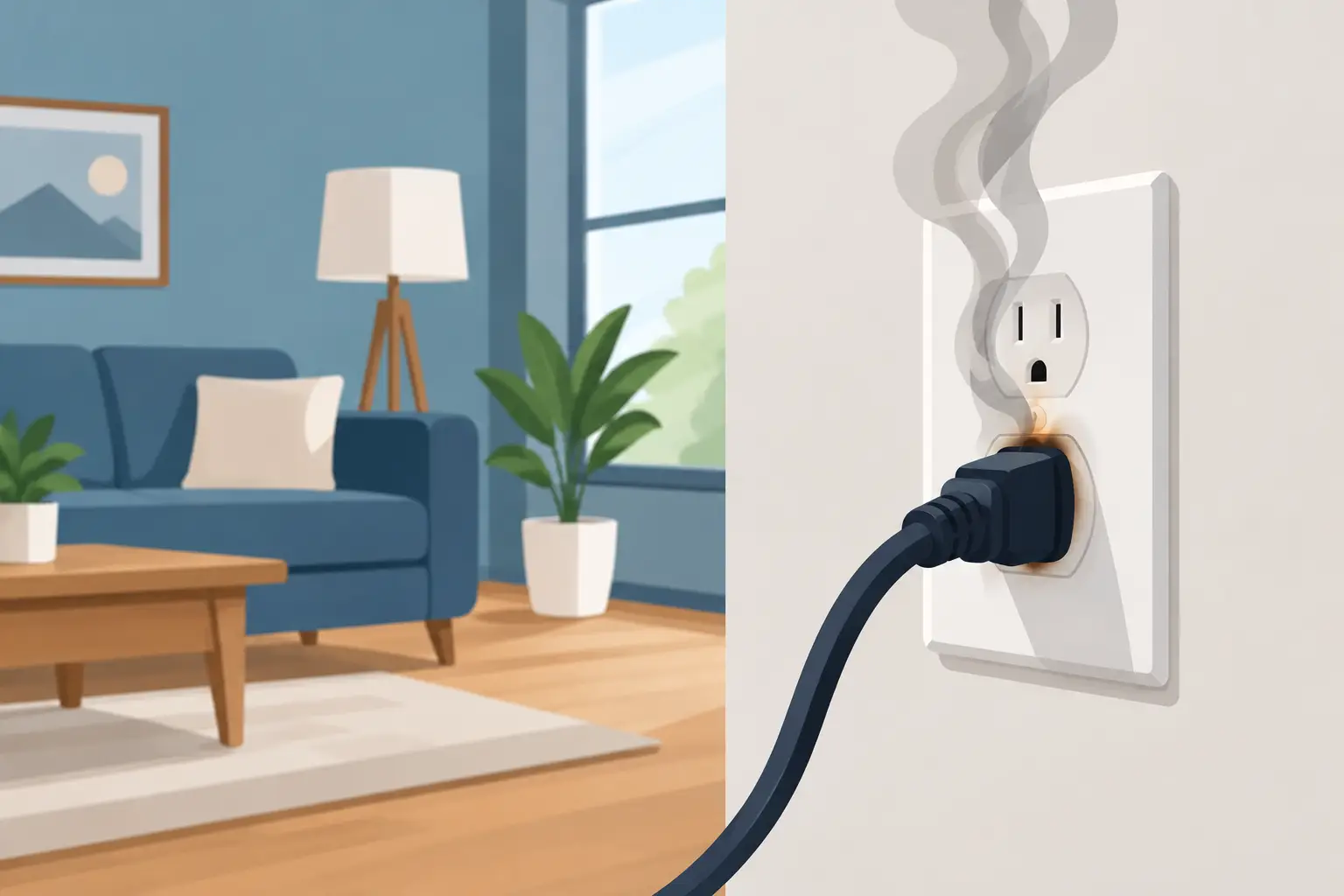
A hot plastic or burning smell near an outlet, light fixture, or electrical panel is not something to wait and see about. If you are asking what causes electrical burning smells, the short answer is usually heat building up where it should not. That can mean a loose connection, overloaded circuit, failing appliance, or damaged wiring – all faults that need sensible, prompt action.
The smell may fade after a few minutes, but that does not prove the problem has gone away. Electrical faults can generate heat inside walls, ceilings, outlets, and equipment long before there is visible smoke or a loss of power. Treat the smell as a warning, keep people clear of the area, and arrange for the cause to be checked properly.
What Causes Electrical Burning Smells?
Electrical components are designed to carry current without becoming dangerously hot. When a connection is loose, a cable is damaged, or a circuit is being asked to do more than it can safely handle, resistance creates heat. Insulation, plastic fittings, dust, or the component itself can then begin to give off a sharp burning odor.
The odor can be difficult to describe. Some people notice a smell like melting plastic, hot rubber, fish, or overheated dust. A brief dusty smell when heating equipment is first used after a long break can be harmless, but a persistent or strong electrical odor is different. If it is coming from wiring, an outlet, a panel, a switch, or an appliance, it needs attention.
Loose or damaged connections
Loose terminals are one of the most common causes. Connections can loosen over time through age, vibration, poor previous work, or repeated use of an outlet or switch. Electricity passing through a poor connection creates excess heat, which can scorch the outlet, melt insulation, and eventually cause arcing.
Arcing is a visible or invisible electrical spark jumping across a gap. It can leave black marks around an outlet or switch, make a crackling sound, or cause lights to flicker. These are not minor cosmetic issues. Switch off the affected circuit if you can do so safely and have an electrician inspect it.
Overloaded outlets and circuits
Extension leads and power strips are useful in moderation, but they are not a permanent answer to a shortage of outlets. Running several high-demand appliances from one outlet, such as space heaters, microwaves, kettles, dryers, or portable air conditioners, can overheat the plug, cable, outlet, or circuit.
Warm plugs, discolored outlet covers, a buzzing power strip, or a burning smell after using particular equipment all point to a possible overload. The right fix may be as simple as reducing the load, but it may also mean adding properly installed circuits or outlets. It depends on the equipment, the age of the property, and the capacity of the existing installation.
Failing appliances and chargers
Not every electrical burning smell comes from fixed wiring. Appliances, chargers, lamps, fans, and electronics can develop internal faults. Damaged cords, crushed cables, loose plug pins, and aging components can all overheat.
Unplug the item if it is safe to do so and the plug is not hot or damaged. Do not use it again just because it appears to work after cooling down. A faulty appliance can damage an outlet and create a fire risk, particularly if it is left running unattended.
Old, damaged, or poorly installed wiring
Older properties can have wiring and accessories that are no longer in good condition, especially where changes have been made over many years. Brittle insulation, cables damaged by screws or pests, unsuitable connections, and outdated electrical panels can all contribute to overheating.
A burning smell that seems to come from a wall, ceiling, attic, or behind cabinetry is especially concerning because the fault may be hidden. Do not remove outlet covers or open panels to investigate. A qualified electrician can test the circuit and locate the issue without putting you at greater risk.
Overheating light fixtures and bulbs
Light fittings can smell hot when the wrong bulb wattage is used, insulation is packed too closely around recessed lights, or a fitting is deteriorating. Older fixtures may not be suitable for high-output bulbs, while loose connections at the light point can also generate heat.
Turn off the light at the switch and avoid touching the fitting until it has cooled. If the smell returns when the light is used again, stop using it and have the fixture, wiring, and bulb type checked.
What to Do When You Smell Burning From Electrical Equipment
Your first priority is to reduce the risk without exposing yourself to electricity. If there is smoke, sparking, flames, or a strong escalating smell, leave the property, call emergency services, and do not re-enter until it is safe. Never throw water on an electrical fire.
If there is no immediate danger, turn off and unplug the suspected appliance if it can be done safely. If the smell is coming from an outlet, switch, panel, or an unknown location, turn off the relevant circuit at the electrical panel only if you can identify it safely. Keep children, pets, and customers away from the area.
Do not keep resetting a tripped breaker to see whether it holds. Breakers trip for a reason: they are responding to a fault, overload, or short circuit. Repeatedly restoring power can allow overheating to continue. Similarly, do not cover the smell with air freshener or assume it is solved because the odor disappears.
Take a note of what was running when you noticed the problem, where the smell was strongest, whether lights flickered, and whether a breaker tripped. These details can help an electrician diagnose the fault faster and avoid unnecessary disruption.
When a Burning Smell Is an Emergency
Some situations need immediate action rather than a routine repair appointment. Treat it as urgent if you see smoke, sparks, blackening around electrical accessories, melted plastic, or scorch marks. A hot outlet, a breaker panel that feels unusually warm, repeated tripping, buzzing, or a burning smell from inside a wall also deserve prompt professional attention.
Businesses and landlords should take these signs seriously even when a tenant or employee says the smell has stopped. Electrical faults can affect the safety of everyone using the property, and delayed repairs can lead to greater damage and downtime. Isolate the affected area where possible and arrange an inspection.
How an Electrician Finds the Source
Electrical burning smells are not always located where the fault started. Heat and odor can travel through gaps around outlets, ceiling voids, or cable routes. A proper inspection starts with the affected circuit and includes checking outlets, switches, connections, appliances, protective devices, and cable condition.
Testing can identify loose connections, overloaded circuits, insulation damage, and faults that are not visible from the outside. The repair might involve replacing a damaged accessory, correcting a connection, repairing a cable, upgrading an overloaded circuit, or recommending more extensive work where the installation is in poor condition. A good electrician should explain the issue in plain language and set out the sensible options before work begins.
Preventing Electrical Overheating at Home or Work
Most electrical burning smells are preventable with safe use and timely maintenance. Avoid overloading outlets, replace damaged cords promptly, and use power strips only within their stated limits. Keep portable heaters clear of fabrics and furniture, and do not run cords beneath rugs where heat and damage can go unnoticed.
For landlords, property managers, and business owners, regular electrical inspections are a practical way to spot deterioration before it becomes an emergency. Homeowners can also benefit from having aging wiring, frequently tripping circuits, or plans for major new equipment assessed before adding more demand.
A burning electrical smell is your cue to stop using the affected equipment or circuit, not to hope it clears on its own. Getting it checked promptly protects the property, the people in it, and your peace of mind.