
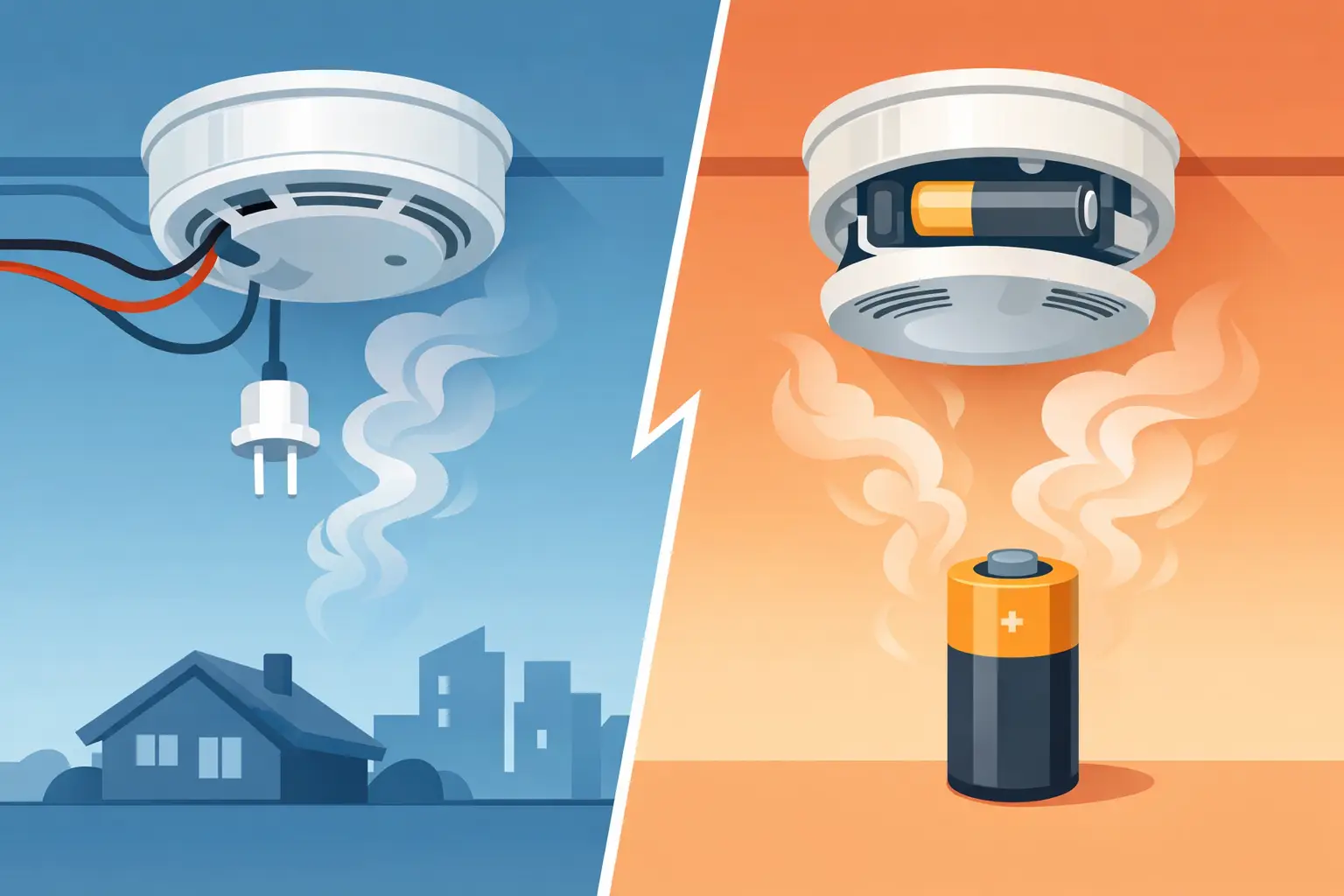
A smoke alarm is only useful if it sounds when a fire starts. That is why the question of wired smoke alarms vs battery alarms matters more than most homeowners realize. One option is connected to your home’s electrical system, while the other runs independently on batteries. Both can save lives, but they suit different properties, budgets, and levels of protection.
For most homes, the best answer is not simply choosing one over the other. It is choosing the right alarms, putting them in the right places, and testing them often enough that you can rely on them when it counts.
Wired Smoke Alarms vs Battery Alarms: The Main Difference
A wired, or hardwired, smoke alarm is connected to the building’s electrical supply. In many newer homes, alarms are also interconnected. If one alarm detects smoke, every linked alarm sounds at the same time. Most hardwired systems include a backup battery, so the alarm can still operate during a power outage.
A battery smoke alarm is self-contained. It is quicker and less disruptive to install because it does not need wiring added to walls or ceilings. Depending on the model, it may use replaceable batteries or a sealed long-life battery designed to last for several years.
The key difference is consistency. A hardwired alarm receives normal power from the electrical system and can warn the whole property through interconnection. A battery unit relies on its battery being fitted, charged, and not past its service life.
Why Hardwired Smoke Alarms Are Often the Better Long-Term Option
Hardwired alarms are usually the strongest choice during a renovation, rewire, extension, or new-build project. Once they are installed correctly, they offer dependable day-to-day power without the concern that someone has removed a battery after a nuisance alarm.
Interconnected warnings give people more time
A fire can begin in a garage, basement, utility room, or far end of a commercial unit without being noticed straight away. With interconnected alarms, smoke detected in one area triggers alarms throughout the building. That matters in larger homes, multi-story properties, rental homes, and workplaces where people may be asleep or working behind closed doors.
The additional warning time can be especially valuable if bedrooms are upstairs and the fire starts downstairs. Hearing an alarm outside the bedroom, rather than relying on a single unit at the other end of the property, gives occupants a better chance to react quickly.
Backup batteries cover power outages
There is a common misconception that wired alarms stop working when the power goes out. Properly installed modern units normally include battery backup. That means they continue monitoring during an outage, provided the backup battery is in good condition.
The backup battery still needs checking. Hardwired does not mean maintenance-free, but it does remove the need to depend entirely on a small battery as the alarm’s main source of power.
They are a sensible fit for major electrical work
If ceilings are already open for a rewire or renovation, adding hardwired smoke alarms is usually more practical and cost-effective than returning later to run new cables. It also gives an electrician the opportunity to position alarms properly, interconnect them where appropriate, and make sure the installation works as a complete safety system.
For landlords and property managers, a professionally planned hardwired system can also make ongoing maintenance easier to manage across a larger property.
When Battery Smoke Alarms Make Sense
Battery alarms should not be treated as second-rate protection. A good-quality battery unit, fitted in the correct position and regularly tested, is far better than no alarm at all. They are often the sensible option where running cables would cause unnecessary damage, expense, or disruption.
They are particularly useful in existing homes where access above ceilings is limited, in detached garages, sheds, outbuildings, and smaller spaces that need an additional alarm. Battery units can also be installed quickly while you arrange a more extensive electrical upgrade.
Sealed long-life battery alarms are often preferable to models using replaceable batteries. They reduce the temptation to remove a battery and forget to replace it. However, the entire alarm must be replaced at the end of its stated service life, not just ignored because it still looks clean on the ceiling.
Battery alarms also have a place when a property needs extra coverage beyond the existing wired system. Wireless interconnected models may be an option in some situations, allowing alarms to communicate without extensive new cabling. The right choice depends on the property layout and the equipment already in place.
The Trade-Offs: Cost, Reliability, and Installation
Battery alarms generally cost less to purchase and are easier to install. That makes them attractive for a quick improvement, a single room, or an older home where cables are difficult to conceal. Their weakness is human behavior. Batteries run flat, alarms are removed during cooking, and replacement dates get missed.
Hardwired alarms cost more upfront because installation involves electrical work, cables, connections, and sometimes making good walls or ceilings afterward. In return, they provide a more permanent setup and can support whole-property interconnection. The cost is usually easier to justify when electrical work is already being carried out.
Neither option eliminates the need for routine attention. Smoke alarms can become less reliable with age, dust, insects, paint contamination, or general wear. Most alarms have a manufacturer-stated replacement date, commonly around 10 years. If an alarm is past that date, replacing the battery is not enough.
Choosing the Right Alarm Type for Your Property
The right system depends on the building, who uses it, and the risks involved. A small single-level home may be well served by carefully placed battery or wireless linked alarms. A multi-level family home is often better protected by interconnected hardwired units with battery backup. A rental property or small business may need a more considered arrangement based on occupancy, layout, and local requirements.
As a practical starting point, alarms should cover escape routes and sleeping areas, with additional protection where risks are higher. Kitchens, garages, utility rooms, and areas near fuel-burning appliances may require a different detector type. For example, a heat alarm can be more suitable near a kitchen than a standard smoke alarm that may trigger repeatedly from cooking fumes.
Carbon monoxide alarms are separate devices and should not be overlooked where gas, oil, wood, or other fuel-burning appliances are present. A smoke alarm cannot replace carbon monoxide protection.
Do not choose based on price alone
The cheapest alarm is not always the best value if it is difficult to test, easy to disable, or unsuitable for the room. Look for a recognized safety standard, a clear replacement date, a test button you can reach safely, and a power arrangement that fits how the property is used.
For a landlord, consider the risk of tenants removing batteries. For a homeowner, think about whether family members would hear a single alarm from every bedroom. For a business owner, consider whether staff could hear an alarm above machinery, music, or everyday activity.
Testing and Maintenance Matter More Than Most People Think
Test every smoke alarm regularly using the test button. A quick test confirms that the alarm can sound, although it does not prove the sensor will detect every fire condition. Keep alarms free from dust and avoid painting over them or placing them too close to fans, vents, or bathrooms where steam can cause false alarms.
If an alarm chirps, deal with it promptly. Do not remove the battery and leave the unit disabled. The cause may be a low battery, contamination, a loose connection, or an alarm that has reached the end of its life. Repeated false alarms are also worth investigating because they may point to poor placement or the wrong type of detector for that area.
For hardwired systems, it is wise to have faults, damaged units, additions, or uncertain wiring checked by a qualified electrician. BS Electrical can assess existing alarms as part of wider electrical work and help plan a practical system that is done properly the first time.
A Safer Choice Is the One You Will Maintain
If you are deciding between wired smoke alarms vs battery alarms, prioritize dependable coverage over the easiest short-term purchase. Hardwired, interconnected alarms with battery backup are often the best long-term option for larger homes and major projects. Battery or wireless alarms can be an effective, practical solution where wiring is not realistic.
The alarm that protects your property is the one that is correctly located, powered, tested, and replaced when its working life ends. If you are unsure whether your current setup gives your family, tenants, or staff enough warning, getting it checked is a straightforward step that can make a real difference.