
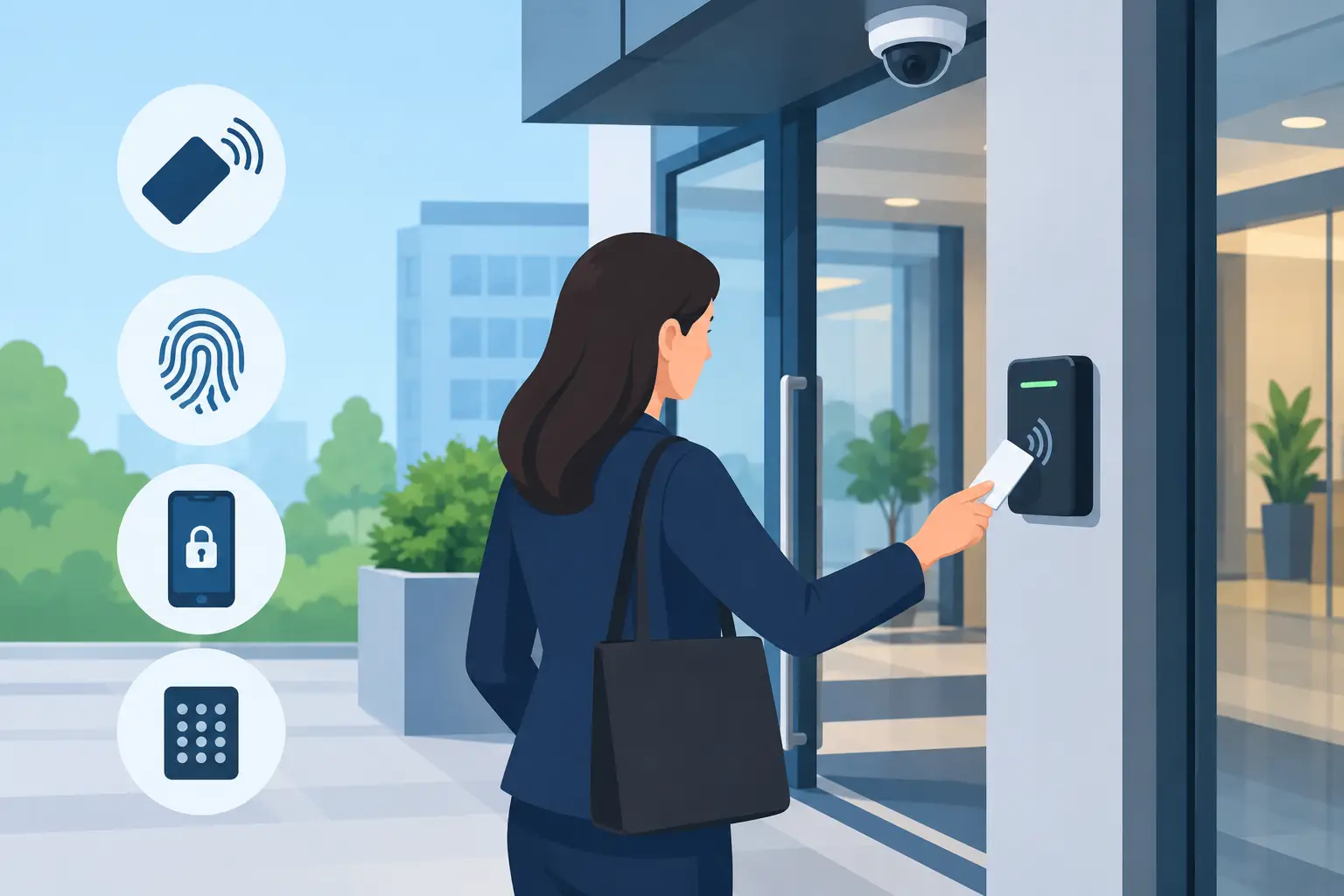
A lost key, an ex-employee who still has access, or a delivery person left waiting at an unsecured entrance can quickly become more than a minor inconvenience. The best access control options give you a clear, practical way to control who enters your property, when they can enter, and how easily access can be changed when circumstances do.
For a homeowner, that may mean replacing a vulnerable front-door key system. For a landlord or business owner, it may mean stopping keys from circulating between tenants, staff, contractors, and former employees. The right setup should improve security without making daily life difficult for the people who need to use the building.
What Access Control Is Designed to Solve
Access control is any system that restricts entry to a building, room, gate, or shared area. Instead of relying solely on a traditional key, users may enter with a code, card, fob, mobile phone, or approved biometric credential. Many systems can also record who entered and at what time.
The real benefit is control after installation. When a key goes missing, a standard lock may need to be rekeyed or replaced. With an electronic system, an individual code or fob can usually be removed from the system while everyone else keeps working as normal. That is especially useful for rental properties, offices, workshops, shared entrances, and sites with regular staff changes.
No single system is right for every property. A small house may only need a reliable keypad lock, while a multi-tenant building may need managed fobs, video entry, and door release controls. The best choice depends on the number of users, the type of door, the level of risk, and how much day-to-day administration you are willing to take on.
Best Access Control Options for Different Needs
Keypad and PIN Code Entry
Keypad access uses a PIN code entered at the door or gate. It is one of the most straightforward choices for homes, small offices, staff rooms, and shared storage areas. There are no physical keys or fobs to issue, which can make it convenient for a small number of trusted users.
Its weakness is that codes can be shared, written down, or seen by someone standing nearby. A single shared code also gives you limited accountability because you cannot tell which person used it. For better control, choose a system that allows separate codes for different users or groups, and change codes promptly when a tenant, employee, or contractor no longer needs access.
Key Fobs and Proximity Cards
Fobs and proximity cards are a common choice for commercial premises, apartment blocks, schools, and managed rental properties. A user presents their credential to a reader, and the door releases if they are authorized.
They are easy to use, quick to issue, and suitable for properties with several regular users. Lost fobs can be canceled without changing the locks, and many systems can keep an entry log. This makes them a sensible middle ground between a basic keypad and a more advanced networked system.
The main consideration is management. Someone needs to keep the user list current, issue credentials carefully, and remove access when people leave. A well-installed system is only as secure as the way it is managed afterward.
Video Door Entry Systems
Video entry combines visitor calling with a camera and controlled door release. A visitor presses a call button, the person inside can see and speak to them, then chooses whether to release the door. Some systems use an indoor monitor, while others can send calls to a phone or tablet.
This is a strong option for apartment buildings, offices, clinics, gated sites, and homes where you want to verify visitors before opening the door. It is also useful where deliveries are frequent or where reception is not staffed all day.
A video system should be selected with the property layout in mind. Camera placement, lighting, internet reliability for app-based functions, and cable routes all affect how well it works. A clear image at night is more useful than a long list of features that are never properly set up.
Mobile Phone Access
Mobile access allows users to enter through an app, digital credential, or Bluetooth connection on their phone. It can be useful for flexible workplaces, serviced offices, short-term rentals, and properties where access needs to be issued remotely.
The attraction is convenience. Permissions can often be set for certain times or dates, which is helpful for cleaners, maintenance teams, and temporary contractors. There is no need to meet someone in person just to hand over a key or fob.
However, mobile access relies on users having charged, compatible phones and being comfortable with the app. It should not be chosen simply because it sounds modern. For many small businesses, fobs or cards remain the simpler and more dependable option.
Biometric Access
Biometric systems use a fingerprint, facial recognition, or another physical characteristic to confirm identity. They are often considered for higher-security areas, such as server rooms, stock rooms, or restricted workspaces.
The advantage is that a fingerprint cannot be casually passed to another person like a fob or PIN. But biometrics come with higher costs, privacy considerations, and the need for careful setup. They are not usually necessary for a typical home or small office entrance. In many cases, a quality fob system with well-managed permissions provides the right level of security at a more sensible cost.
The Door and Lock Matter as Much as the Reader
An access reader is only one part of the system. The door, frame, lock, cabling, power supply, and emergency exit arrangements all need to work together. Fitting a modern keypad to a weak door or poorly aligned lock will not deliver the level of protection you expect.
For outward-opening gates, external doors, and high-use commercial entrances, the equipment must be chosen for the environment. Weather exposure, heavy traffic, and the risk of tampering can all change the specification. A system that works well inside a quiet office may not be suitable for an exposed side gate or warehouse entrance.
Fire safety also has to be considered from the start. Doors used as escape routes must allow people to leave safely in an emergency. Depending on the property and door type, this may require appropriate emergency release equipment and a fail-safe arrangement. This is not an area for guesswork or a quick DIY fix.
Questions to Ask Before Choosing a System
Start by thinking about how people use the property now, rather than choosing a device from a product brochure. How many people need regular access? Do they need entry at different times? Is there a shared main entrance, a private office, a gate, or a sensitive room that needs extra control?
It also helps to consider what happens when access changes. If a staff member leaves, can their access be removed quickly? If a tenant loses a fob, can it be canceled? If the internet goes down, does the system still allow authorized people to enter? These practical details often matter more than the headline features.
Budget matters, but it is worth comparing the whole cost rather than the price of the reader alone. Installation, electrical supplies, lock hardware, door alterations, programming, maintenance, and future expansion all need to be accounted for. A cheaper system that cannot be expanded may cost more when your needs change.
When a Standalone System Is Enough
A standalone system is installed at one door and operates independently. It is usually the right choice for a simple setup, such as a staff-only room, small office, residential side entrance, or single gate. It can provide a major improvement over traditional keys without unnecessary complexity.
For properties with several entrances, multiple user groups, or a need for entry records, a managed system is usually more suitable. Central management makes it easier to add or remove users, control permissions, and review activity when needed. It is a better fit for landlords, property managers, and growing businesses.
Get the Installation Right From the Beginning
Good access control should feel easy to use because the hard work has been done before the system goes live. That means checking the door condition, selecting compatible locking hardware, routing cables neatly, setting user permissions correctly, and showing the owner how to manage the system.
BS Electrical can help property owners and businesses across Middlesbrough, Teesside, and the wider North East choose and install access control that suits the building and the people using it. Whether you need a simple keypad, fob entry, video door access, or a system that works alongside CCTV and alarms, the aim is the same: clear control, safer entry points, and work done properly the first time.
The most useful system is rarely the one with the most features. It is the one that your household, tenants, or staff will use confidently every day, while giving you the control to act quickly when access needs to change.