
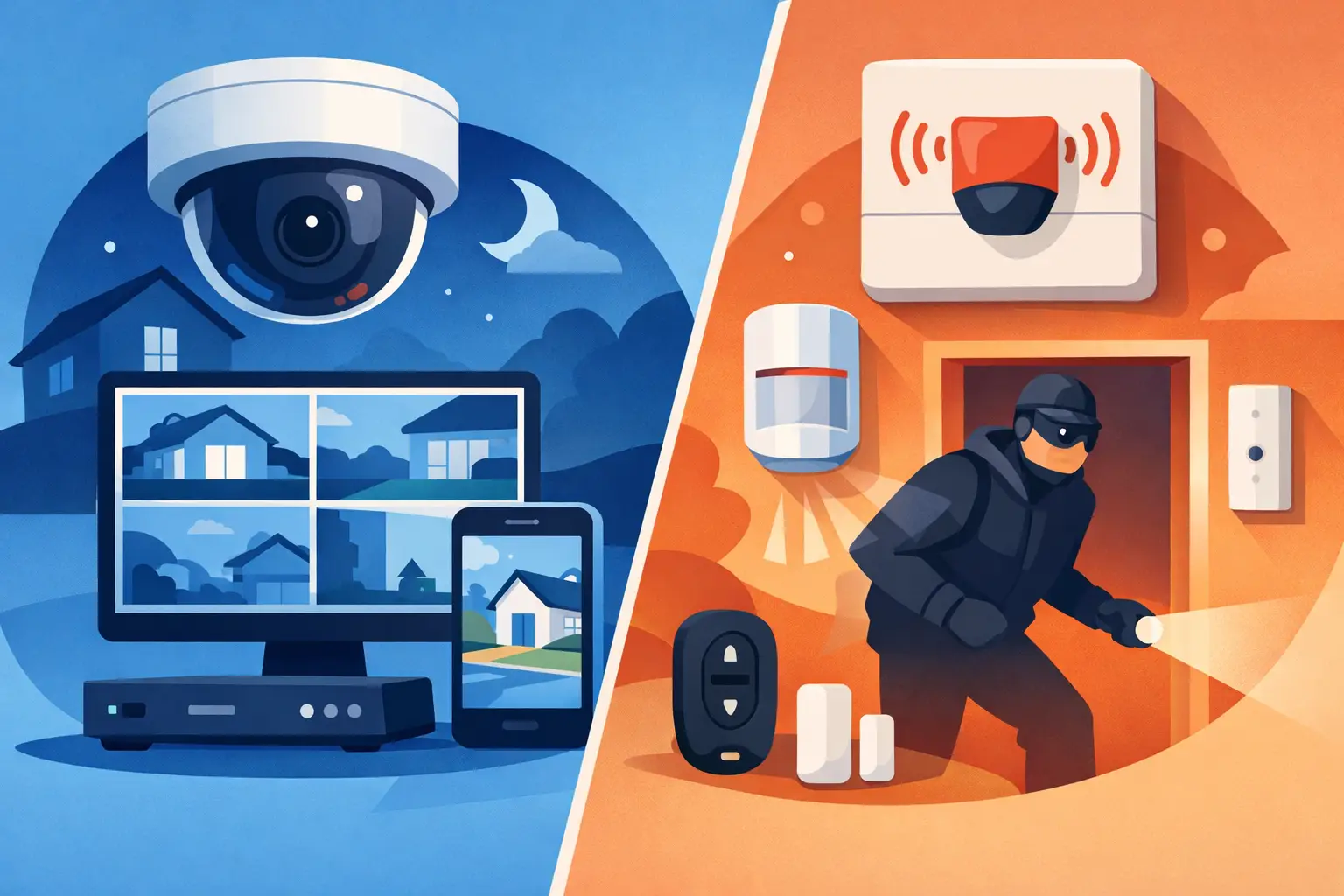
A camera above the front door can make a property feel protected, but it will not necessarily wake you at 2 a.m. if someone forces entry. An alarm can make a lot of noise and send an alert, but it may not tell you who was there or what happened. That is the real difference in the CCTV vs intruder alarm decision: one helps you see and record events, while the other is designed to detect an intrusion and trigger a response.
For homes, rental properties, shops, offices, and small commercial units across Middlesbrough and the North East, the right answer often depends on the risks around the property, how it is used, and what you need the system to do when nobody is there.
CCTV vs Intruder Alarm: The Main Difference
CCTV is primarily a visual security system. Cameras monitor chosen areas, such as entrances, driveways, yards, stock rooms, reception areas, or shared access points. Footage can be recorded locally or viewed remotely through an app, depending on the system installed. Visible cameras can also make an opportunistic thief think twice before approaching.
An intruder alarm is primarily a detection and warning system. Door and window contacts, motion sensors, vibration sensors, and other devices identify unusual activity. The alarm then sounds a siren and can send a notification to your phone or, where arranged, a monitoring service.
Put simply, CCTV answers, “What is happening?” An intruder alarm answers, “Has someone entered or tried to enter?” Neither is automatically better. They solve different problems.
When CCTV Is the Better Starting Point
CCTV is often the best first investment when visibility is the main concern. A homeowner may want to keep an eye on a driveway, side gate, garage, or front entrance. A landlord might need to monitor communal entrances or deter vandalism around a vacant property. A business owner may need clearer oversight of deliveries, customer areas, or stock access.
The main benefit is evidence. If there is damage, theft, a false claim, or a dispute about an incident, clear and correctly positioned footage can be extremely useful. It can show the time of an event, the direction someone came from, and whether there were vehicles or other people involved.
CCTV also gives day-to-day reassurance. Remote viewing can be useful when you are away, checking on a delivery, or closing up a business. However, it should not be treated as someone actively watching every camera all day. Notifications and motion alerts can help, but they need setting up carefully. Too many alerts from passing cars, pets, trees, or changing light soon lead to people ignoring them.
Camera placement matters more than simply having several cameras. A poorly placed camera may capture the top of a hood, glare from a security light, or a wide shot that is too unclear to identify anyone. Entrances, access routes, gates, and areas where valuable items are stored should be assessed first.
When an Intruder Alarm Offers Better Protection
An intruder alarm is generally the stronger option when early warning and immediate deterrence matter most. If someone opens a protected door or window, or moves through a covered area while the system is armed, the alarm can react within seconds. A loud external siren can draw attention and make staying on the premises much less appealing to an intruder.
For many homes, an alarm is particularly valuable overnight. Cameras may record a person entering, but an alarm is more likely to alert the household at the moment it happens. For businesses, alarms are useful during closed hours, especially where cash, tools, electronics, stock, or confidential records are kept on site.
Modern systems can be more flexible than people expect. You may be able to arm different zones separately, so an upstairs area is protected at night while people move around downstairs. A shop or office can protect the main building while allowing approved access to a storage area. App alerts also mean you can know quickly if the alarm has activated while you are away.
That said, alarms need sensible design. A basic system with sensors placed in the wrong rooms can leave weak points. It is also important to consider pets, open-plan layouts, regular staff access, and whether outbuildings need separate protection. The goal is reliable detection without repeated false alarms.
Is CCTV or an Alarm Better for Deterring Crime?
Both can deter crime, but they do it differently. A visible camera tells someone they may be recorded. A visible alarm bell box tells them that forced entry could attract immediate attention. Together, they send a clearer message that the property is actively protected.
CCTV can be especially effective where people are likely to approach from outside, such as a driveway, parking area, rear lane, or commercial entrance. It helps make the property feel less anonymous. An alarm becomes more powerful once an intruder attempts entry or gets inside.
There is no guarantee that either system will stop every determined criminal. Security is about reducing opportunity, increasing the chance of detection, and making the property less attractive than an easier target. Good locks, secure doors and windows, suitable outside lighting, and sensible key control all play a part as well.
Cost: What Are You Actually Paying For?
The cost of CCTV or an intruder alarm depends on the size and layout of the property, the number of areas to cover, cable routes, camera quality, remote access features, and whether you want optional monitoring. A small home system may be straightforward, while a large commercial site with multiple entrances and separate zones requires more planning.
It is tempting to buy a low-cost DIY kit and fit it wherever there is an available plug socket. Sometimes that is enough for a simple, low-risk requirement. But security equipment is only useful when it works reliably and captures or detects the right things. Poor Wi-Fi coverage, weak night images, exposed cables, badly chosen sensor locations, and limited recording storage can all undermine a cheap installation.
A professional installation should begin with a practical survey of the property. That helps avoid paying for equipment that does not match the risk. In some cases, two well-positioned cameras are more useful than six poorly placed ones. In others, a modest alarm system with door contacts and internal detection provides better value than cameras alone.
Why Combining CCTV and an Alarm Often Makes Sense
For properties with higher-value contents, repeat security concerns, or periods when they are left empty, combining the two systems is often the most sensible approach. The alarm provides the immediate warning. CCTV provides the visual confirmation and recorded evidence.
A business owner who receives an alarm notification can check camera footage before deciding what to do next. A homeowner can see whether a motion alert is caused by a delivery driver, wildlife, or someone attempting to access the property. This can reduce uncertainty without encouraging you to take unnecessary risks.
Integration should be useful, not complicated for the sake of it. You need a system that is straightforward to arm, disarm, check, and maintain. If staff or family members find it confusing, it is more likely to be left switched off.
Choosing the Right System for Your Property
Start by thinking about the likely problem rather than the equipment. If your concern is vehicle damage, package theft, or people approaching the property, CCTV is likely to be the priority. If your concern is a break-in while you are asleep or away, an intruder alarm deserves serious consideration. If the property contains valuable tools, stock, or equipment, both may be justified.
For landlords and property managers, consider who needs access and how often. A system that suits an owner-occupied house may not suit a shared building, an empty rental, or a small office with several keyholders. Businesses should also consider privacy, employee areas, customer-facing spaces, and how footage will be stored and accessed.
Maintenance matters too. Cameras need clean lenses, clear views, and recording checks. Alarm systems need batteries, sensors, and communication features tested periodically. Security should not be a fit-and-forget job.
BS Electrical can help property owners choose a practical system without overselling equipment they do not need. A proper discussion about the building, its weak points, and how it is used will usually make the decision clearer.
The best place to start is often the most vulnerable point of entry. Protect that properly, make sure the system is easy to use every day, and build from there when the property or your security needs change.