
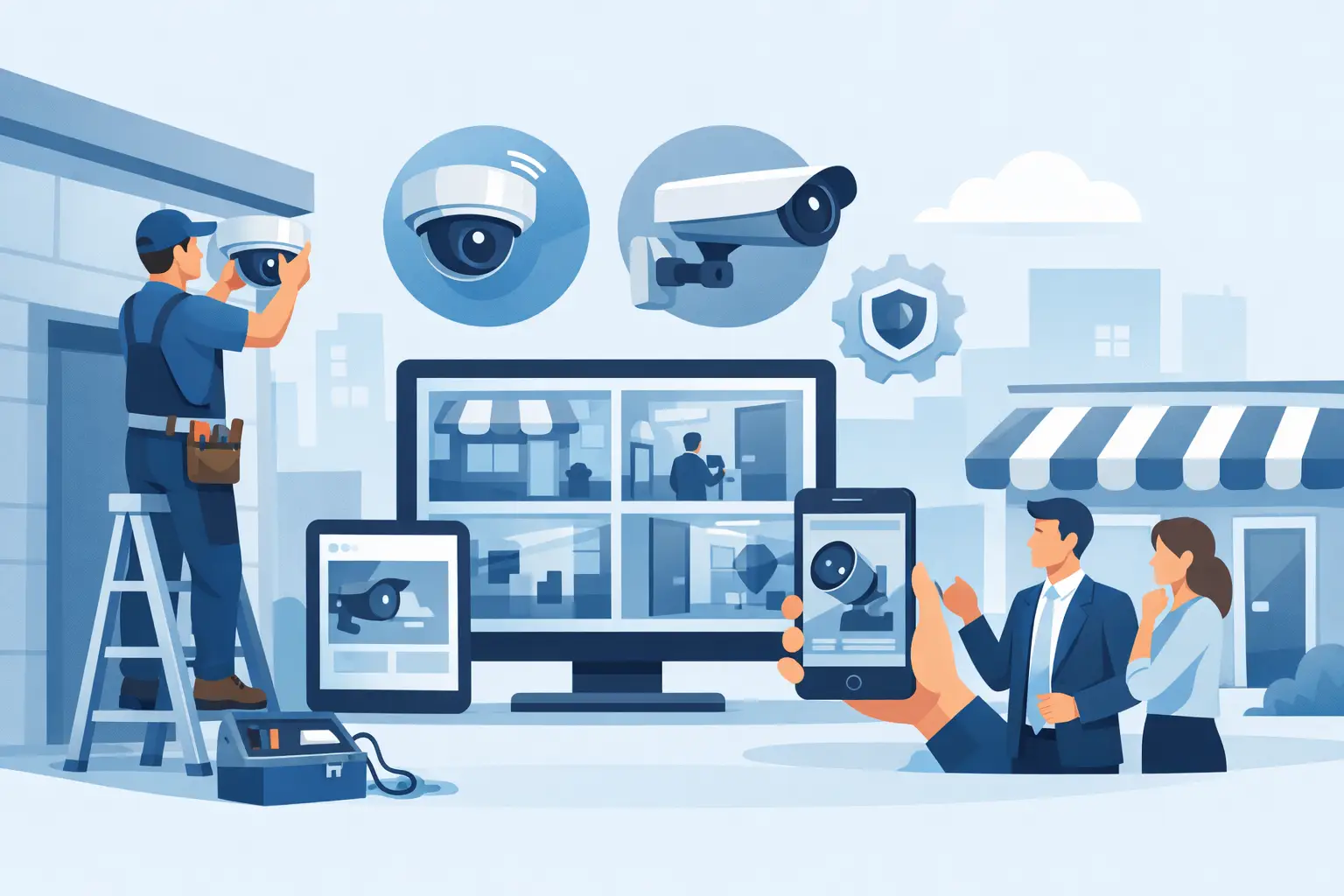
A back door left unmonitored, a stock room with no clear view, a parking area that only becomes a problem after dark – these are usually the reasons business owners start asking about CCTV installation for small business. It is rarely about buying the most advanced system on the market. It is about closing the gaps that leave your premises, staff, and equipment exposed.
For most small businesses, the right CCTV setup is not the biggest one. It is the one that suits the building, captures the areas that matter, records clearly enough to be useful, and works reliably day after day. Whether you run a shop, office, salon, café, workshop, or rental property, a properly planned system gives you more than footage. It gives you confidence that the basics are covered.
Why CCTV installation for small business matters
Small businesses often deal with a mix of risks that larger companies can spread across departments, security teams, and bigger budgets. A single theft, false claim, break-in, or act of vandalism can cause real disruption. Lost stock is one thing. Lost trading time, staff stress, and insurance complications are another.
CCTV helps on a practical level. Visible cameras can discourage opportunistic theft. Recorded footage can help you review incidents properly instead of relying on guesswork. Remote access can let you check on opening and closing procedures, deliveries, and after-hours activity without needing to be on site all the time.
That said, cameras are not a magic fix. If lighting is poor, entrances are insecure, or blind spots are ignored, even a decent system can fall short. Good installation matters just as much as the cameras themselves.
What a small business should cover first
The starting point is not brand names or app features. It is the layout of your premises and the points where problems are most likely to happen.
In many businesses, the first priority is the main entrance and exit. After that, it often makes sense to cover the cash handling area, reception desk, stock room, rear access points, and any side alley or parking area where people can come and go without being seen clearly. Inside the building, you want enough coverage to understand what happened during an incident, but not a random spread of cameras that leaves key areas missed.
This is where a proper site survey pays off. A good installer will look at entrances, lighting conditions, cable routes, recording equipment location, internet access, and where cameras can be mounted for a clear field of view. In a small unit, one badly placed camera can be nearly as useless as no camera at all.
Wired or wireless – what makes sense?
This is one of the first questions most owners ask, and the honest answer is that it depends on the building and what you want from the system.
Wired CCTV is often the better choice for commercial premises because it is more stable and usually better suited for permanent use. It tends to be more reliable for recording, less vulnerable to signal issues, and cleaner from a long-term maintenance point of view. If your business needs dependable day-to-day coverage, wired systems are often worth it.
Wireless cameras can work well in certain situations, especially where cabling is difficult or where a smaller temporary setup is needed. But they can be limited by Wi-Fi strength, battery life in some models, or interference. For a business that cannot afford missed recordings or patchy performance, those trade-offs matter.
A local electrical contractor with experience in both security and power supply can usually tell quite quickly which route is sensible for your site rather than just pushing the easiest option.
Camera quality is only part of the job
Many business owners focus on resolution first. Clear footage is important, of course, but image quality is not just about the camera spec on the box.
Positioning, lighting, lens choice, and recording settings all affect whether footage is actually useful. A camera pointed at a bright doorway can struggle if the contrast is not handled properly. A wide-angle view may cover more space but lose useful facial detail. Night coverage can also vary massively depending on whether the area has decent lighting or relies entirely on the camera’s infrared capability.
That is why professional installation makes a difference. You want cameras placed to identify people, monitor movement, and record events in a way that helps if something goes wrong. There is no real value in footage that only confirms that “someone was there.”
Storage, remote viewing, and day-to-day use
A small business CCTV system should be simple to use. If reviewing footage feels like a chore or the mobile app never works properly, the system will not deliver much value when you need it.
Most businesses now want remote viewing as standard. Being able to check the premises from your phone can be genuinely useful, especially for owners who open and close, manage multiple sites, or want reassurance after hours. It can also help if an alarm is triggered and you need a quick visual check before deciding what to do next.
Storage matters as well. The right amount depends on how many cameras you have, the recording quality, and how long you need to keep footage. A busy retail unit may need a different setup from a small office with low foot traffic. More storage is not always better if it comes at the expense of system speed or budget, but too little can mean footage is overwritten before it is needed.
CCTV installation for small business and legal considerations
Most business owners are not looking for a legal lecture. They just want to know they are doing things properly.
If your CCTV system captures staff, customers, public walkways, or neighboring areas, there are responsibilities that come with that. In general, the system should have a clear purpose, signage should be in place where appropriate, and camera placement should be reasonable rather than excessive. Recording should be proportionate to the risk you are addressing.
This is another reason not to take a guess-and-go approach. A sensible installer will help you avoid obvious mistakes such as pointing cameras where they are not needed or setting up a system that creates more issues than it solves.
CCTV works best as part of a wider setup
For many small businesses, CCTV does its best work when it supports other security measures. Good exterior lighting, secure doors, alarm systems, and access control all strengthen the overall setup.
For example, a rear entrance camera is more useful when the area is properly lit. An indoor camera near a stock room is more effective when access to that room is controlled. If there is an intruder alarm on site, CCTV can help confirm what is happening rather than leaving you to respond with limited information.
This joined-up approach is often more cost-effective than overspending on cameras alone. It is about building a sensible layer of protection around the way your business actually operates.
What to expect from a professional installation
A good job should feel straightforward from the start. That means a clear conversation about what you need, a site visit where necessary, honest advice on the number of cameras required, and a quote that reflects the work properly.
Installation itself should take into account neat cable routing, safe power supply, reliable recording equipment placement, and proper testing before handover. You should also be shown how to use the system without needing to figure it out on your own later.
For local businesses, there is real value in using a contractor who can return if you need adjustments, maintenance, or future expansion. A small business setup often changes over time. Maybe you take on a unit next door, redesign your layout, or need to add coverage around deliveries. It helps when the installer understands the property and treats the work like an ongoing service rather than a one-off sale.
That is why many business owners prefer dealing with a local firm like BS Electrical. You are not dealing with a faceless national call center. You are dealing with tradespeople who understand the job, explain things clearly, and aim to get it done properly the first time.
Choosing the right system without overspending
It is easy to overbuy with CCTV. More cameras, higher specs, and extra features can all sound appealing, but they are not always necessary.
The better question is this: what problems are you trying to solve? If your main concern is front-of-house security and after-hours access, a focused system may be enough. If you manage stock, customer traffic, staff-only areas, and external access points, the setup may need to be broader.
A fair quote should reflect those realities. Not every business needs the same package, and a decent installer should be comfortable explaining the trade-offs between budget, coverage, and functionality.
If you are considering CCTV for your premises, the best place to start is with a practical conversation about your layout, your risks, and how you use the space. The right system should make the business easier to protect, not harder to manage.