
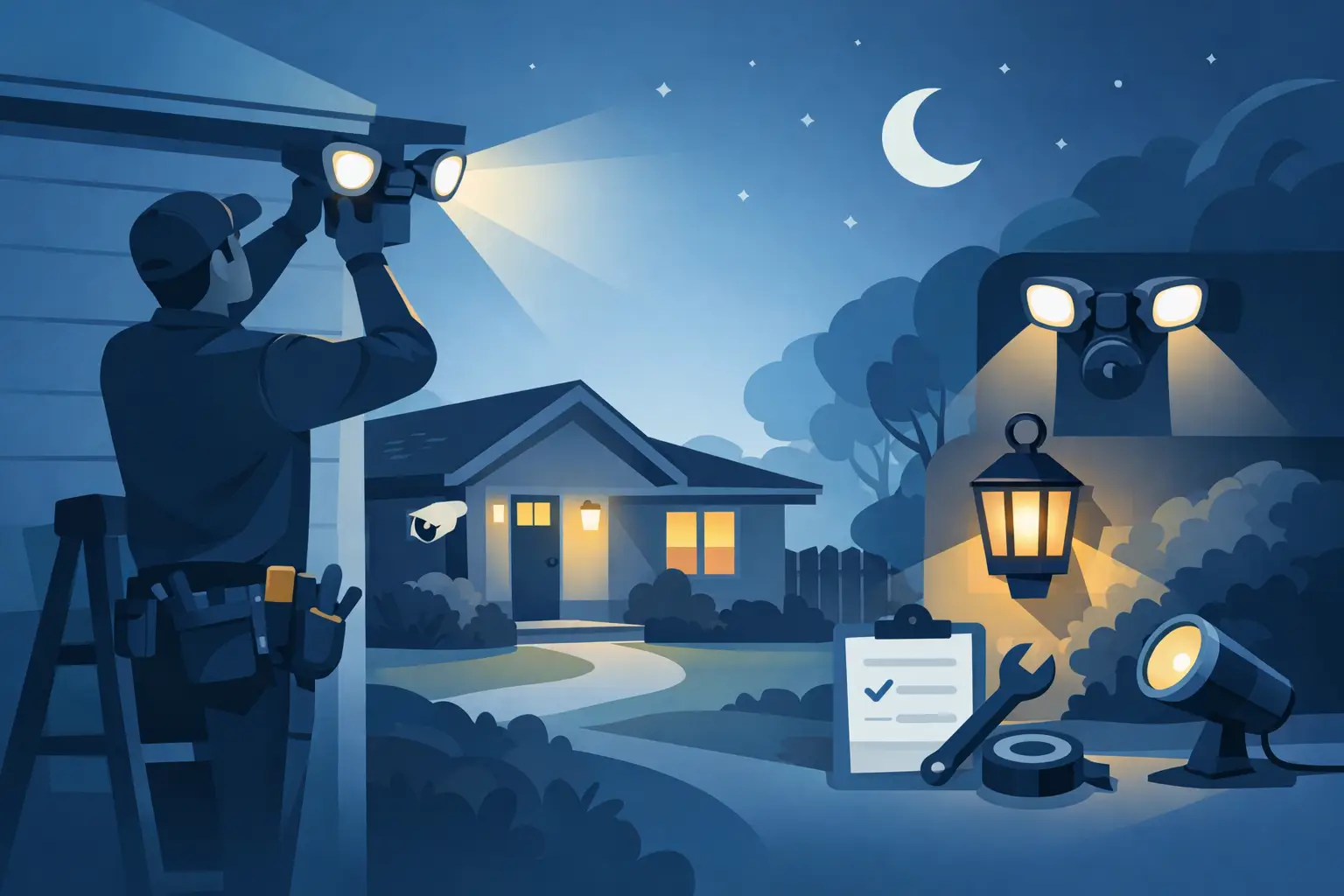
A dark side path, a shadowed driveway, or a rear entrance with no visibility can make any property feel less secure than it should. Outdoor security lighting installation is one of the most practical ways to improve safety around a home or business, but the difference between a useful setup and an annoying one usually comes down to planning and proper electrical work.
Good security lighting does two jobs at once. It helps deter unwanted activity, and it makes everyday life easier for the people who actually use the property. That might mean seeing who is at the door, getting the trash out on a winter evening, walking to the car safely, or helping staff lock up at the end of the day.
Why outdoor security lighting matters
Security lights are often treated like a simple add-on, but placement and performance matter more than most people expect. A light that is too bright in the wrong spot can create glare and deep shadows. A fixture pointed straight into a neighbor’s window can cause complaints. A cheap motion light with poor sensitivity can switch on every time a cat passes by, then miss a person walking up the path.
Done properly, outdoor security lighting installation gives you better visibility exactly where you need it. Entry points, driveways, detached garages, gates, side access, loading areas, and back yards are the usual priorities. For landlords and business owners, lighting also helps reduce risk around common areas, walkways, and parking spaces.
There is also the confidence factor. People feel better using a property when the outside areas are clearly lit and easy to navigate. That matters just as much as the security benefit.
What makes a good outdoor security lighting installation
The best setup is rarely the one with the most fixtures. It is the one that covers the right areas without over-lighting everything. In most cases, that means starting with how the property is actually used.
A family home may need focused lighting at the front door, driveway, and back patio. A rental property may need dependable illumination for shared access routes and bins. A small business may need a stronger setup at entrances, service yards, and parking areas. The layout, surrounding buildings, and nearby street lighting all affect the final design.
Coverage should match real weak points
A common mistake is putting one very bright floodlight on the wall and assuming it covers everything. In practice, that often leaves blind spots. A better approach is to think in zones. Front approach, side access, rear access, and vehicle areas each have different lighting needs.
This is where experienced electrical advice helps. Some spots need wide-beam flood lighting, while others are better suited to a lower-level wall light that improves visibility without dazzling anyone.
Brightness is important, but balance matters more
More brightness does not automatically mean more security. If a fixture is too powerful, it can wash out camera images, reduce visibility beyond the glare, and make the area uncomfortable to use. On the other hand, lights that are too weak may not provide enough practical visibility.
The right level depends on the height of the fitting, the beam angle, and the surface below it. A light mounted high on a pale wall will behave very differently from one installed lower down against dark brickwork.
Motion sensors are useful when they are set up properly
Motion-activated security lighting is popular for good reason. It saves energy and draws attention when movement is detected. But poor positioning can make it frustrating. If the sensor catches passing traffic, branches moving in wind, or regular foot traffic outside the property line, it will become more of a nuisance than a benefit.
The detection range, angle, and timer settings all need to be adjusted for the space. For some properties, a mix of dusk-to-dawn lighting and motion activation works best. That gives a steady base level of visibility with added brightness when movement occurs.
Choosing the right fixtures
Outdoor fittings need to cope with weather, temperature changes, and regular exposure to moisture. That sounds obvious, but not every light sold for external use is equal in quality. A fitting may look the part and still fail early if the build quality is poor or the installation is rushed.
LED fixtures are now the standard choice for most outdoor security lighting installation projects. They are energy efficient, long-lasting, and available in a wide range of outputs and color temperatures. For security purposes, a clean white light usually works well because it improves visibility without the yellow cast of older fittings.
The style of fixture still matters. Floodlights are useful for larger open areas, but they are not right for every location. Bulkhead lights, wall-mounted downlights, and soffit-mounted fittings can all play a part depending on the building and the result you want.
For commercial properties, durability and tamper resistance may matter more than appearance. For homes, customers often want something that feels secure without making the front of the house look like a warehouse yard. That is a fair concern, and a good installer should account for it.
Why professional installation is worth it
Outdoor electrical work needs to be safe, weather-appropriate, and correctly integrated with the existing electrical system. That includes the wiring route, load considerations, switching method, circuit protection, and the condition of what is already in place.
This is one of those jobs where the finish can look simple from the outside while the important part is hidden. If a cable run is poorly protected, if connections are not properly sealed, or if the circuit is not suitable, problems can show up later in the form of nuisance tripping, unreliable operation, or water-related faults.
Professional installation also helps avoid the usual headaches. Lights placed too low can be tampered with. Lights fitted too high may be hard to maintain and less effective than expected. Poor alignment can leave dark gaps or send light where it should not go.
A proper installer will assess the building, recommend sensible positions, and make sure the system works as it should from day one. For customers who already have CCTV, alarms, or other security measures, lighting can also be set up to complement the wider system instead of working against it.
Common problems to avoid
One of the biggest issues is over-lighting. People often assume that a brighter property is automatically a safer one, but too much light in the wrong place creates contrast and shadow. It can also irritate neighbors and make the property look harsh rather than secure.
Another common issue is poor sensor setup. If the light is constantly switching on for no useful reason, people start ignoring it. That defeats the point.
Then there is fixture quality. Low-cost fittings can be tempting, especially for landlords or anyone trying to keep project costs down. Sometimes that works out fine. Sometimes it means replacing failed units far sooner than expected. In many cases, spending a bit more upfront on decent fittings and proper installation is the cheaper option over time.
Homes and businesses need different approaches
For homeowners, the priority is usually a mix of safety, convenience, and curb appeal. You want the property to feel secure without making it uncomfortable to live with. That might mean subtle front lighting, stronger rear coverage, and sensor control around access points.
For landlords, reliability is often the key issue. Exterior lights in shared or regularly used spaces need to stand up to use and be simple for tenants to live with. Fewer callouts and fewer complaints are a real advantage.
For business owners, outdoor lighting is often part of a wider duty of care. Staff and customers need safe access, especially in darker months. Service entrances, yards, and parking areas may need more deliberate coverage, particularly where deliveries, closing procedures, or early starts are involved.
A practical approach that works
The best results usually come from keeping things straightforward. Start with the areas that genuinely need visibility. Choose fittings that suit the building and the purpose. Make sure the controls are sensible. And most importantly, have the work carried out properly so the system is safe, reliable, and built to last.
That is the approach trusted local contractors tend to take, and it is the reason many customers prefer dealing with a firm like BS Electrical rather than chasing the cheapest possible fix. Honest advice, clear pricing, and work done properly the first time usually saves money and stress in the long run.
If you are thinking about outdoor security lighting, the goal is not to flood every wall with light. It is to make the property safer, easier to use, and harder to approach unnoticed, without creating new problems in the process.