
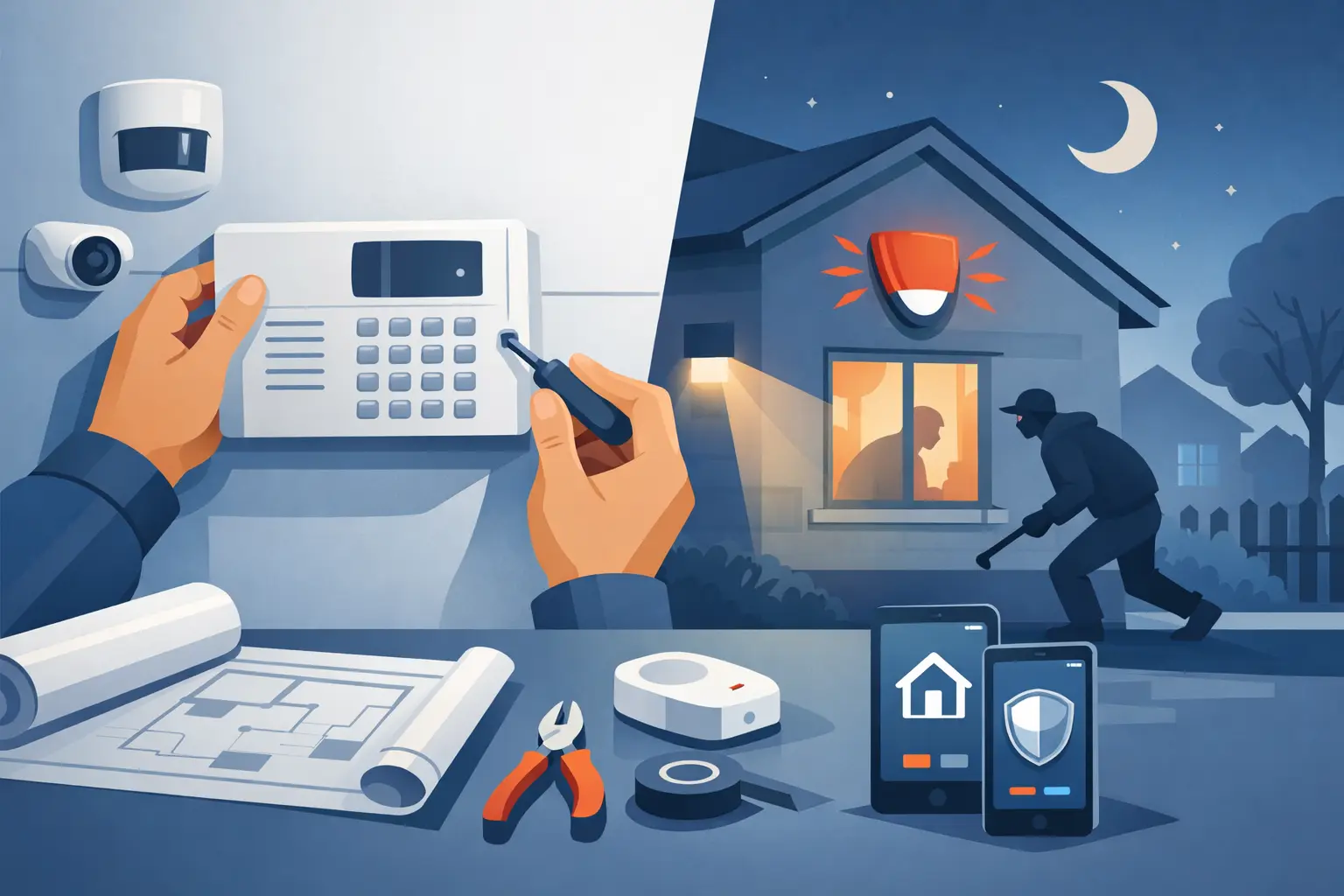
A front door camera might show you who came by. A smart lock might let you check if the door is secure. But when someone actually tries to force entry, home intruder alarm installation is what turns a quiet risk into an immediate response. For many homeowners, landlords, and small business owners, that is the difference between finding a problem later and stopping one while it is happening.
Why home intruder alarm installation matters
Most break-ins are opportunistic. A property that looks easy to access, poorly lit, or obviously unprotected is more likely to be targeted than one with visible alarm equipment and clear signs of security. An alarm system does two jobs at once. First, it acts as a deterrent. Second, if someone does try to get in, it raises the alert fast.
That matters whether you live in the property every day, rent it out, or leave it empty for stretches of time. Families want reassurance at night and when away from home. Landlords want to protect buildings, tenants, and contents in shared or vacant properties. Small business owners want to secure stock, equipment, and entry points without making day-to-day use awkward.
The right system is rarely the biggest or most expensive one. It is the one that suits the property layout, your routine, and the level of risk.
What a good intruder alarm system should include
A proper alarm setup is not just a control panel and a loud siren. It should be planned around how someone would actually try to get in. In most homes, that means looking first at the main doors, accessible windows, side access, garages, and any hidden entry points.
A standard system often includes door contacts, motion detectors in key rooms or hallways, an external sounder, and a control unit that is easy to use. Some properties also benefit from window sensors, pet-friendly detectors, panic buttons, or app-based alerts. If you already have CCTV or outdoor lighting, those systems can often work alongside your alarm to give better overall coverage.
The key is balance. Too few devices and you leave blind spots. Too many in the wrong places and the system becomes annoying, prone to false alarms, or difficult to arm properly.
Wired or wireless – which is better?
This depends on the property and the stage of work.
Wired alarms are often a strong choice where renovation work is already happening or where access for cabling is straightforward. They can be very reliable and reduce the need for battery changes in sensors. The downside is that installation can be more disruptive in finished homes if cable routes are limited.
Wireless systems are popular because they are quicker to fit and usually involve less disturbance to walls and ceilings. They suit existing homes well and can be a practical option for upgrades. That said, they still need proper placement, good signal planning, and ongoing battery maintenance.
There is no one-size-fits-all answer. A tradesperson-led assessment matters because the best option on paper is not always the best fit for the building in front of you.
Planning home intruder alarm installation properly
The biggest mistake people make is thinking alarm installation starts with choosing a brand or an app. It starts with the building.
A good installer will look at how the property is used, not just its square footage. Do you use the back door more than the front? Is there an attached garage with internal access? Are there pets moving around at night? Does an upstairs office need separate protection? Is the property vacant at certain times of year? These details affect where devices should go and how the alarm should be set up.
Zoning is another important part of planning. In a family home, you may want the downstairs protected overnight while people move freely upstairs. In a rental or small commercial unit, you may want different areas armed separately. A well-planned system works with your routine instead of constantly fighting it.
Placement matters more than people think
Even quality alarm equipment can underperform if it is badly positioned. Motion detectors should cover likely routes through the property without being triggered by heat sources, moving curtains, or awkward angles. Door contacts need secure fitting and proper alignment. External sounders need to be visible enough to deter but also mounted correctly for durability and tamper protection.
This is where professional installation earns its value. It is not just about getting devices on the wall. It is about making sure the whole system works reliably day after day.
Common mistakes with alarm installation
DIY kits can look attractive, especially if the upfront price seems lower. For some very simple properties, they may appear to do the job. The issue is usually not whether the alarm can be turned on. The issue is whether it will protect the right areas consistently without becoming a nuisance.
One common mistake is covering only the front entrance while leaving side or rear access too lightly protected. Another is putting motion sensors where they are likely to false trigger. Some people also forget that user error is a real problem. If the keypad is awkward, the app is confusing, or arming takes too many steps, people stop using the system properly.
Poor installation can also mean weak siren placement, patchy wireless signal, low-quality fixings, or no clear handover once the work is done. An alarm should not leave you guessing. You should know how to set it, unset it, test it, and understand what happens when it activates.
Choosing the right setup for your property
A small apartment does not need the same alarm design as a detached home, rental property, shop, or office. That sounds obvious, but it is where many off-the-shelf systems fall short.
For a typical home, the focus is often on perimeter protection and key internal movement routes. For landlords, reliability and ease of use are especially important, along with a setup that can be managed clearly between tenancies. For small businesses, alarm systems often need to account for staff access, stock rooms, rear entry points, and opening or closing routines.
This is also where integration can make sense. If you are already planning CCTV, security lighting, or door access control, it can be more practical to think about security as one joined-up system rather than separate pieces added over time. A trusted local contractor can help you avoid overlap, gaps, and unnecessary cost.
What to expect from a professional installer
Good service is about more than fitting the hardware. You want someone who turns up when they say they will, explains the options clearly, and recommends what suits the property rather than what is easiest to sell.
A proper installation should begin with a site assessment and a straightforward quote. From there, the work should be neat, safe, and planned to keep disruption sensible. Once the system is installed, it should be fully tested and demonstrated so you know exactly how it works.
That practical handover matters. If you are not confident using the alarm, the job is not really finished. A good installer will keep the explanation plain and make sure you are comfortable with day-to-day operation before they leave.
For local customers who want honest, no-nonsense service, that approach often matters just as much as the equipment itself. It is one reason many property owners prefer a local firm like BS Electrical over a faceless national chain.
Maintenance and long-term reliability
Alarm systems are not fit-and-forget forever. Batteries need checking where relevant, sensors should be tested, and any faults should be dealt with promptly. If you have changed doors, windows, room layouts, or building use, the system may need adjusting too.
Regular testing helps catch small issues before they become bigger ones. A siren that sounds weak, a detector that drops out, or a keypad that starts showing faults should not be ignored. Security only works when it is dependable.
If your current setup is older, unreliable, or difficult to use, a partial upgrade may be enough. In other cases, replacement is the smarter option. It depends on the age of the system, the condition of the components, and whether it still matches how the property is used today.
Getting the best value from home intruder alarm installation
Value is not just the lowest quote. It is getting a system that is correctly designed, professionally fitted, and simple enough to use every day. Paying less for poor coverage or repeated false alarms usually costs more in frustration later.
A sensible installer will talk honestly about what you do and do not need. Some properties benefit from a straightforward setup with a few well-placed devices. Others need broader coverage or integrated security measures. The best result is a system that feels proportionate, effective, and easy to live with.
If you are thinking about home intruder alarm installation, the smart move is to start with the property, the risks, and the way you actually use the space. Get that right, and the alarm becomes more than a box on the wall. It becomes part of a safer, more confident way to protect your home or business.