A tripping breaker, flickering kitchen light, or dead outlet can leave you asking the same question: is this a straightforward fix, or is it time to replace part of the electrical system? Electrical repair versus replacement is not just a cost decision. It is about finding the real cause of the fault, keeping people safe, and avoiding a cheap fix that turns into a larger problem a few months later.
For homeowners, landlords, and business owners, the right answer depends on the age and condition of the installation, the type of fault, and whether the system still meets the demands being placed on it. A qualified electrician should be able to explain the options in plain terms, including what can be repaired safely and where replacement is the more sensible long-term choice.
Electrical Repair Versus Replacement: What Is the Difference?
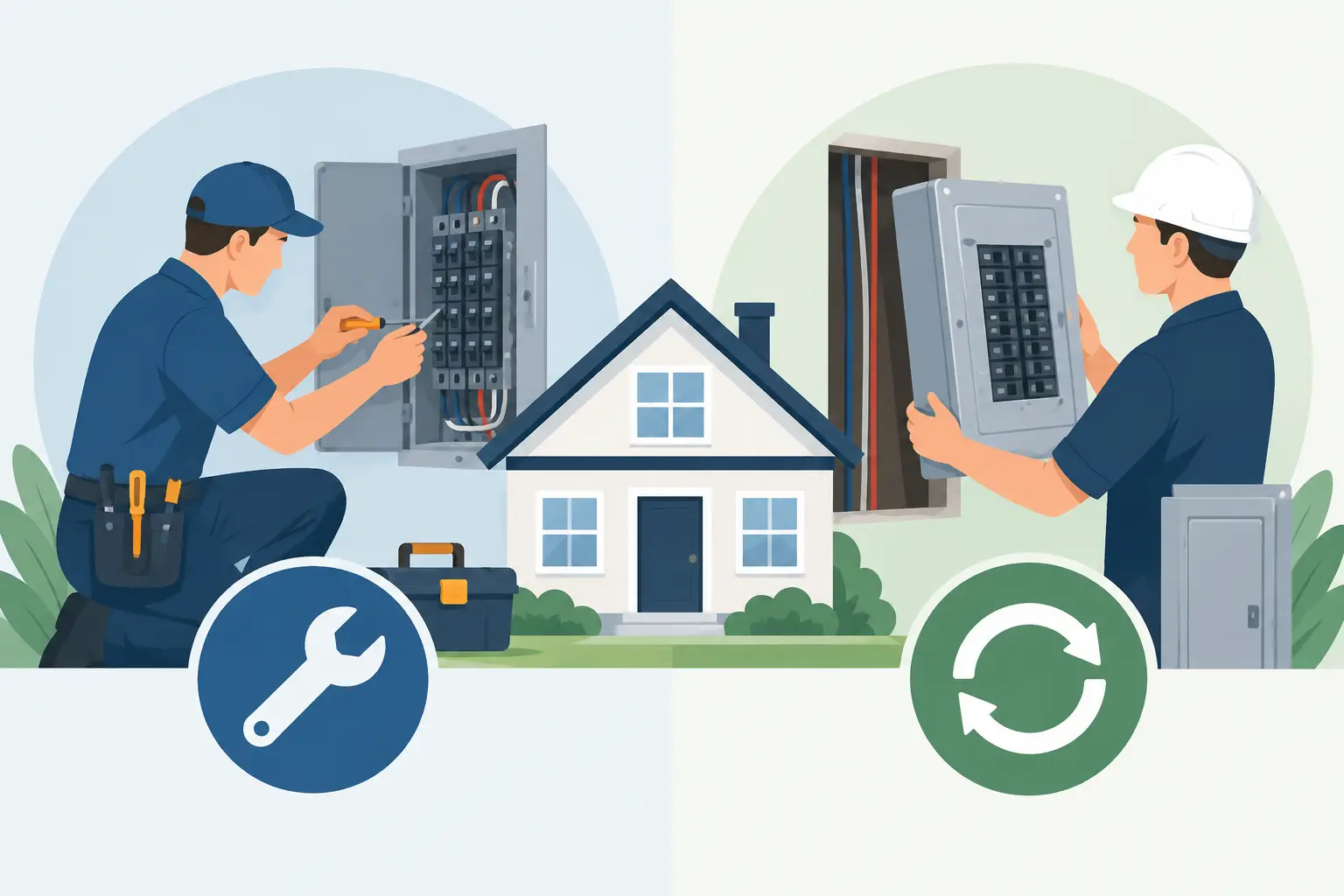
An electrical repair restores a faulty part of an otherwise sound installation. This could mean replacing a damaged outlet, tightening a loose connection, repairing a lighting circuit, changing a failed switch, or locating and correcting a fault that is causing breakers to trip.
Replacement goes further. It means removing equipment or wiring that is outdated, damaged beyond reliable repair, unsafe, or no longer suitable for the property. Examples include replacing an old electrical panel, upgrading a consumer unit, renewing deteriorated cables, replacing unsafe light fittings, or carrying out a partial or full rewire.
Repair is often the quicker and less expensive route when the fault is isolated and the rest of the installation is in good order. Replacement can cost more upfront, but it may prevent repeated callouts, improve safety, and provide enough capacity for modern living or business use.
When Repair Is Usually the Right Choice
A repair is often appropriate when there is a clear, contained issue and testing shows the circuit remains safe. A single faulty outlet, a broken light switch, a loose connection, or a damaged cable section can often be resolved without replacing an entire circuit.
For example, a light that flickers may be caused by a failing bulb, loose fitting, worn switch, or poor connection. Once the fault is identified, replacing that component may be all that is needed. The same applies to a breaker that trips after one appliance is plugged in. The problem may be the appliance, not the wiring in the building.
Repairs make practical sense when they address the root cause. Replacing a faceplate because it looks worn is simple enough, but a scorched outlet or burning smell needs proper investigation. The visible damage may be a symptom of overheating, a loose terminal, overloaded use, or damaged wiring behind the wall.
For rental properties and commercial premises, prompt repairs are particularly valuable. A small fault can quickly become a tenant complaint, an interruption to trading, or a safety concern. Dealing with it early helps keep disruption and costs under control.
Signs Replacement May Be the Safer Option
There are times when repairing one component would only postpone a wider problem. Older properties can have electrical systems installed for a very different level of demand. More kitchen appliances, home offices, electric showers, EV chargers, security systems, and modern lighting all place greater pressure on an installation.
Replacement should be considered if there are recurring faults, damaged or brittle wiring, outdated protective equipment, or clear signs that the system has been altered poorly over the years. Frequent breaker trips are not something to keep resetting and hoping for the best. They need fault finding, and the findings may point to a circuit or panel upgrade.
A full rewire is not always necessary. Sometimes a partial rewire or a new dedicated circuit is enough. For instance, an extension, renovated kitchen, garage conversion, or EV charger installation may need new wiring that is properly designed for the load, while the rest of the property remains serviceable.
Replacement is also worth discussing when the electrical panel lacks modern safety protection or has no spare capacity. Upgrading the panel can make fault protection more effective and create room for planned additions. It is often a sensible step before larger improvements rather than an emergency measure after something fails.
Warning Signs That Should Not Be Ignored
Some issues need urgent professional attention rather than a wait-and-see approach. Switch off the affected circuit if it is safe to do so and arrange an inspection if you notice:
- Burning smells, scorch marks, buzzing, crackling, or warm outlets and switches
- Repeated tripping breakers or blown fuses without an obvious appliance fault
- Electric shocks or tingling from fittings, appliances, or metalwork
- Lights that dim or surge when other equipment is used
- Exposed wiring, water damage near electrical equipment, or broken panel covers
These signs do not automatically mean the whole system needs replacing. They do mean the fault should be diagnosed properly before anyone continues using the circuit.
Cost: Look Beyond the First Price
The lowest immediate price is not always the best value. A minor repair that restores a safe, reliable circuit is money well spent. But repeated repairs to old equipment can become more expensive than replacing it once, particularly if each failure causes lost time, damaged appliances, or emergency callout costs.
It helps to compare the expected life of the repair with the cost and benefits of replacement. Ask whether the proposed work solves the underlying issue, whether other parts are likely to fail soon, and whether replacement would reduce future disruption. A clear quote should separate essential safety work from optional improvements, so you can make an informed decision without pressure.
Landlords should also think about the condition of the installation across the full tenancy period, not just the current fault. Business owners may need to weigh the cost of replacement against downtime. In both cases, planned work is usually easier to manage than an urgent failure.
Why Testing Comes Before the Decision
Electrical faults are not always visible. A breaker may trip because of a damaged cable, moisture in an outside fitting, a failing appliance, or a loose connection. Replacing the first item that looks suspicious without testing can waste money and leave the actual problem in place.
A professional inspection and fault-finding process provides the evidence needed to choose repair or replacement. This may include checking circuit protection, testing insulation, examining connections, and assessing the condition and capacity of the installation. The result should be a practical recommendation, not technical jargon designed to push unnecessary work.
This is especially useful after buying an older home, taking on a commercial unit, or planning renovations. An electrical safety inspection can identify issues before walls are opened, new flooring is installed, or a property is handed over to tenants.
Choosing the Right Option for Your Property
There is no one-size-fits-all answer to electrical repair versus replacement. A newer home with one damaged outlet may need a small, targeted repair. An older property with repeated issues, limited panel capacity, and aging wiring may be better served by phased upgrades or a rewire.
The best approach is honest assessment. You should know what has failed, why it failed, what work is essential now, and what could reasonably be planned for later. That gives you control over the budget while keeping safety where it belongs – at the top of the list.
If something does not look, sound, or smell right, do not keep resetting the breaker or relying on temporary fixes. BS Electrical can assess the fault, explain the sensible options, and carry out the work properly the first time, whether that means a careful repair or a replacement built to last.