A warm outlet, a breaker that keeps tripping, or lights that flicker when the kettle is on are easy problems to put off. They are also the sort of warning signs that can turn into costly repairs, damaged equipment, or a real fire risk. Good electrical safety is not about worrying over every switch – it is about recognizing when something is not right and getting it dealt with properly.
For homeowners, landlords, and business owners, the safest approach is usually the simplest: use electrics sensibly, check for changes, and do not attempt repairs that need a qualified electrician. A few practical habits can prevent many common problems before they interrupt your day or put people at risk.
Electrical Safety Starts With What You Can See
You do not need electrical training to spot obvious issues. Walk around your property occasionally and pay attention to outlets, switches, extension leads, and the electrical panel or fuse board. They should look secure, clean, and undamaged. Cracked faceplates, loose outlets, exposed wiring, scorch marks, or discoloration around a switch all need professional attention.
A burning smell is never something to ignore, even if it disappears after a few minutes. Turn off the affected circuit at the panel if you can identify it safely, stop using the appliance or outlet, and arrange for it to be checked. The same applies to buzzing, crackling, or an outlet that feels unusually warm.
Lights that dim briefly when a high-power appliance starts can sometimes be a sign of normal demand. But regular flickering, frequent bulb failures, or lights changing brightness without an obvious reason may point to a loose connection, overloaded circuit, or a fault elsewhere in the installation. It depends on the pattern, which is why a proper inspection is more useful than guessing.
Do Not Overload Outlets and Extension Cords
Many electrical issues begin with too much demand from one outlet. Extension cords and power strips are useful for temporary, low-demand equipment, but they are not a permanent answer to a lack of outlets. Avoid running extension cords under rugs, through doorways, or where furniture can crush them. Heat and damaged insulation can build up out of sight.
High-demand items need particular care. Space heaters, microwaves, air fryers, washing machines, tumble dryers, kettles, and portable air conditioners can draw a significant load. Plugging several of these into one power strip or extension lead is a poor trade-off: it may be convenient for a while, but it can overload the circuit or the accessory itself.
Use one extension cord only when it is suitable for the job and fully uncoiled. Never connect multiple extension cords or power strips together. If your home office, kitchen, workshop, or retail counter relies on them every day, additional fixed outlets are normally the safer and tidier solution.
Keep Electricity and Water Apart
Bathrooms, kitchens, utility rooms, and outdoor areas demand extra caution because water increases the risk of electric shock. Keep appliances and chargers away from sinks, tubs, and wet surfaces. Do not use electrical equipment with wet hands, and never handle a plugged-in appliance that has fallen into water.
Outdoor outlets, garden lighting, and equipment used in sheds or garages should be designed and protected for the conditions. A cable that is fine indoors may not be safe in damp areas, exposed locations, or places where it can be cut by tools. If you are adding exterior lighting, a hot tub supply, a garden office, or an EV charger, get the circuit planned for the actual load and environment rather than extending an existing outlet.
In rental properties and shared commercial spaces, this matters even more. People will use sockets in ways you cannot always predict. Safe positioning, appropriate protection, and regular checks reduce the chance that everyday use creates a problem.
Know What Your Breakers Are Telling You
A breaker or fuse is there to interrupt the supply when it detects a fault or excessive current. Resetting one once after an obvious cause, such as too many appliances running on the same circuit, may be reasonable. Repeated tripping is not something to keep resetting until it stays on.
First, unplug or switch off the appliances on that circuit. If the breaker still trips, or it trips again when a particular appliance is used, leave it off and have the fault investigated. The cause could be a faulty appliance, damaged cable, moisture, an overloaded circuit, or a problem within the wiring. Only testing can establish which one.
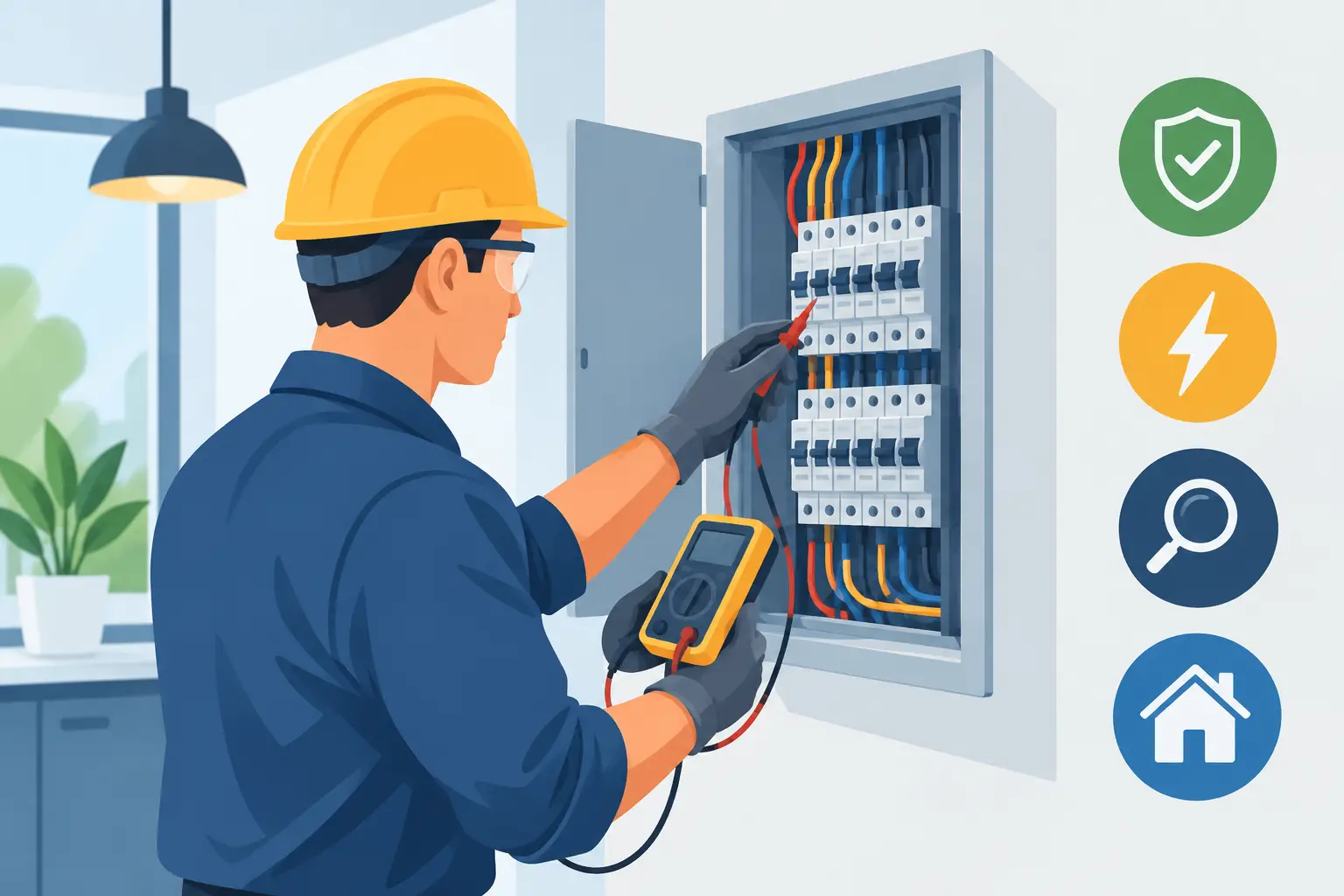
Make sure the electrical panel or fuse board is accessible. Do not block it with storage, and do not leave its cover damaged or missing. It is also useful to know which circuits serve key areas of the building. Clear labels save time during a fault and make it easier to isolate equipment safely in an emergency.
Older Wiring Deserves an Honest Assessment
Age alone does not prove that an installation is unsafe, but older systems are more likely to have wear, previous alterations, and limited capacity for modern use. A property that was wired decades ago may now be supplying multiple TVs, computers, kitchen appliances, chargers, security equipment, and heating controls that were never part of the original plan.
Signs that it is time for an assessment include outdated-looking accessories, cloth-covered cables, insufficient outlets, recurring faults, or a fuse board that no longer provides the protection expected for a modern property. Renovations are another important trigger. Before walls are closed, kitchens are replaced, or new circuits are added, it makes sense to check whether the existing installation can safely support the work.
A full rewire is not always necessary. Sometimes the right answer is a targeted repair, a new circuit, a fuse board upgrade, or better distribution of loads. A straightforward electrician will explain the condition found, the options available, and what work is genuinely needed.
Electrical Safety for Landlords and Businesses
Electrical systems in rentals and workplaces receive more varied use than those in a single household. Tenants change, staff bring in equipment, and minor damage may go unreported. Regular inspection gives owners and managers a clear picture of the installation and identifies issues before they become a dispute, a disruption, or a hazard.
In a business setting, pay attention to portable equipment, trailing leads, kitchen areas, stock rooms, and staff workstations. Cables across walkways are both a trip hazard and a source of damage. Equipment with a damaged plug, loose cable, or intermittent power should be removed from use until it has been checked.
For landlords, prompt action on reports of shocks, hot outlets, tripping breakers, or damaged fittings protects tenants and helps prevent a small repair from escalating. Keeping inspection records and repair details is sensible property management, particularly where several people may need to understand what work has been carried out.
Leave These Jobs to a Qualified Electrician
Changing a light bulb or resetting a breaker is one thing. Work inside outlets, switches, junction boxes, electrical panels, or fixed wiring is different. It can expose you to live parts, create hidden faults, and affect the safety of the whole circuit if it is done incorrectly.
Call a qualified electrician for recurring breaker trips, replacement outlets or switches, new lighting, additional circuits, fuse board work, fault finding, and any damage to fixed wiring. This is especially important after flooding, water leaks, rodent damage, DIY drilling into a wall, or a suspected electrical fire.
BS Electrical provides a practical, local approach for properties across Middlesbrough, Teesside, and the wider North East. The aim is not to overcomplicate a fault, but to find the cause, explain the work clearly, and leave the installation safe and dependable.
If something electrical has changed in your property, trust that instinct. Switch it off where safe to do so, avoid using it until it has been checked, and deal with the issue before it has the chance to become a bigger one.