
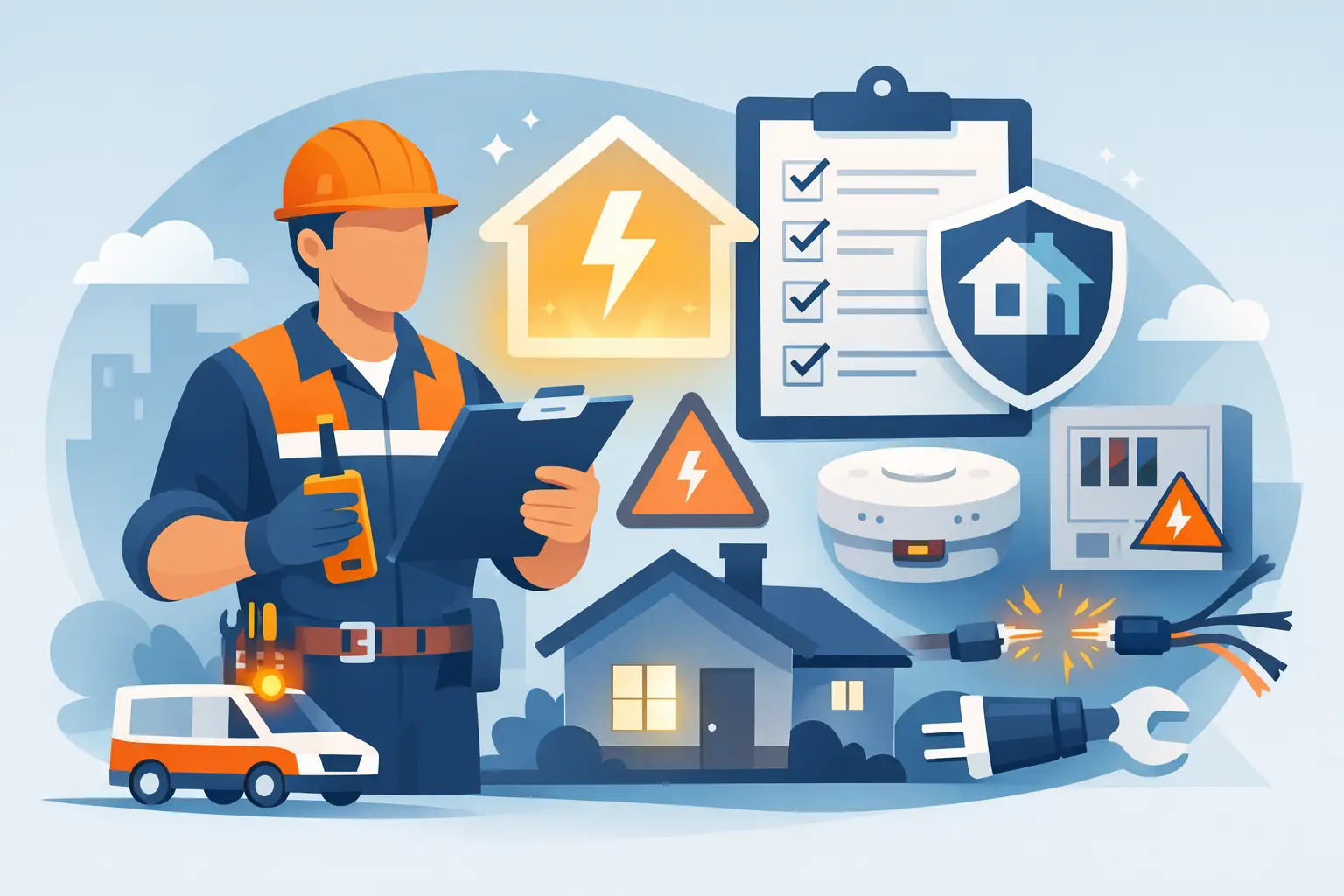
A burning smell from an outlet, a buzzing electrical panel, or power loss affecting part of the property can turn a normal day into a real safety concern. This emergency electrician callout checklist helps you make sensible decisions before help arrives, give the electrician useful information, and avoid taking risks with a fault you cannot safely diagnose yourself.
Electrical emergencies are not always dramatic, but they should never be ignored. If something feels wrong, the safest choice is to stop using the affected circuit or equipment and get professional advice. A prompt call can prevent further damage to your property and, more importantly, reduce the risk of shock or fire.
Emergency Electrician Callout Checklist: Start With Safety
Your first job is not to find the cause of the fault. It is to keep people away from danger.
If there is smoke, flames, sparking, or a strong burning smell, treat it as an immediate emergency. Get everyone out of the affected area. If there is an active fire or a serious risk to life, call emergency services first. Do not attempt to put out an electrical fire with water.
Where it is safe to do so, switch off and unplug the appliance that appears to be causing the problem. If the issue involves an outlet, light fitting, or fixed wiring, leave it alone. Do not remove covers, touch exposed cables, or keep resetting a breaker that trips straight away.
You may be able to turn off power at the electrical panel if it is dry, accessible, and there are no signs of overheating or damage around it. If you are unsure, do not take chances. Move away from the area and wait for a qualified electrician.
Keep children, pets, tenants, staff, and visitors away from the fault. A simple barrier, closed door, or clear instruction can stop someone from using a damaged outlet or turning an appliance back on by mistake.
Signs You Should Call for Urgent Help
Some problems can wait for a scheduled repair, while others need same-day attention. An urgent callout is sensible when you notice repeated tripping, a hot outlet or switch, scorch marks, exposed wiring, electric shocks or tingling from equipment, loss of essential power, water near electrical fittings, or a damaged electrical panel.
A single breaker trip after plugging in a faulty appliance may be straightforward. Repeated trips, especially when no appliance is connected, can point to a wiring fault, moisture issue, overloaded circuit, or failing protective device. The difference matters, which is why it is best to explain exactly what happened rather than guessing at the cause.
What to Tell the Electrician When You Call
A clear first phone call helps the electrician assess the urgency, bring suitable equipment, and arrive ready to investigate. You do not need technical language. Straightforward details are far more useful than trying to diagnose the fault yourself.
Before calling, make a quick note of the following:
- Your property address, best contact number, and whether someone will be available to provide access.
- What you can see, hear, or smell, such as a burning odor, buzzing, flickering lights, a tripped breaker, or visible damage.
- When the problem started and what was happening at the time, including whether an appliance was switched on or work had recently been carried out.
- Which areas are affected, such as one room, all downstairs outlets, security lighting, heating controls, or the whole property.
- Whether there has been water ingress, storm damage, a leak, building work, or pest damage near the affected area.
- What you have already done, including whether you unplugged an appliance or switched off a circuit.
Photos can be helpful if they can be taken from a safe distance and without moving anything. A picture of a tripped breaker, damaged outlet faceplate, or the appliance involved may save time. Never take a photo if you would need to get close to exposed wiring, smoke, water, or sparks.
If you manage a rental property or business premises, tell the electrician whether the fault affects fire alarms, emergency lighting, refrigeration, security systems, access control, IT equipment, or essential machinery. These details can change the priority and the safest temporary plan.
What Not to Do During an Electrical Emergency
It is understandable to want the power back quickly, particularly when heating, lighting, or business equipment is affected. However, a few common actions can make a manageable fault more dangerous.
Do not keep resetting a breaker to see if it will hold. A breaker is designed to trip when it detects a problem. Repeatedly forcing it back on can expose wiring and equipment to further damage.
Avoid using extension cords as a permanent workaround for a failed circuit. They can create overload risks, run across walkways, and mask a problem that needs proper repair. Do not plug high-demand appliances, such as heaters, kettles, microwaves, or dryers, into overloaded adapters.
Never touch electrical equipment with wet hands or while standing on a wet floor. If water is coming through a ceiling near lights, outlets, or wiring, stay clear of the area and avoid touching switches. Water and electricity are a dangerous combination even when the amount of water looks minor.
It is also wise not to rely on online videos or quick fixes for faults involving fixed wiring. Replacing a bulb is one thing. Opening an electrical panel, changing outlets, or tracing a circuit without the right experience is another.
Make the Property Easier and Safer to Access
Once the immediate danger is controlled, a little preparation can help the visit go smoothly. Keep a clear path to the electrical panel, affected room, and any relevant outside meter or service area. If the issue is in a commercial unit, arrange access to locked plant rooms, ceiling voids, stock areas, or security-controlled spaces.
Leave affected appliances unplugged and do not move damaged items unless they are clearly safe to handle. If a particular breaker has tripped, leave it off. This gives the electrician a clearer starting point and reduces the chance of the fault being disturbed before it is inspected.
For landlords and property managers, make sure the tenant knows not to use the affected circuit. Confirm who will meet the electrician, who can authorize work if needed, and whether there are any vulnerable occupants who need extra support while power is limited.
What a Professional Emergency Visit Should Cover
An emergency callout is about making the situation safe first, then finding the underlying fault where possible. The electrician may inspect the electrical panel, test circuits, check outlets and connections, assess appliances, and look for heat damage, loose wiring, moisture, or overload issues.
Sometimes the fix is immediate, such as isolating a faulty appliance, replacing a damaged accessory, repairing a loose connection, or correcting a tripped protective device. Other faults need further investigation or replacement parts, particularly where older wiring, concealed damage, or water ingress is involved. A good electrician will explain what has been found, what has been made safe, and what further work is recommended.
Cost can depend on the time of day, the severity of the issue, parts required, and how long fault finding takes. Asking for clear information is reasonable. The priority, though, is to prevent a small fault from becoming a larger repair or a serious safety incident.
For homeowners and businesses across Middlesbrough, Teesside, and the wider North East, BS Electrical provides a practical, no-nonsense response to urgent electrical problems. The focus is simple: assess the fault properly, make the property safe, and explain the next step in plain language.
When an electrical issue feels urgent, trust the warning signs, keep clear of the hazard, and make the call with the facts you have. That calm, sensible approach gives the electrician the best chance of getting your property safe and back to normal as quickly as possible.