
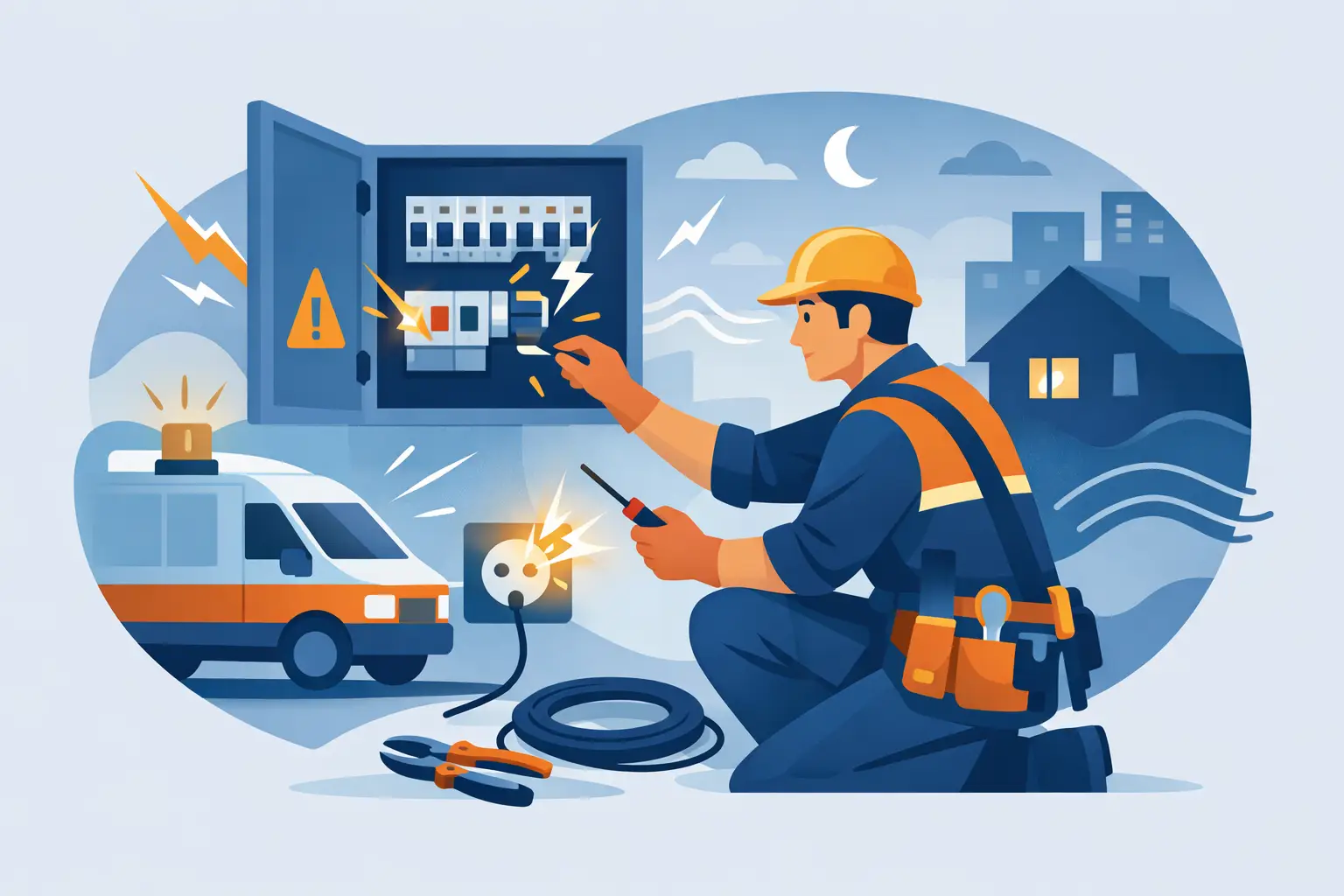
A circuit that keeps tripping is more than an inconvenience when it takes out your lights, heating, kitchen appliances, or business equipment. An emergency electrician for tripping circuits can identify whether the problem is a simple overload or a fault that needs urgent attention, without guesswork or unsafe temporary fixes.
The key is knowing what you can safely check and when to stop. A breaker is doing its job when it trips – it is cutting power because it has detected a condition that could damage wiring, appliances, or people. Resetting it repeatedly without finding the cause can turn a manageable fault into a bigger problem.
Why Electrical Circuits Trip
Most tripping issues fall into one of three categories: an overloaded circuit, a faulty appliance, or a fault in the fixed wiring. The symptoms can look similar at first, but the right repair depends on which one is responsible.
An overload happens when too many high-demand appliances run from the same circuit at once. Kettles, space heaters, air fryers, tumble dryers, microwaves, and power tools can all draw significant power. If a breaker trips only when several appliances are in use, reducing the load may solve the immediate issue. It may also show that the property needs additional circuits or an electrical upgrade to suit how the space is used now.
A faulty appliance is another common cause. A damaged cable, worn plug, moisture inside an appliance, or an internal electrical fault can trip protection as soon as that item is switched on. This is especially common with older appliances, outdoor equipment, and anything used in damp areas.
Fixed wiring faults need professional attention. Damaged cables, loose connections, water ingress, worn outlets, faulty light fittings, and problems inside the electrical panel can all cause repeated tripping. These faults are not always visible, which is why proper fault finding matters.
What to Do When a Circuit Keeps Tripping
Start by switching off or unplugging appliances on the affected circuit. If you can safely identify the tripped breaker in the electrical panel, reset it once. Then reconnect appliances one at a time, allowing a short pause between each one. If the breaker trips when a particular appliance is plugged in or switched on, leave that item disconnected and arrange for it to be checked or replaced.
If the breaker trips again with everything unplugged, do not keep resetting it. The fault may be within the wiring, an outlet, a light fitting, or the panel itself. Turn off the affected circuit if possible and call a qualified electrician.
Do not remove the panel cover, attempt to repair damaged wiring, or fit a larger breaker to stop the tripping. A larger breaker does not fix the problem. It can allow cables to overheat before protection operates, creating a serious fire risk.
When You Need an Emergency Electrician for Tripping Circuits
A single trip caused by an overloaded outlet is not always an emergency. Repeated tripping, however, should not be ignored, particularly when there are warning signs that point to a more serious electrical fault.
Call for urgent help if you notice a burning smell, buzzing or crackling from an outlet or panel, sparks, smoke, discoloration around switches, or an electric shock from an appliance or fitting. You should also treat it as urgent if water has entered an electrical area, power has failed to essential equipment, or a circuit will not remain on even with all appliances disconnected.
For landlords and property managers, a tripping circuit can quickly become a safety and compliance issue, especially where it affects smoke alarms, emergency lighting, heating, shared areas, or kitchen facilities. Businesses may need a prompt response to protect stock, prevent downtime, and keep staff and customers safe.
If there is smoke, fire, or an immediate danger to people, leave the area if it is safe to do so and contact emergency services. Do not attempt to investigate a potentially live electrical fire yourself.
How a Professional Finds the Fault
Good electrical fault finding is methodical. The aim is not simply to get the power back on, but to establish why the protection operated and make sure the repair is safe.
An electrician will first ask when the circuit trips and what was being used at the time. That history often provides useful clues. A circuit that trips only when the washing machine heats up needs a different investigation from one that trips after heavy rain or when a particular light is switched on.
They can then isolate sections of the circuit, inspect outlets, switches, fittings, cables, and connections, and test the installation with appropriate equipment. This helps distinguish between overloads, earth faults, short circuits, insulation damage, and appliance-related issues. Once the cause is confirmed, the repair might be as straightforward as replacing a damaged outlet or light fitting. In other cases, it may involve repairing wiring, correcting a poor connection, replacing a faulty breaker, or recommending a panel upgrade.
There is a practical trade-off here. The cheapest-looking option is often a quick reset and a hope that the fault does not return. Proper testing can take longer, but it avoids the false economy of repeated callouts, damaged appliances, or a fault left hidden in the walls.
Common Causes Around Homes and Small Businesses
In homes, kitchens and utility rooms are frequent trouble spots because they contain high-use appliances and moisture. Bathrooms, garages, outdoor outlets, and garden lighting also deserve attention, particularly after bad weather. Extension cords and overloaded power strips can add to the problem, even when the fixed wiring is otherwise sound.
In commercial spaces, tripping may be linked to portable equipment, refrigeration, kitchen appliances, office equipment, outdoor signage, security systems, or changes to the way a unit is being used. A small workshop, salon, café, or office can outgrow its original electrical setup over time. Adding equipment without assessing circuit capacity can lead to regular nuisance tripping and lost working hours.
Older properties can present their own challenges. Previous alterations, aging components, hidden cable damage, and circuits that were never designed for modern demand can all contribute. That does not automatically mean a full rewire is needed. An honest electrician should explain what has failed, what needs immediate repair, and whether wider improvement work is genuinely worthwhile.
Preventing Future Trips
Once the immediate fault is repaired, a few sensible habits can reduce the chance of it happening again. Avoid daisy-chaining extension cords or loading several high-demand appliances onto one outlet area. Replace damaged cords and loose plugs promptly. Keep outdoor electrical equipment protected from weather, and do not use indoor-rated equipment outside.
For landlords and businesses, regular electrical safety inspections are a useful way to identify deteriorating equipment before it causes disruption. For homeowners, an inspection is worth considering after a property purchase, a major renovation, water damage, or repeated unexplained electrical issues.
If your panel is old, crowded, or frequently trips as your electrical needs increase, an upgrade may be the right long-term answer. The decision depends on the condition of the existing installation, the type of protection fitted, and the demand placed on it. A site visit and clear assessment are better than assumptions.
Local Help When Power Cannot Wait
BS Electrical provides straightforward fault finding and electrical repairs for homeowners, landlords, and businesses across Middlesbrough, Teesside, and the wider North East. The focus is simple: identify the real cause, explain the options clearly, and carry out the work safely and properly the first time.
If a breaker continues to trip, do not keep forcing it back on. Leave the suspect appliance disconnected, keep the affected area safe, and arrange for a qualified electrician to trace the fault before a small warning becomes a bigger repair.