
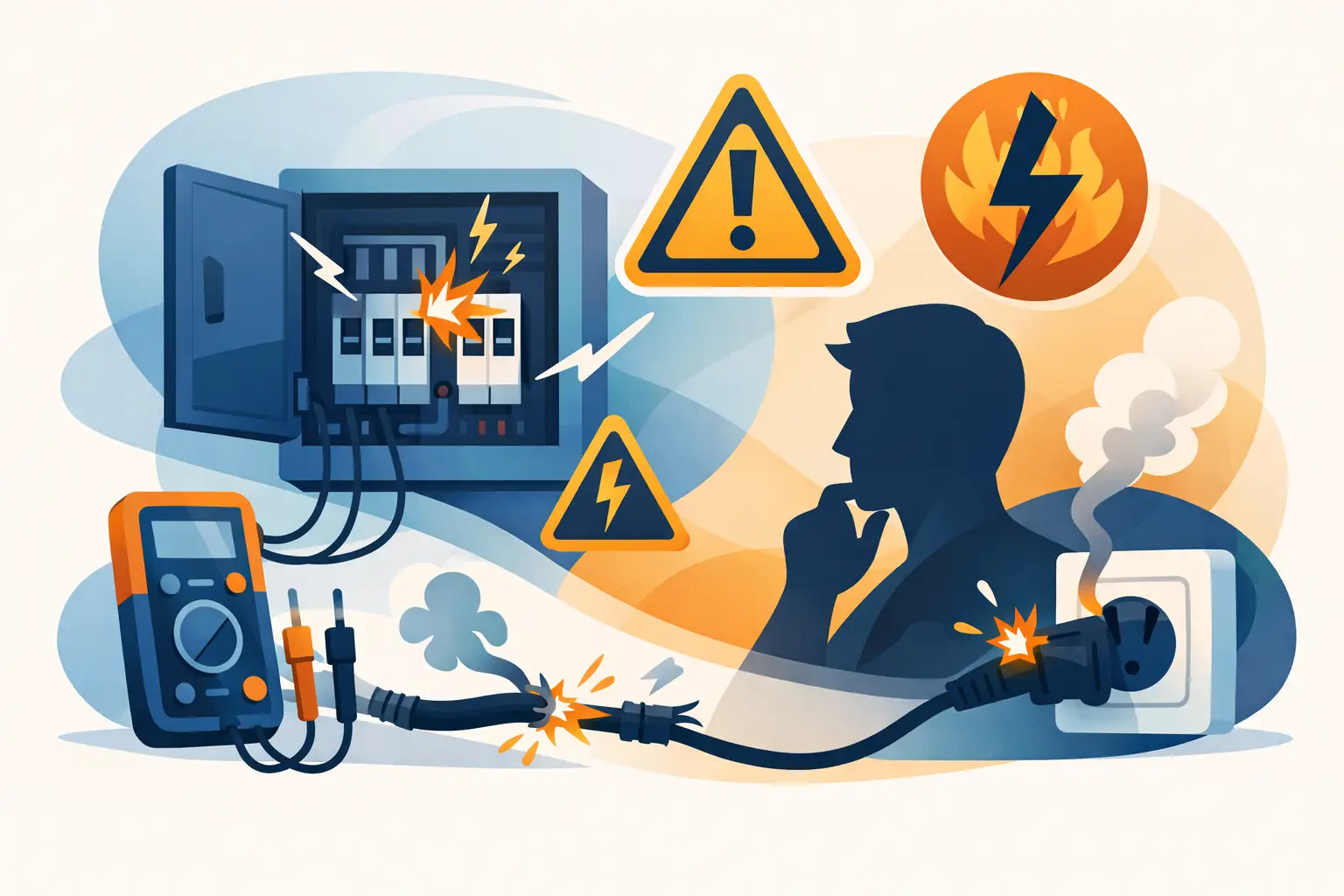
A light that flickers once is easy to ignore. A breaker that keeps tripping, a burning smell near an outlet, or buzzing behind a wall is not. If you are wondering how to know if an electrical fault is dangerous, the short answer is this: if there is heat, smoke, repeated tripping, shock, or signs of damaged wiring, treat it seriously straight away.
Electrical faults do not all mean the same thing. Some are minor, like a worn-out switch or a loose lamp connection. Others can point to overloaded circuits, failing components, damaged insulation, or hidden wiring problems that raise the risk of fire or electric shock. The challenge for most homeowners and business owners is knowing where the line is between inconvenient and unsafe.
How to know if an electrical fault is dangerous at a glance
The most serious warning signs are usually the easiest to spot. If you notice a burning odor, scorch marks, sparking, buzzing, crackling, warm outlets, smoke, or anyone receiving a shock from a switch or appliance, stop using that circuit. If it is safe to do so, turn the power off at the breaker and get a qualified electrician involved.
Repeated breaker trips also deserve attention. A breaker is meant to trip when it detects a fault or overload. Resetting it once after a clear one-off issue may be reasonable. Resetting it over and over without knowing the cause is not. That usually means the system is reacting to something that could get worse if ignored.
The same goes for lights dimming unexpectedly, outlets that suddenly stop working, or a section of the property losing power without an obvious reason. These faults are not always emergencies, but they should never be written off as normal.
Signs an electrical fault may be dangerous
Some faults are visible, while others show up through smell, sound, or unusual behavior in the system. Heat is one of the biggest warning signs. Outlet covers, switches, plugs, or the electrical panel should not feel hot in normal use. A little warmth from certain devices can happen, but noticeable heat at the wiring point itself suggests resistance, loose connections, or overloading.
Smells matter too. If something smells like burning plastic, fishy odor, or overheated wiring, there may be insulation melting somewhere behind the faceplate or in the wall. That is not something to monitor for a few days to see if it settles down. It needs checking properly.
Noise is another clue people often overlook. Electricity should not buzz loudly, crackle, or hiss. A faint hum from some equipment can be normal, but noise from outlets, switches, or the panel is different. It can mean arcing or a loose connection, both of which can become dangerous quickly.
Then there are the visual signs. Black marks around sockets, discolored switches, melted plastic, or sparks when plugging something in all point to a fault that needs urgent attention. One small spark from plugging in certain devices can happen, but repeated or larger sparks are a different matter.
When a tripping breaker is more than a nuisance
A tripping breaker is one of the most common reasons people call an electrician, and for good reason. Sometimes the answer is simple. You may have too many high-demand appliances on one circuit, and the breaker is doing its job. In that case, the fault is still important, but it may not mean damaged wiring.
Other times, it points to a short circuit, ground fault, water getting where it should not, or a faulty appliance. If the breaker trips as soon as you reset it, or trips even when very little is plugged in, that is a stronger sign of a real electrical problem. The danger depends on the cause, which is why guessing can make things worse.
A good rule is this: one trip after a clear overload is a warning. Repeated trips without an obvious reason are a fault that needs investigation.
Shock, tingling, and moisture make the risk higher
If you touch a switch, outlet, or appliance and feel a tingle or shock, that is a red flag. Even a mild shock means electricity may be escaping where it should not. People sometimes brush this off if it is brief, but it only takes one fault in the wrong place to cause serious injury.
This becomes even more urgent in kitchens, bathrooms, utility rooms, garages, and outdoor areas, where moisture increases the risk. Water and electricity are a bad combination for obvious reasons. Faults around exterior lighting, outdoor sockets, sheds, or damp walls should be taken seriously from the start.
For landlords and business owners, this matters even more because a fault does not just put one person at risk. It can affect tenants, staff, customers, and the property itself.
It depends on the age and condition of the system
Not every older property is unsafe, and not every newer one is fault-free. Still, age does matter. Older wiring, outdated panels, DIY alterations, and years of wear can all increase the chance that a fault is part of a bigger issue.
For example, one dead outlet in a modern, well-maintained property might turn out to be a localized problem. The same issue in an older building with a history of tripping breakers, loose sockets, or patchwork repairs may point to wider deterioration.
That is why fault finding is not just about fixing the obvious symptom. A proper inspection looks at what caused it, whether it is isolated, and whether there are other risks nearby.
What you should do if you think the fault is dangerous
Start with safety, not diagnosis. Do not keep testing switches, plugging things back in, or resetting breakers repeatedly to see what happens. If there is smoke, a burning smell, visible damage, or any sign of arcing, turn off the power if it is safe to reach the breaker. If you cannot do that safely, step away and get help.
Do not use the affected outlet, switch, or appliance. If one appliance seems to be causing the issue, unplug it only if there is no sign of heat or damage around the plug. If there is, leave it alone until an electrician can assess it.
You should also avoid opening up outlets, panels, or fittings yourself unless you are properly qualified. Electrical faults can appear straightforward from the outside and still involve dangerous live parts or hidden cable damage.
Problems that feel small but should not be ignored
Some of the most dangerous faults do not start dramatically. A light that flickers every few days, a breaker that trips once a month, or an outlet that only works if the plug sits a certain way can all seem minor. The issue is that electrical faults often worsen gradually.
Loose connections tend to build heat over time. Damaged insulation can deteriorate further. Moisture ingress can spread. So while not every small fault is an emergency, recurring electrical issues are never something to leave indefinitely.
If the same problem keeps coming back, that is your sign that it has moved beyond a quick annoyance and into something that needs proper fault finding.
When to call an electrician right away
You should get professional help immediately if there is any burning smell, smoke, heat, visible damage, repeated breaker tripping, electric shock, buzzing from outlets or panels, or power loss affecting part of the property with no clear reason. The same applies if the fault involves bathrooms, outdoor electrics, commercial premises, or rental property.
For local customers, this is where a straightforward, experienced contractor makes a difference. A proper electrician will not just patch the symptom and leave. They will trace the cause, explain it clearly, and recommend the safest fix without overcomplicating it.
That matters because electrical work is one of those jobs where the cheapest-looking answer is not always the most affordable in the long run. A quick reset or temporary workaround can hide a fault that later damages appliances, causes downtime, or creates a fire risk.
Why fast action usually saves trouble later
The reason to act early is simple. Electrical faults do not usually fix themselves. They either stay the same until the next time they show up, or they get worse. The cost difference between a small repair today and emergency work after a major failure can be significant.
More importantly, safety comes first. If something feels off with your electrics, trust that instinct. You do not need to know exactly what has failed to recognize that heat, smell, noise, shock, or repeated tripping are signs worth taking seriously.
If you are ever unsure how dangerous a fault is, treat uncertainty as a reason to get it checked. A calm, professional inspection is often the quickest way to protect your property, avoid disruption, and make sure the job is done properly first time.