
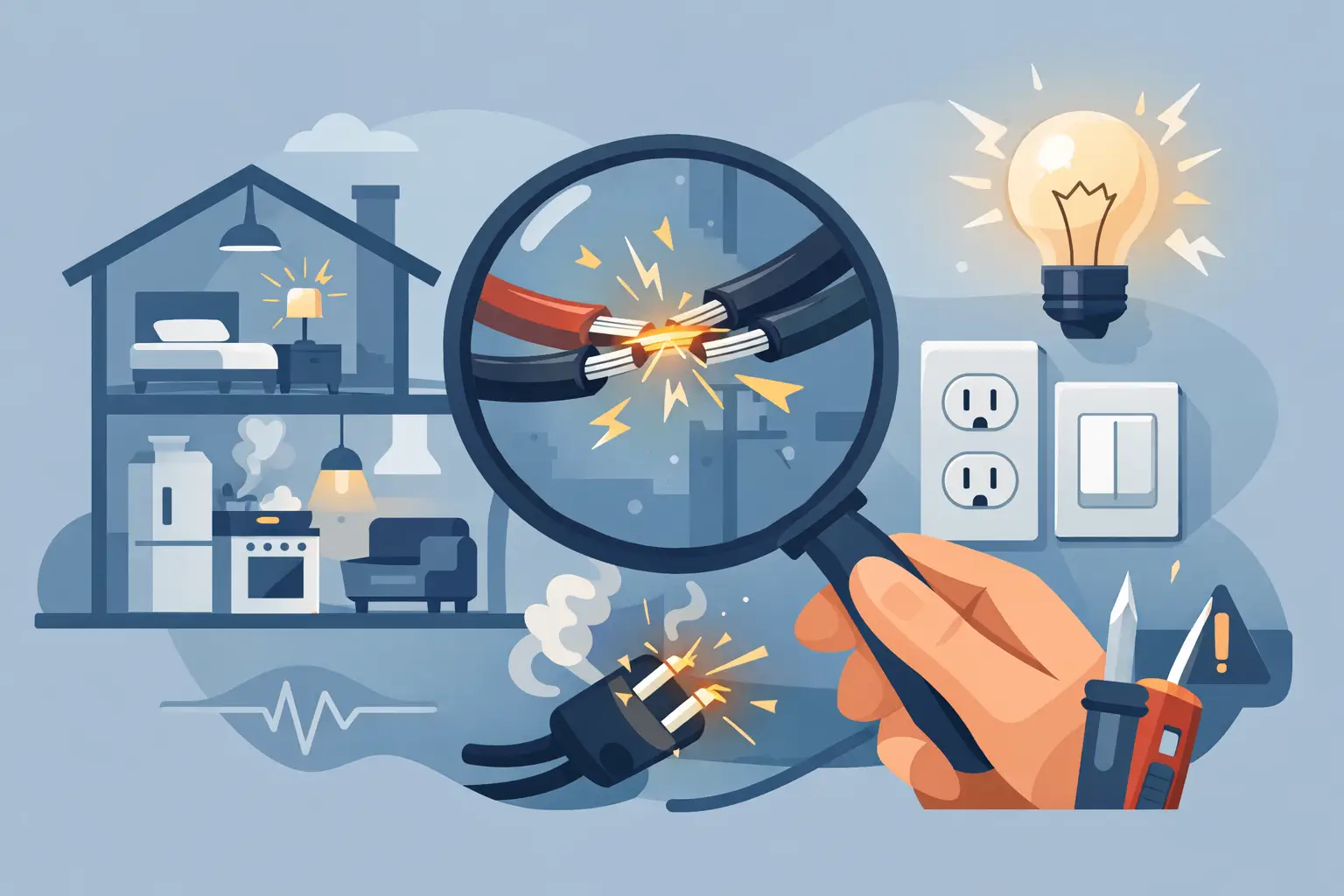
A breaker that keeps tripping is easy to brush off until it starts happening every week. The same goes for a light that flickers, an outlet that feels warm, or a faint burning smell you cannot quite place. If you are wondering how to spot faulty wiring, the key is knowing which signs are minor annoyances and which ones point to a real electrical risk.
Faulty wiring does not always announce itself with sparks or a full power loss. In many homes and small commercial spaces, it starts with subtle changes that build over time. That is why it pays to take electrical warning signs seriously, especially in older properties, rental units, and buildings that have had DIY work done in the past.
How to Spot Faulty Wiring Before It Becomes Dangerous
The first thing to watch for is repeated electrical trouble in the same area. One tripped breaker after plugging in a space heater may not mean much. But if a circuit trips often under normal use, that usually suggests the wiring, breaker, or connected devices are under strain.
Flickering or dimming lights are another common clue. Sometimes the issue is simple, like a loose bulb. But when lights flicker across several rooms, dim when appliances start up, or behave differently from day to day, it can point to loose connections or overloaded circuits behind the walls.
Outlets and switches can also tell you a lot. A warm outlet, a switch plate that feels hot, buzzing sounds, or sockets that no longer hold plugs firmly are all worth attention. Wiring should not create heat during ordinary use. If it does, there may be a loose connection, internal damage, or wiring that is no longer safe.
Then there is smell. A persistent burning or fishy odor near an outlet, panel, or appliance should never be ignored. Electrical insulation can overheat before visible damage appears. If you smell something unusual and cannot explain it, turn off power to that area if it is safe to do so and have it checked.
Common Signs of Faulty Wiring
Some warning signs are obvious, while others are easy to dismiss. The most common issues homeowners and landlords notice first are nuisance tripping, flickering lights, and dead outlets. On their own, these do not always confirm bad wiring, but they do tell you something is not right.
More serious signs include scorch marks on outlets, discolored switch plates, crackling noises, and mild shocks when touching switches or appliances. Even a small tingle is not normal. That often means electricity is not following the path it should.
You may also notice that extension cords and power strips have become part of everyday life because there are not enough outlets where you need them. That is not faulty wiring by itself, but it often creates overload problems and hides the fact that the original electrical layout is no longer suitable for how the space is used.
In commercial settings, warning signs can look slightly different. You might see equipment cutting out, lights dipping when machinery starts, or staff reporting intermittent power in one area. In shops, offices, and smaller business premises, those issues can come from failing circuits, poor past alterations, or systems that simply need upgrading.
Older Properties Need Extra Attention
Older homes can be perfectly safe if they have been maintained and updated properly. The issue is that age increases the chance of wear, outdated materials, and previous repairs that were done to a poor standard. If a property has not had an electrical inspection in years, there is a greater chance that hidden problems have gone unnoticed.
This matters a lot for landlords and property managers. Tenants may report a single problem, such as one bad outlet, when the bigger issue is deterioration elsewhere on the same circuit. A proper inspection can reveal whether the fault is isolated or part of a wider problem.
Renovated homes can also be a mixed bag. A new kitchen or updated lighting does not always mean the wiring behind it was upgraded properly. Sometimes new fixtures get added onto older circuits that were not designed for the extra demand. That is where a professional eye makes a real difference.
What Causes Wiring Faults?
Faulty wiring can come from a few different places. Wear and tear is one. Connections can loosen over time, insulation can degrade, and older systems can struggle with modern electrical loads. A home that once powered a few lamps and a TV may now be running air fryers, gaming setups, office equipment, and EV charging.
Poor workmanship is another common cause. Loose terminals, incorrect cable sizing, badly installed outlets, and unsafe junctions can all create faults. In many cases, the problem is not the age of the system but the standard of the work done on it.
Rodents, moisture, and physical damage can also play a part. Wiring in attics, basements, garages, or exterior areas is more exposed to damage than wiring hidden in finished living spaces. If a property has had leaks, pest issues, or building work, it is sensible to keep electrical faults in mind.
What You Can Check Safely
There are a few basic observations you can make without taking any risks. You can note where breakers trip, which outlets stop working, and whether problems happen at certain times or when specific appliances are used. You can also look for visible signs like black marks, loose faceplates, or damaged cords.
Testing smoke alarms and making sure your electrical panel is clearly labeled is also useful. If a breaker has tripped, resetting it once may be reasonable. If it trips again, that is not something to keep forcing. Repeated resets can make a bad situation worse.
What you should not do is remove outlet covers, open the panel, or start investigating live wiring yourself. Electrical faults are not always visible, and a quick look can turn into a serious shock risk. The safer approach is to gather clear information and pass it on to a qualified electrician.
When to Call a Professional Right Away
Some situations should be treated as urgent. If you smell burning, see smoke, notice sparks from an outlet, or have a breaker that will not stay on, stop using that circuit immediately. The same applies if part of your property has lost power and the cause is not obvious.
A professional should also be called if you have recurring faults with no clear reason, especially in older properties or buildings with previous electrical alterations. The longer these issues are left, the more likely they are to damage appliances, interrupt business activity, or become a fire hazard.
For landlords, recurring tenant complaints about tripping power, dead sockets, or unreliable lighting should not be treated as routine maintenance alone. Those are exactly the kinds of signs that can point to wiring faults needing proper investigation.
Why Fault Finding Matters More Than Guesswork
Electrical problems often overlap. A flickering light could be a bad bulb, a failing fitting, a loose connection, or an overloaded circuit. A tripping breaker could be doing its job because of a faulty appliance, or it could be warning you about a deeper issue in the wiring.
That is why proper fault finding matters. A good electrician will not just swap a part and hope for the best. They will test the circuit, identify the cause, and explain whether the fix is a simple repair or part of a bigger recommendation like a partial rewire or consumer unit upgrade.
For local property owners, that practical approach is often what matters most. You want the issue found, explained clearly, and fixed properly the first time. That is the standard BS Electrical aims to bring to every job, whether it is one faulty outlet or a larger inspection after repeated electrical issues.
If something in your home or workplace has been nagging at you for a while, trust that instinct. Electrical systems usually give warnings before they fail completely, and spotting them early can save a lot of stress later. A quick check now is often far easier than dealing with damage after the fact.