
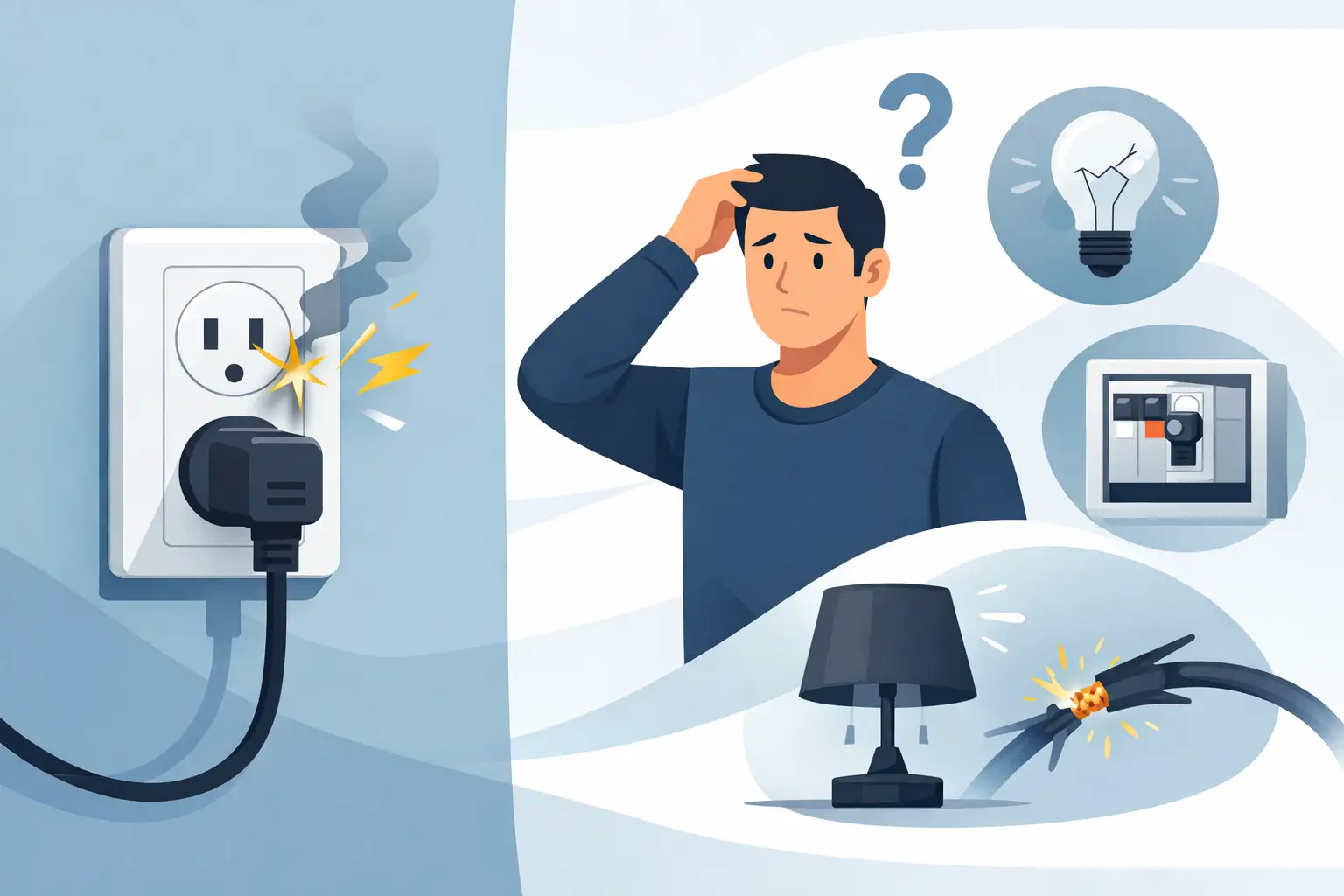
You plug in the kettle, charger, or TV and nothing happens. When that leaves you asking why are sockets not working, the cause can be something simple, but it can also point to a fault that should not be ignored. A dead outlet is not just inconvenient. In some cases, it is your electrical system warning you that something is overloaded, damaged, or no longer safe.
The good news is that not every socket problem means a major repair. Sometimes the issue is limited to one outlet. Other times, several outlets on the same circuit go off together because a breaker has tripped or a safety device has cut power. The key is knowing what you can check safely and when it is time to stop and call a professional.
Why are sockets not working in one room?
If all the sockets in one room have stopped working, the problem is often tied to a single circuit. Modern electrical systems split power across different circuits so one fault does not shut down the whole property. If a breaker trips, that room or area may lose power while the rest of the building stays live.
A tripped breaker is one of the most common causes. This can happen if too many high-demand appliances are used at once, or if there is a fault in something plugged into the circuit. Portable heaters, microwaves, hair dryers, and similar items can put a lot of strain on a circuit, especially in older properties.
Another possibility is a tripped GFCI outlet. These are safety outlets designed to cut power quickly if they detect a fault. They are often fitted in kitchens, bathrooms, garages, utility spaces, and outdoors. What catches people out is that one GFCI can protect several standard outlets downstream. So the outlet that has tripped may not be the one that looks dead.
There is also the chance of a loose connection somewhere in the circuit. This is less visible and more serious. If wires have worked loose behind a socket or junction point, power may fail intermittently or stop completely. In that case, it needs proper fault finding rather than guesswork.
Why are sockets not working when the breaker looks fine?
This is where things get a bit less obvious. A breaker can appear to be on when it has actually tripped to a middle position. It may need to be switched fully off and then back on again to reset properly. If it trips again straight away, that usually means there is still an active fault on the circuit.
If the breaker is definitely fine, the issue may be local to the outlet itself. Sockets do wear out. The internal contacts can loosen over time, particularly in outlets that get heavy daily use. Signs of a failing socket include plugs that feel loose, buzzing sounds, scorch marks, heat around the faceplate, or power that cuts in and out.
In some cases, the fault sits behind the wall rather than in the outlet front. Damaged wiring, poor past repairs, or hidden junction issues can all interrupt supply. This is one reason socket faults should not be dismissed as minor, especially in older homes or rental properties where previous electrical work may not be fully documented.
What you can check safely first
Before assuming the socket itself has failed, try the appliance in a different working outlet. It sounds obvious, but faulty chargers, lamps, extension leads, and appliances are often mistaken for outlet problems. If the item still does not work elsewhere, the issue may not be with the wiring at all.
Next, check your electrical panel. Look for any breaker that is out of line with the others or sitting in the middle position. If one has tripped, reset it once. If it trips again, leave it off and arrange for an electrician to inspect it.
Then look for a GFCI outlet nearby. Press the reset button if one has tripped. Kitchens, bathrooms, garages, basements, and exterior outlets are the usual places to check, but the protected dead socket may be in a different room.
You can also unplug anything recently connected to that circuit. If a new appliance has caused the fault, removing it may stop the breaker from tripping again. That said, if there is any smell of burning, any visible damage, or signs of overheating, do not keep testing things. Turn the circuit off and get it checked.
Signs the problem is more serious
Some socket faults are fairly straightforward. Others can point to wiring damage or overheating, and those need quick attention. If the socket faceplate is cracked, discolored, or warm to the touch, stop using it. Those are not normal wear-and-tear signs. They can mean the wiring or terminals have been overheating behind the outlet.
Buzzing, crackling, or a faint burning smell also matters. Electricity should be quiet. Noise usually suggests arcing or a poor connection, which can worsen over time and increase fire risk. The same applies if plugs feel unusually hot when removed.
Intermittent power is another red flag. If the outlet works only when a plug is held at a certain angle, or if it cuts out and comes back, the connection may be loose. That type of fault often gets worse rather than better.
If multiple sockets fail across different rooms, especially alongside flickering lights or repeated breaker trips, the issue may be broader than a single outlet. At that point, it makes sense to have the whole circuit properly tested.
Older properties and repeated socket problems
If you live in an older property, socket problems can be a sign that the electrical system is struggling to keep up with modern use. Homes built decades ago were not designed for today’s number of devices, chargers, kitchen appliances, and home office equipment. What once served a TV and a lamp may now be expected to handle much more.
That does not always mean a full rewire is needed, but it can mean parts of the system need upgrading. Worn outlets, outdated fuse boards, poor previous alterations, and overloaded circuits are all more common in older homes. Landlords and property managers should pay close attention here, because repeated power issues often point to underlying defects rather than random one-off faults.
Commercial spaces can run into similar problems. A small office, shop, or unit may add equipment over time without revisiting the load on existing circuits. If sockets regularly trip or certain areas lose power during busy periods, that usually needs a proper assessment rather than another extension lead.
When not to try fixing it yourself
There is a difference between basic checks and electrical repair. Resetting a breaker or testing an appliance elsewhere is one thing. Removing a socket faceplate, testing live conductors, or replacing an outlet without the right knowledge is another.
Even when power appears off, electrical work carries risk. Incorrect repairs can create hidden faults that show up later as shocks, nuisance tripping, or overheating in the wall. That is why a proper diagnosis matters. The visible dead socket is sometimes only the symptom, not the real cause.
A qualified electrician can test the circuit, identify whether the problem is with the outlet, breaker, wiring, or connected equipment, and fix it safely. That saves time, but more importantly, it avoids the bigger cost of leaving a fault to get worse.
How an electrician usually diagnoses dead sockets
A proper fault-finding visit is not just a matter of swapping the outlet and hoping for the best. The circuit needs to be tested methodically. That often starts with checking whether power is reaching the socket, whether protective devices have operated correctly, and whether there are signs of cable damage or loose terminations.
If several outlets are affected, the electrician may trace the circuit to find where power is being lost. In some cases the issue turns out to be a damaged accessory. In others, it is a hidden connection fault under a floor, in a wall cavity, or at another socket on the same run.
This is where using a trusted local contractor helps. You want someone who will explain the problem clearly, carry out the work safely, and not turn a straightforward repair into unnecessary expense. That practical, no-nonsense approach is exactly what customers expect from BS Electrical.
The simple rule to follow
If a socket stops working once, check the obvious things safely. If it keeps happening, affects multiple outlets, shows heat damage, or trips power repeatedly, treat it as more than a nuisance. Electrical faults rarely improve on their own.
The safest approach is simple: if you are asking why are sockets not working and the answer is not immediately obvious, get it checked properly before a small problem turns into a bigger one.