A breaker that trips once after a clear one-off event is not always a crisis. A breaker that trips whenever the kettle, microwave, space heater, or power tools come on is telling you something useful. Knowing how to spot overloaded circuits gives you the chance to deal with a problem before it becomes damaged wiring, lost power, or a fire risk.
An overloaded circuit simply means too much electrical demand is being placed on one circuit at the same time. Modern homes and workplaces use more plug-in equipment than ever, while older properties may have wiring and circuit layouts that were never designed for that level of use. The issue is often fixable, but it should not be ignored.
The most common signs of an overloaded circuit
The clearest sign is a circuit breaker that repeatedly trips. Breakers are designed to cut power when the current rises beyond what the circuit can safely handle. Resetting it may restore power temporarily, but if it trips again after you use the same appliances, the circuit is likely overloaded or there may be another fault that needs investigating.
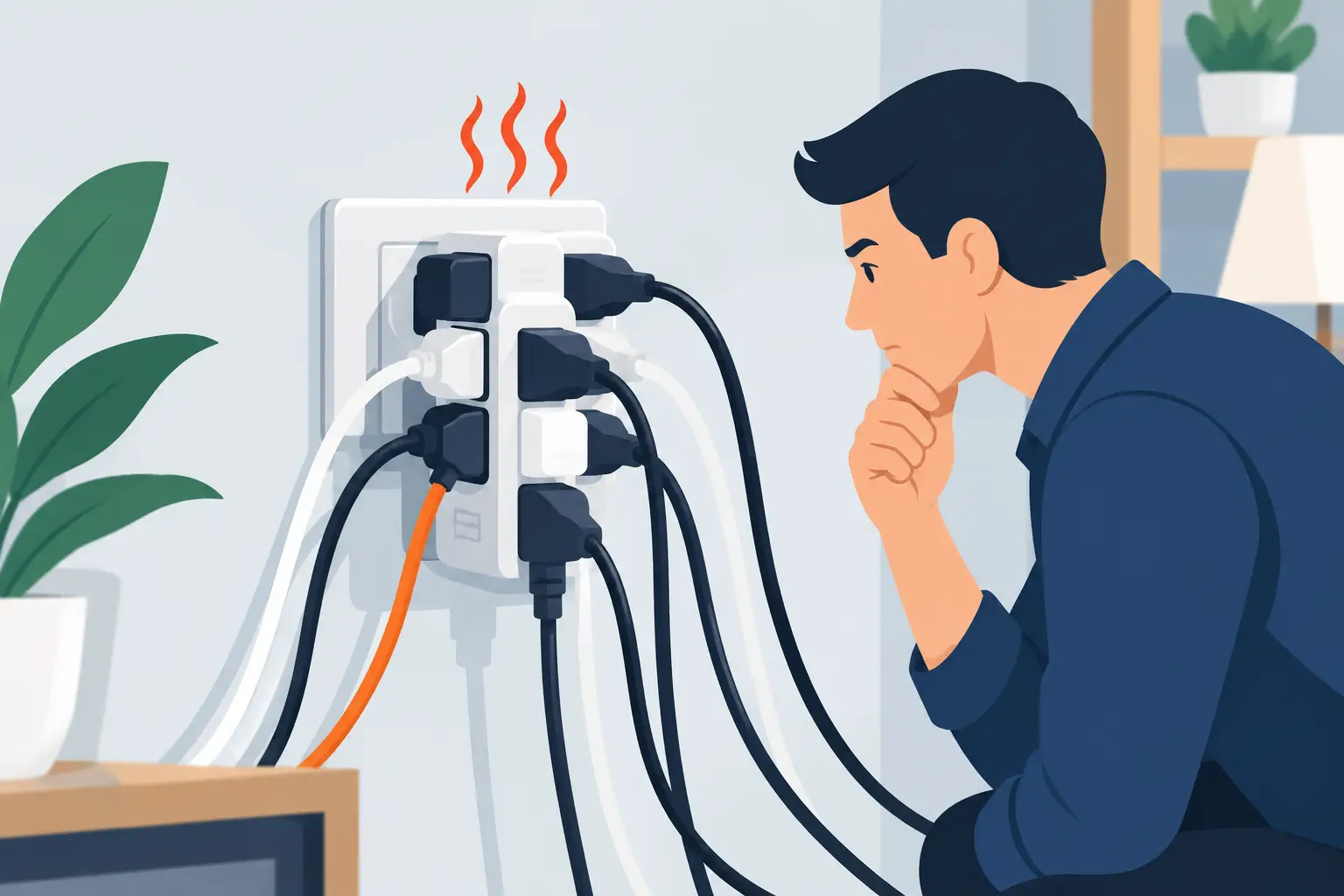
Warm outlets, switches, plugs, or extension leads are another warning sign. A plug may feel slightly warm while powering a high-demand appliance, but it should never be hot enough to make you pull your hand away. Heat suggests resistance or excessive load, both of which can damage connections over time.
You may also notice lights dimming or flickering when an appliance starts up. For example, lights briefly dipping when a refrigerator compressor kicks in can happen in some homes. But frequent or dramatic dimming when you run a vacuum, microwave, heater, or workshop equipment deserves professional attention, especially if it affects several rooms.
Watch for buzzing, crackling, burning smells, discoloration around an outlet, or a plug that seems loose in the wall. These are not normal signs of a busy electrical circuit. Turn off and unplug the affected equipment if it is safe to do so, avoid using that outlet, and arrange for an electrician to inspect it promptly.
How to spot overloaded circuits in everyday use
Overloading usually happens because several high-wattage appliances are sharing one circuit. The problem is not simply the number of items plugged in. A phone charger, lamp, and router use relatively little electricity. A toaster, coffee machine, hair dryer, portable heater, air fryer, washing machine, or power tool can use much more.
The kitchen is a common pressure point. It is easy to run a microwave, kettle, toaster, coffee machine, and dishwasher within a short period, particularly where countertop outlets are supplied by the same circuit. Garages, home offices, utility rooms, and older living rooms can also be affected, especially when extension leads become a permanent answer to a lack of outlets.
In a small business, the same pattern can develop quietly. A reception desk might collect monitors, chargers, printers, a fan or heater, and cleaning equipment on a few outlets. A workshop may add new machinery without checking whether the existing supply has enough capacity. If the power trips during busy periods or only when certain equipment is running, make a note of what was switched on at the time. That information helps an electrician identify the cause efficiently.
Extension leads can hide the problem
An extension lead does not create extra capacity. It only lets more equipment draw power from the same outlet and circuit. Daisy-chaining one extension lead into another, or using multi-plug adapters with high-demand appliances, increases the risk of overheating.
Use a properly rated extension lead only when it is genuinely temporary and keep it fully uncoiled when supplying a heavy load. Coiled cable can retain heat. Portable heaters, tumble dryers, washing machines, microwaves, kettles, and other high-demand appliances should be plugged directly into a suitable wall outlet wherever possible.
What to do when a breaker keeps tripping
Start with the safe basics. Switch off or unplug the appliances that were in use when the breaker tripped. Reset the breaker once, then bring appliances back on gradually rather than all at once. If the breaker trips when one particular appliance is connected, stop using that appliance until it has been checked.
Do not keep resetting a breaker repeatedly. It is doing its job by interrupting a potentially unsafe condition. Never replace a breaker with a larger one, bypass it, or attempt work inside the breaker panel yourself. A circuit may be overloaded, but repeated trips can also point to a faulty appliance, damaged cable, loose connection, water ingress, or a more serious wiring issue.
If there is smoke, visible scorching, a burning smell that persists, sparking, or an outlet that is hot, turn off power at the breaker panel if you can do so safely and contact an emergency electrician. Do not touch damaged wiring or try to remove a plug that is stuck or melted into an outlet.
When an overloaded circuit needs a permanent fix
Changing a few habits can solve a minor overload. Spreading high-demand appliances across different circuits, unplugging equipment that is not in use, and avoiding extension-lead overloads may be enough in a newer property with a sound electrical installation.
However, a lasting solution is often needed when the demand is part of normal life. A home office, remodeled kitchen, converted garage, EV charger, new workshop tools, or extra security equipment can all change how a property uses electricity. In those cases, an electrician may recommend additional outlets, a dedicated circuit for a particular appliance, an upgraded breaker panel, or improvements to the overall wiring installation.
Older properties deserve particular care. Some may have limited circuits, aging accessories, or previous alterations that no longer suit the way the building is used. A proper inspection looks beyond the breaker that tripped. It checks circuit loading, cable condition, connections, protective devices, and whether the installation is still appropriate for the property.
Simple habits that reduce the risk
Avoid running several heat-producing appliances from the same area at once, particularly in kitchens and utility rooms. Keep cables clear of rugs, doorways, and furniture that can crush or trap them. Replace damaged plugs and leads rather than taping them up, and do not use outlets that are loose, cracked, discolored, or making noise.
Landlords and business owners should take recurring trips seriously, even if tenants or staff have found a workaround. An intermittent electrical problem can be difficult to spot from a distance, and the person using the space may not realize that a warm outlet or a flickering light is a warning sign. Acting early is usually simpler and less disruptive than dealing with a fault after damage has occurred.
BS Electrical provides practical fault finding and electrical safety work for homeowners and businesses that need a clear answer, not guesswork. A qualified electrician can identify whether the issue is genuine overload, a faulty appliance, or a problem within the wiring, then recommend work that fits the property and budget.
If your power keeps tripping, trust what the circuit is telling you. Stop relying on resets and extension leads, and have the cause checked properly before a small warning becomes a bigger repair.