A phone charger with a split cable, a heater that has been stored in a damp garage, or a kettle used by dozens of staff can all become electrical risks long before anyone notices a problem. That is why people often ask who needs portable appliance testing. The short answer is that any person or organization responsible for plug-in electrical equipment used by others should have a sensible system for checking and maintaining it.
Portable appliance testing, usually called PAT testing, helps identify faults in items with a plug, lead, or battery charger before they cause an electric shock, burn, or fire. It is not just for large offices or factories. Small businesses, landlords, community groups, and anyone running a workplace can all have equipment that needs attention.
Who needs portable appliance testing?
PAT testing is most relevant where appliances are supplied for staff, tenants, customers, visitors, or contractors to use. That includes offices, shops, salons, workshops, cafés, warehouses, schools, care settings, and construction sites. If you provide the equipment, you are generally responsible for making sure it is safe to use.
Employers have a duty to maintain electrical equipment in a safe condition. A formal testing program is one practical way to meet that duty, alongside visual inspections, staff awareness, and prompt repairs. The right approach depends on the type of appliance, how often it is moved, where it is used, and the consequences if it fails.
For example, a desktop computer in a clean office is lower risk than a power tool used outside, an extension lead in a busy workshop, or a hair dryer used all day in a salon. Treating every item exactly the same can waste money or, worse, overlook the equipment that needs more frequent checks.
Small businesses and workplaces
Businesses of every size commonly need portable appliance testing. Even a small office may have monitors, laptop chargers, printers, microwaves, kettles, fans, extension leads, and cleaning equipment. In a customer-facing setting, the risk is wider because members of the public may use or come into contact with appliances.
Higher-use businesses should pay particular attention to extension leads, multi-socket adapters, portable heaters, catering equipment, and equipment moved between rooms. These items face more wear than fixed equipment and are often where damage first appears.
A PAT test does not replace common sense. Staff should be encouraged to report cracked plugs, loose sockets, frayed cables, scorch marks, overheating, and appliances that trip the power. Taking a suspect item out of use straight away is often the most important safety step.
Landlords and property managers
Landlords do not normally need to test appliances that belong to tenants. However, if a furnished rental includes electrical items supplied by the landlord, those items should be safe and maintained. This can include washing machines, refrigerators, lamps, vacuum cleaners, microwaves, and other plug-in appliances left in the property.
PAT testing can provide a clear record that landlord-supplied appliances were checked, particularly between tenancies. It is separate from the electrical installation inspection, which covers the fixed wiring, consumer unit, sockets, and other parts of the property’s electrical system. Both matter, but they deal with different risks.
Property managers also need to consider shared areas. Appliances in communal lounges, laundry rooms, offices, maintenance cupboards, or cleaners’ stores should not be forgotten simply because they are not inside an individual apartment.
Schools, charities, community groups, and places of worship
Organizations run by volunteers often rely on donated or older equipment. That can include sound systems, projectors, kitchen appliances, craft equipment, extension leads, and portable heaters. The equipment may be safe, but its history is not always known.
A straightforward inspection and testing plan is useful in these settings because equipment is often handled by different people and stored for long periods. Items brought in for events deserve extra care, especially if they are used by the public or connected to the building’s supply.
Trades, construction, and mobile workers
Portable tools have a tougher life than most office equipment. Drills, saws, grinders, work lights, battery chargers, cable reels, and extension leads may be dropped, exposed to dust or moisture, or used outdoors. They usually need closer monitoring and more frequent testing than equipment kept in a low-risk indoor environment.
The same applies to cleaners, maintenance teams, caterers, DJs, event suppliers, and mobile beauty professionals. If equipment travels from job to job, damage can happen in transport or during setup. A test label and an up-to-date record help show which items have been checked and when they are next due for review.
What counts as a portable appliance?
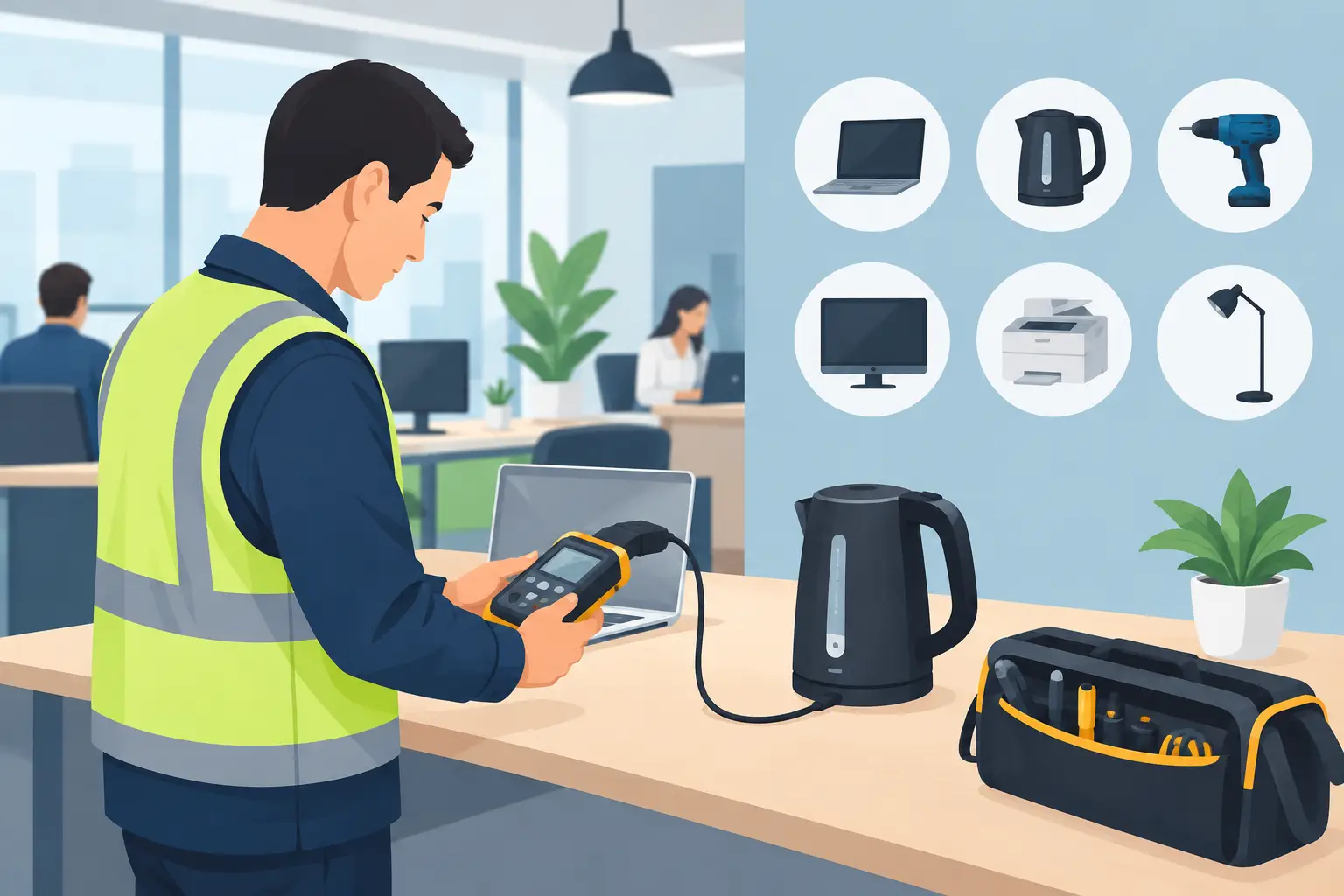
A portable appliance is generally an electrical item that can be moved and is connected by a plug or flexible cable. Common examples include laptops, monitors, printers, kettles, microwaves, fans, heaters, chargers, vacuum cleaners, power tools, extension leads, and multi-socket adapters.
Some equipment is easy to overlook. Phone chargers, cable reels, desk lamps, and extension leads may seem minor, but their cables and plugs receive regular handling. An extension lead can also carry the load of several appliances, so it deserves the same care as the items plugged into it.
Fixed equipment is different. A hard-wired extractor fan or built-in electric heater is not usually part of PAT testing, although it should still be maintained and included in appropriate electrical inspection arrangements.
How often should PAT testing be done?
There is no single testing interval that suits every appliance or every property. A sensible schedule is based on risk, not a blanket annual test for everything. Some low-risk equipment may only need a routine visual check and periodic formal testing. Equipment used heavily, moved often, or used in demanding conditions may need more frequent attention.
Consider the environment first. Clean, dry office equipment is generally lower risk. Kitchens, workshops, outdoor areas, construction sites, and public spaces are higher risk because of heat, moisture, movement, impact, or heavier use. Also consider the appliance itself. A double-insulated plastic power tool may be assessed differently from a metal-bodied appliance that relies on an earth connection.
The condition and age of equipment matter too. A recently purchased appliance used carefully may need less frequent formal testing than an older item with a worn lead. New equipment should still be visually checked before first use, and it should be suitable for the job.
PAT testing is more than a sticker
A pass label is useful, but it is not a guarantee that an appliance will remain safe until the next test. Cables can be crushed tomorrow, plugs can crack next week, and a heater can be damaged when it is moved. Safe appliance management works best as an ongoing process.
That process starts with a basic visual check. Is the cable intact? Is the plug secure? Are there exposed wires, burn marks, loose parts, or signs of overheating? Does the appliance work normally? Staff do not need electrical training to spot obvious damage, and they should know not to attempt makeshift repairs with tape or replacement fuses of the wrong rating.
A competent tester can then carry out appropriate electrical tests, record the results, identify failed items, and advise on repair or replacement. Keeping an appliance register is helpful for businesses and landlords because it shows what equipment is on site, where it is kept, and what has been inspected.
When testing is especially worthwhile
PAT testing is particularly sensible after a move, refurbishment, flood, leak, electrical fault, or period of storage. It is also a good idea when taking over a business premises, acquiring second-hand equipment, or preparing a furnished rental for a new tenant.
If an appliance repeatedly trips a breaker, gives off a burning smell, feels unusually hot, makes crackling noises, or has visible damage, do not wait for its planned test date. Unplug it if safe to do so, mark it as out of use, and arrange for it to be checked by a qualified electrician.
For homes, PAT testing is not usually a routine requirement for every personal appliance. Homeowners should still replace damaged leads, avoid overloaded adapters, use equipment as intended, and have concerns checked promptly. The situation changes where a home is used as a business, rented out furnished, or has equipment provided for others.
A practical testing plan should fit the equipment and the way it is actually used. If you are unsure what needs checking at your workplace or rental property, an experienced local electrician can help you separate the genuine priorities from the items that simply need a quick visual check.