
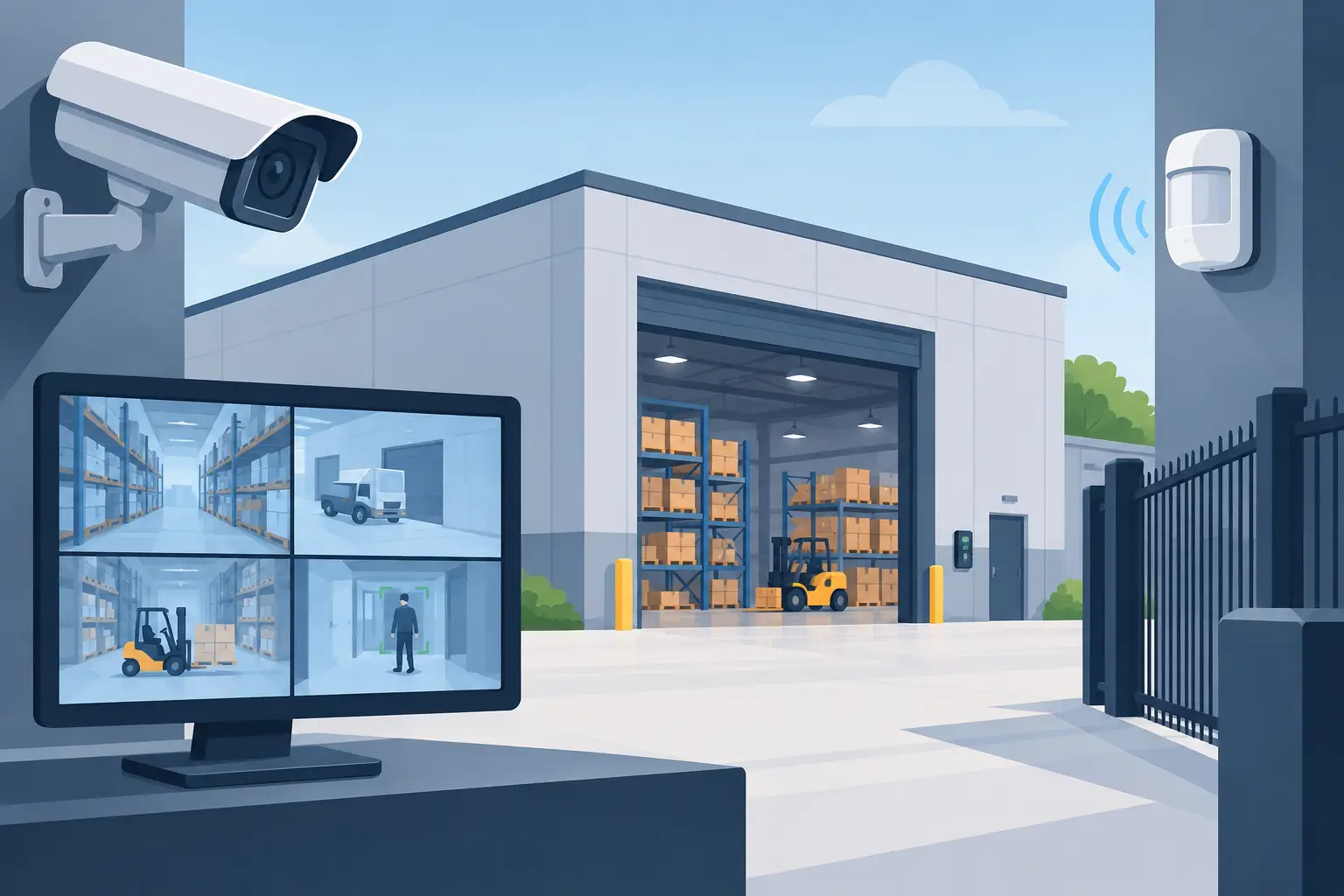
A warehouse can be secure at 5 p.m. and vulnerable by 5:15. One propped-open door, an unmonitored loading bay, or a camera that cannot identify a face can leave stock, equipment, and staff exposed. The best security systems for warehouses do not rely on one device. They combine visible deterrents, reliable detection, controlled access, and a clear response when something happens.
For warehouse owners and managers, the right setup depends on the building layout, the value of stored goods, operating hours, and how many people need access. A small unit with one roller door needs something different from a busy distribution site with multiple loading bays, contractors, and round-the-clock shifts. The aim is not to buy every available feature. It is to close the gaps that matter most and have the system installed properly from the start.
What makes warehouse security different?
Warehouses present a particular set of problems. They often have large, open floor areas, high ceilings, dark exterior spaces, several entry points, and stock that can be moved quickly. Loading areas are especially difficult because legitimate deliveries and collections can look much like unauthorized activity unless access is controlled and recorded.
A good system needs to protect the perimeter, the building, and key areas inside. It should also be easy enough for staff to use correctly every day. If an alarm is too complicated to set or a door release is routinely bypassed because it slows work down, the equipment will not deliver the protection you paid for.
The best security systems for warehouses use layers
The most effective warehouse security is a connected combination of CCTV, intruder alarms, access control, and suitable lighting. Fire detection is separate from security, but it should be planned alongside it so that systems, wiring, and emergency procedures work together without creating confusion.
CCTV for evidence, oversight, and deterrence
CCTV is usually the starting point for warehouse security, but camera placement matters more than simply having a high number of cameras. A camera pointing across a large floor may show general movement, yet fail to provide a usable image of a person or vehicle. Cameras should be selected and positioned for the task at hand.
External cameras can cover gates, parking areas, perimeter fences, entrances, and loading docks. Inside, coverage may be needed at stock cages, high-value storage zones, dispatch areas, offices, and main walkways. At entrances, a camera should capture a clear view of faces. At vehicle access points, it may need to capture license plates as well.
Modern systems can send alerts for movement outside scheduled hours, line crossing, or activity in restricted zones. These features are useful, but they need careful setup. A poorly configured motion alert can flood a manager’s phone with notifications from rain, wildlife, or routine traffic. The practical approach is to define the areas and times that genuinely need attention.
Remote viewing is valuable for business owners who are not always on site. It allows you to check a delivery, investigate an alarm activation, or review activity without traveling to the building. However, remote access should be protected with strong passwords, separate user accounts, and sensible permissions. A security camera system should not become another weak point in the business network.
Intruder alarms that detect a real break-in
An intruder alarm provides the immediate warning that CCTV alone cannot. Cameras record events, but an alarm can draw attention to an attempted break-in while it is happening. For warehouses, this often means a mix of door contacts, roller-shutter protection, motion detectors, and glass-break detection where appropriate.
The best design divides the building into zones. For example, the office, warehouse floor, loading area, and exterior stores may each be set independently. This lets staff secure part of the premises while another area remains in use. It also helps identify where an activation occurred, saving time when a keyholder or responder arrives.
A monitored alarm can provide added reassurance for sites that are vacant overnight or hold high-value goods. When an alarm activates, the monitoring center follows an agreed response process rather than relying solely on someone seeing a phone notification. Monitoring adds an ongoing cost, so it is worth considering the risk level, insurance requirements, and how quickly a keyholder could realistically attend.
False alarms are a genuine concern in busy commercial buildings. Quality equipment, correct sensor placement, and staff training make a major difference. Detectors should not be installed where forklifts, heaters, open doors, or changing temperatures are likely to trigger unnecessary activations.
Access control for knowing who comes and goes
A traditional key gives no useful record and is difficult to manage once it has been copied, misplaced, or not returned by a former employee. Access control replaces that uncertainty with a clearer process. Staff can use fobs, cards, PIN codes, or mobile credentials to enter designated doors at approved times.
For a warehouse, access control is particularly useful at staff entrances, offices, stock rooms, IT cabinets, and restricted storage areas. Permissions can be set by role, so a driver might access the loading entrance while only supervisors can enter a high-value cage or management office.
It also makes routine changes simpler. If an employee leaves or a fob is lost, that credential can be removed without changing locks across the building. Door events can be reviewed if there is a question about who accessed an area and when.
Access control is not a substitute for good physical doors and hardware. A weak door, damaged frame, or poorly fitted electric lock can undermine the whole setup. The door, locking method, emergency exit requirements, and access system need to be considered as one installation.
Security lighting that removes hiding places
Good exterior lighting is one of the most cost-effective ways to improve warehouse security. It makes gates, paths, parking areas, and loading bays less attractive to intruders while helping cameras capture better footage after dark. It also gives staff safer visibility when arriving early or leaving late.
Lighting should be bright where people and vehicles need to see, not simply pointed everywhere. Glare can make CCTV images worse, disturb nearby properties, and create shadows that conceal activity. LED floodlights with controlled angles, timers, photocells, or motion detection usually offer a practical balance between security and running costs.
Start with a site survey, not a product list
Before choosing equipment, walk the site as an intruder might. Look at fence lines, gates, blind corners, roofs, roller doors, fire exits, windows, and areas where pallets or bins could provide cover. Then consider normal operations. Where do deliveries arrive? Which doors must remain available during shifts? Who works alone? Where is valuable stock held before dispatch?
A professional survey should identify risks without pushing unnecessary equipment. In many cases, moving a camera, fitting better lighting at a loading bay, and separating access permissions will do more than adding several low-quality devices.
It is also the point to discuss power, network connections, cable routes, recording storage, and future expansion. Wireless equipment can be useful in difficult locations, but hardwired systems are often the better long-term choice for larger sites because they provide dependable power and communication. The right answer depends on the building and the disruption that cabling would involve.
Build a system around your daily operation
Security works best when it supports the way the warehouse runs. A warehouse with seasonal staff may benefit from easily managed temporary access credentials. A site handling expensive tools or electronics may need cameras and access control around specific storage areas. A business that operates only Monday through Friday may prioritize scheduled arming and alerts for weekends.
Think about responsibility as well. Decide who can view footage, who receives alarm notifications, who can add or remove staff access, and who has authority to release doors remotely. Keep these roles limited and review them whenever staffing changes.
Maintenance is part of the investment. Cameras need lenses kept clear, recording must be checked, backup power should be tested, and alarm batteries eventually need replacement. A system that has not been tested for months may fail at the exact moment it is needed. A simple planned maintenance routine is far cheaper than discovering a fault after a break-in.
Cost versus value: where to spend first
Budget is always a factor, particularly for small and mid-sized businesses. If a complete installation is not possible at once, start with the highest-risk points: main entries, loading bays, exterior lighting, and any area containing high-value goods. Choose a system that can be expanded later rather than fitting isolated equipment that cannot work together.
Avoid judging a quote on camera count alone. The quality of the image, storage capacity, installation standard, network security, and aftercare all affect whether the system will be useful. Clear footage of the right doorway is worth more than several cameras that only provide a vague overview.
Insurance conditions may also influence priorities. Some policies require specific alarm arrangements, locks, or inspection records, especially where stock values are high. Check those requirements before committing to equipment, not after an incident.
A warehouse security system should give you more than footage after something has gone wrong. When cameras cover the right places, access is controlled, alarms are reliable, and lighting removes dark corners, staff can work with greater confidence and owners can spend less time worrying about the building when it is empty.