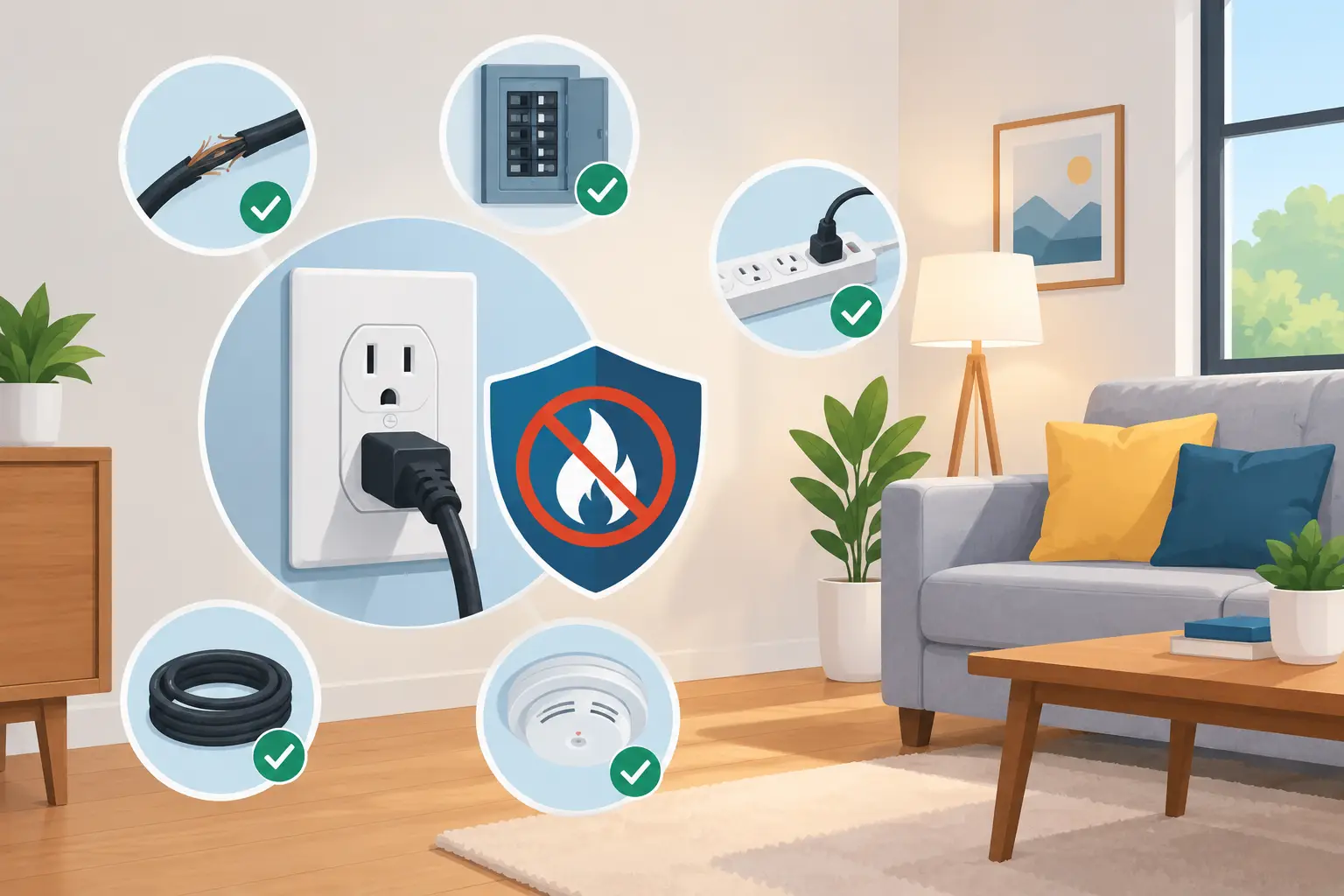
A burning-plastic smell near an outlet, a breaker that keeps tripping, or a plug that feels hot are not small annoyances to put off until later. They are warnings that need attention. The best ways to prevent electrical fires come down to spotting those warnings early, using your electrical system properly, and getting faults repaired before heat builds up behind a wall or inside a socket.
Electrical fires can start quietly. A damaged cable, loose connection, overloaded circuit, or aging panel may work well enough for a while, then overheat when demand increases. The good news is that most risks can be reduced with sensible habits and professional help when something does not look or feel right.
Do not ignore the warning signs
Your electrical system should work without sparks, buzzing, burning smells, scorch marks, or repeated trips. If an outlet is warm, discolored, loose in the wall, or makes a crackling sound, stop using it. Turn off the circuit if it is safe to do so and arrange for an electrician to inspect it.
A circuit breaker trips to protect the wiring from overheating. Resetting it once after an obvious cause, such as too many appliances running at once, can be reasonable. If it trips again, do not keep resetting it. Repeated tripping can point to an overloaded circuit, a faulty appliance, damaged wiring, or another fault that needs proper testing.
Lights that flicker only when one particular appliance runs may also indicate a problem. It could be a loose connection or a circuit struggling with demand. Either way, guessing is not a safe fix.
Use outlets and extension cords sensibly
Overloaded outlets are a common and preventable fire risk. A power strip does not create extra capacity in the circuit. It simply allows more items to be plugged into one location. High-demand appliances such as space heaters, microwaves, air conditioners, kettles, toasters, and hair dryers should normally be plugged directly into a wall outlet, not into an extension cord or overloaded power strip.
Avoid plugging one extension cord or power strip into another. This practice, sometimes called daisy-chaining, can overload equipment and create excess heat at the plugs and connections. It is especially risky in offices, retail spaces, rental properties, and workshops where extra equipment slowly gets added over time.
Cords deserve a quick visual check. Replace any cord with cracked insulation, exposed wire, bent pins, or a damaged plug. Do not run cables under rugs, through doorways, or beneath furniture where they can be crushed, overheated, or damaged without anyone noticing. Extension cords are useful for temporary tasks, but if you rely on one every day, you likely need another outlet installed in the right place.
Keep heat-producing appliances clear and attended
Portable heaters cause a disproportionate number of electrical fire concerns because they draw a lot of power and operate close to combustible materials. Keep them on a firm, level surface with clear space around them. Never place clothing, towels, bedding, paper, or furniture over or against a heater, and do not leave one running while you sleep or leave the room.
The same common-sense approach applies to chargers, electric blankets, heated throws, irons, and cooking appliances. Use products in good condition, follow the manufacturer instructions, and unplug appliances that are not designed to stay on. If a charger becomes unusually hot, makes a noise, smells odd, or has a damaged lead, replace it rather than taking a chance.
In commercial premises, make someone responsible for checking shared kitchen areas, portable heaters, and charging stations. A simple end-of-day check can prevent an appliance being left running or a damaged cord being used again the next morning.
Give older wiring and panels the attention they need
Many electrical problems are hidden. Wiring can deteriorate with age, DIY alterations can leave unsafe connections, and a system designed for a few appliances may now be powering home offices, large TVs, kitchen equipment, electric heating, and vehicle charging.
An electrical safety inspection is particularly worthwhile if a property is older, has recently been purchased, has had water damage, or has undergone remodeling. It is also sensible for landlords and business owners managing several properties, where changes and wear can be harder to track.
The inspector can test circuits, look for signs of overheating, identify damaged accessories, and assess whether the panel and protective devices are suitable for the property. An inspection does not automatically mean a full rewire is needed. Sometimes the right answer is a targeted repair, replacement outlets, a new circuit for a high-load appliance, or a panel upgrade. The correct scope depends on what testing finds, not on selling the biggest job.
Do not treat DIY electrical work as a shortcut
Replacing a light bulb is one thing. Altering circuits, adding outlets, changing a panel, or dealing with wiring is another. Loose terminals and incorrect connections can heat up gradually, often out of sight. A job may appear fine when it is switched on, yet become dangerous under load weeks later.
Use a qualified, fully insured electrician for electrical repairs and alterations. This is especially important around kitchens, bathrooms, outdoor wiring, and any work involving a panel or fixed circuit. Professional work should be tested after completion, so you have confidence that the repair is safe as well as functional.
If you have inherited DIY wiring in a house or commercial unit, do not assume it is safe because it has been there for years. Have it checked before adding new equipment or increasing the load on the circuit.
Reduce risks around water and outdoors
Water and electricity are a dangerous combination. Keep plugged-in appliances away from sinks, tubs, and wet work areas. Use appropriate protected outlets in bathrooms, kitchens, garages, and outdoor locations, and test any protective devices according to the manufacturer guidance.
Outdoor outlets, lighting, and power supplies need fittings rated for the environment. Damaged exterior cables, cracked weather covers, and water getting into a junction box can all create faults. After storms, flooding, or building work, have affected electrical equipment checked before putting it back into service.
For homes with pools, hot tubs, or outdoor kitchens, electrical work should be planned rather than added bit by bit. The right circuit protection, equipment placement, and weatherproof fittings make a real difference.
Prevent electrical fires through better load planning
One of the best ways to prevent electrical fires is to match the electrical installation to how the property is actually used. This matters when converting a garage, fitting a new kitchen, opening a small office, adding air conditioning, or installing an EV charger. These projects can increase demand significantly.
Rather than sharing an existing circuit and hoping for the best, ask an electrician to assess the load and install dedicated circuits where needed. It may cost more upfront than using the nearest outlet, but it reduces nuisance tripping, protects equipment, and avoids putting strain on old wiring.
For landlords and property managers, keep a record of inspections, repairs, and tenant reports. Encourage occupants to report hot outlets, damaged cords, and tripping breakers promptly. Small faults are usually simpler and less costly to deal with before they develop into serious damage.
Know what to do if something goes wrong
If you see flames or heavy smoke, get everyone out, call emergency services, and do not go back inside. Do not throw water on an electrical fire. If there is a small appliance fire and it is safe to do so, disconnect the power only if you can do it without approaching the fire or touching damaged equipment.
For lesser warning signs, act early. Unplug the appliance if the plug and cord are safe to touch, stop using the outlet or circuit, and arrange an inspection. Waiting for a fault to become more obvious is rarely a good trade-off where electricity is concerned.
BS Electrical takes a straightforward approach: investigate the cause, explain the options clearly, and carry out the work properly the first time. Whether it is one suspect outlet or a larger upgrade, a timely professional check can turn an uneasy warning sign into a simple, safe repair.