
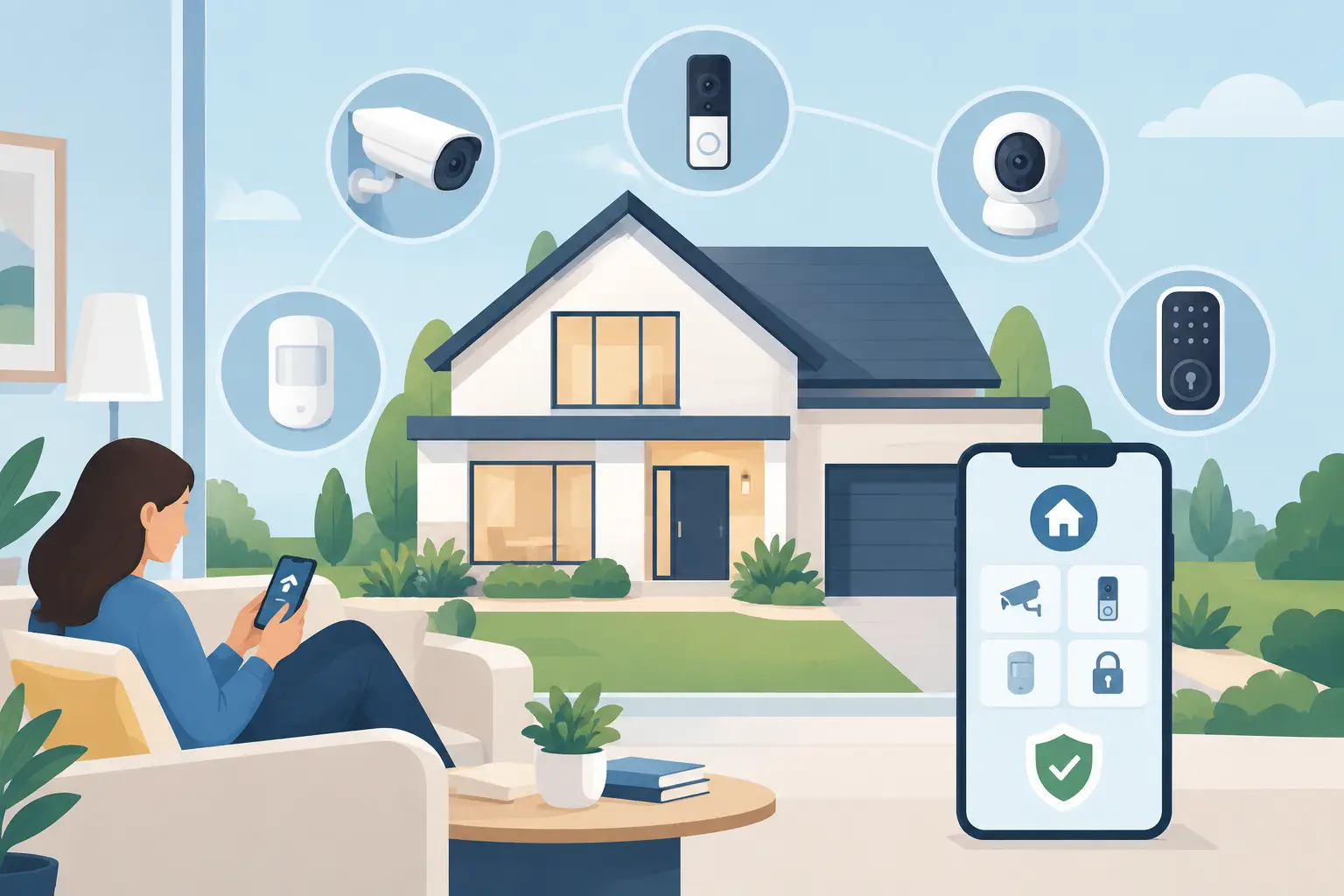
A security system should make life easier, not give you another thing to worry about. The best home security setup is one that suits the way your household actually lives: when the property is empty, which entrances are used most, where deliveries are left, and whether you need to keep an eye on children, pets, tenants, or an older relative.
For homeowners across Middlesbrough, Teesside, and the wider North East, there is rarely one single answer. A well-positioned camera may be enough for one home, while another needs an intruder alarm, outdoor lighting, and controlled access at a side gate or shared entrance. Getting the basics right means you can spend your budget where it makes a real difference.
Home Security Starts With Everyday Habits
Technology is useful, but it works best alongside sensible routines. An expensive alarm will not help much if a window is regularly left on latch while the house is empty. Likewise, a camera may record activity, but it cannot replace a properly locked door or a clear view around the outside of the property.
Start by looking at the home as someone unfamiliar with it would. Are gates easy to open? Is the driveway or rear entrance hidden from the road? Are dark corners giving somebody room to approach unnoticed? Are tools, bikes, or ladders visible from outside? This simple check often highlights practical improvements before any electrical work is needed.
Lighting is one of the most effective places to begin. A well-lit entrance makes it easier to use keys, welcome visitors, and see who is outside. Motion-activated lighting can be useful around driveways, paths, garages, and side access, particularly where the property is dark after work. It should be aimed carefully, though. Overly sensitive fittings can switch on constantly, disturb neighbors, or create glare that makes cameras less effective.
Doors and windows remain the main points to assess. Make sure locks, frames, and hinges are in good condition, especially on rear doors, patio doors, garages, and outbuildings. If you are upgrading a property, it is worth thinking about security early rather than treating it as an afterthought once decorating and landscaping are complete.
Choosing Home Security That Suits the Property
A good system is not necessarily the one with the most equipment. It is the one that covers genuine weak points without making day-to-day use awkward. Before choosing anything, consider the size and layout of the building, whether there are pets indoors, how reliable the internet connection is, and who needs access.
CCTV for visibility and reassurance
CCTV is often a sensible choice where there is a driveway, front entrance, rear yard, garage, or business storage area to protect. Visible cameras can act as a deterrent, while recorded footage can help establish what happened if there is damage, theft, or an unwanted visitor.
Camera placement matters more than the number of cameras. A camera positioned too high may only capture the top of a hood or hat. One facing directly into strong sunlight may give poor images at key times of day. A professionally planned system considers sight lines, nighttime performance, cabling routes, recording capacity, and how footage will be viewed when you are away.
It is also important to respect privacy. Cameras should cover your own entrances and boundaries wherever possible, rather than pointing into a neighbor’s home or private garden. If a camera captures a shared space or public area, clear signage and sensible positioning are particularly important.
Intruder alarms for a clear response
An intruder alarm provides a direct warning when a protected area is entered. For many households, that reassurance is the main benefit. Modern systems can be set in different zones, allowing you to protect downstairs areas at night while people move freely upstairs, for example.
The right alarm depends on the home and how it is used. A family with a dog may need pet-friendly sensors. A detached property with several access points may benefit from more zones than a compact apartment. Wireless equipment can reduce disruption in some homes, while wired systems can be a strong long-term option during a renovation or rewire. Neither is automatically better in every situation.
Think about how alerts will be handled as well. An app notification is useful when you are away, but it should not be the only plan. Decide who can respond locally, whether a neighbor has a key, and how the system will be tested and maintained.
Outdoor lighting and access control
Security lighting, alarms, and CCTV are strongest when they work together. Lighting helps people see what is happening. Cameras provide visibility and evidence. An alarm draws attention to an attempted entry. Each system has a different job, so combining them can close gaps without overcomplicating the property.
For homes with gates, communal doors, workshops, or detached offices, access control can add another useful layer. A keypad, fob, video door entry system, or controlled electric lock can help you decide who gets in and when. This is especially useful for landlords and small businesses that need to manage several users without relying on copied keys.
Installation Matters as Much as the Equipment
Home security equipment needs to be fitted properly to be dependable. Loose cameras, poorly routed cables, badly placed sensors, or outdoor fittings without suitable protection from the weather can create problems from day one. The goal is a neat installation that performs reliably and does not leave unnecessary holes, trailing cables, or awkward controls around the home.
Electrical safety is part of the job, too. CCTV, alarms, external lights, door access systems, and their power supplies should be installed correctly and checked before handover. This is particularly important with outdoor circuits and equipment exposed to rain, frost, and changing temperatures.
A good installer should explain the system in plain language once the work is complete. You should know how to arm and disarm the alarm, view footage, respond to alerts, replace batteries where needed, and reset the system after a power cut. If a setup is too complicated for everyone in the household to use, it is unlikely to stay switched on consistently.
BS Electrical provides practical, professionally installed security systems alongside domestic electrical work, helping local customers plan protection that fits their home rather than selling a one-size-fits-all package.
Security Considerations for Landlords and Small Businesses
Landlords have an added responsibility to think about tenant safety, shared entrances, vacant periods between lets, and the security of common areas. Good exterior lighting and secure access can make a noticeable difference without making tenants feel watched or restricted. Any CCTV should be planned carefully with privacy and appropriate use in mind.
For small businesses, the priorities may be different. Stock rooms, cash handling areas, customer entrances, staff access, and outbuildings can all require separate consideration. A camera system may need longer recording storage, while an alarm may need different settings for staff arriving early or leaving late. The most useful solution is built around the daily routine of the premises.
When It Is Time to Upgrade
If your existing alarm frequently gives false alerts, cameras produce unclear footage, outdoor lights fail regularly, or there are cables and fittings showing signs of wear, it is worth arranging an assessment. Older systems can sometimes be repaired or improved without replacing everything. In other cases, upgrading key components is more cost-effective than repeatedly dealing with faults.
Changes to the property are another reason to review security. An extension, garage conversion, new driveway, garden office, or replacement front door can all alter how the home is accessed and which areas need protection. Reviewing the setup after these changes is often simpler and more affordable than correcting blind spots later.
The most reassuring home security is not the most complicated system on the market. It is a system that covers the areas that matter, is simple enough to use every day, and has been installed with care. A straightforward conversation with a trusted local electrician can help turn that goal into a practical plan for your property.