
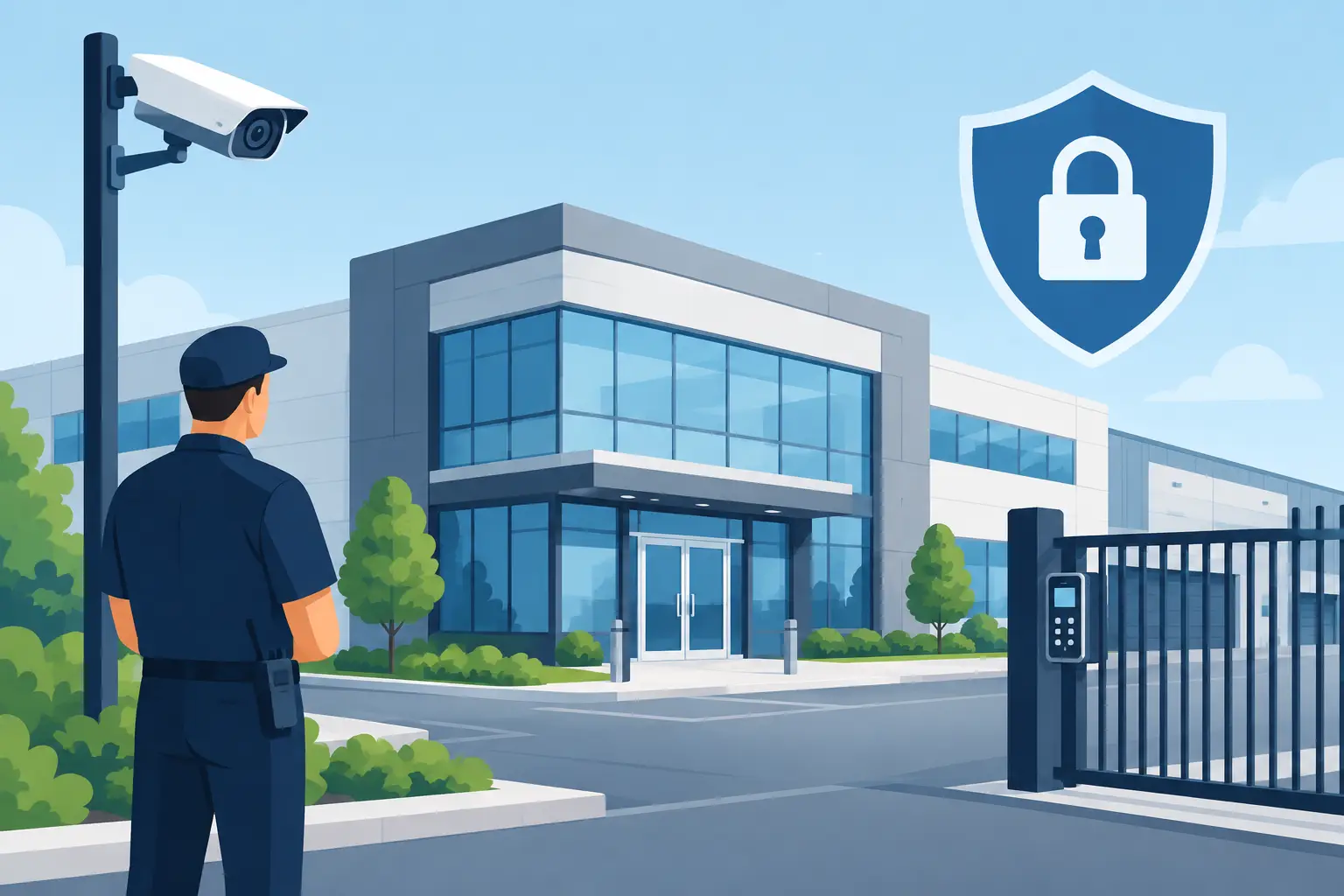
A broken window, a lost set of keys, or an alarm that nobody knows how to set can quickly turn into a costly problem. Knowing how to secure commercial premises starts with looking at the building as a whole – not simply fitting a camera above the front door and hoping for the best.
For shops, offices, workshops, warehouses, and rental properties, good security should protect people, stock, equipment, information, and the building itself. The right setup depends on your premises, operating hours, budget, and the risks you actually face. A small office with staff arriving from 9 to 5 needs a different approach from a workshop holding valuable tools overnight.
Start with a practical security assessment
Before buying equipment, walk around the property as if you were trying to get in without permission. Check the main entrance, rear doors, delivery access, gates, windows, roof access, external storage, and any shared areas. Look for weak locks, poor lighting, damaged fencing, blind spots, or doors that staff regularly prop open for convenience.
It is also worth considering what happens during normal working hours. A secure rear entrance is of little use if it is left unlocked during deliveries, or if there is no clear process for contractors and visitors. Ask staff where they feel vulnerable and where incidents or near misses have happened before. They will often spot day-to-day issues that are easy to miss during a quick inspection.
Write down the risks and rank them by likelihood and impact. This stops you spending heavily on equipment that does not address your biggest concerns. For example, a business with repeated after-hours trespassing may benefit most from better exterior lighting, cameras, and an intruder alarm, while a shared office may need tighter access control and visitor procedures.
Secure the building before adding technology
Electronic security works best when the physical building is already difficult to enter. Doors should be solid, properly fitted, and protected with suitable commercial-grade locks. Check that frames, hinges, and strike plates are in good condition, especially on back doors and side entrances that receive less attention.
Windows should close and lock properly. Ground-floor windows, windows near fire escapes, and those hidden from public view can be particular weak points. Security film, shutters, grilles, or reinforced glazing may be appropriate in higher-risk locations, but the right choice should not obstruct safe emergency escape.
Do not overlook the outside of the property. Gates, fences, bollards, and secure storage for bins or ladders can make access harder and reduce opportunities for someone to climb or hide. Keep shrubbery cut back around doors and windows so there are clear sight lines from the street and from cameras.
Physical measures are not always the most glamorous investment, but they slow down an intruder. That extra time gives an alarm, camera system, neighbors, or a monitoring service a better chance to make a difference.
Use lighting to remove hiding places
Poorly lit entrances and parking areas make a property easier to approach unseen. Well-positioned exterior lighting is one of the simplest ways to improve visibility and make staff feel safer when opening up or locking up.
Focus on entrances, walkways, loading areas, parking spaces, gates, and the sides and rear of the building. Motion-sensor lighting can be useful where lights do not need to run all night, while timed or dusk-to-dawn lighting suits areas that should remain consistently visible. The aim is useful coverage without shining into neighboring properties or creating glare that makes cameras less effective.
Inside, emergency lighting deserves equal attention. It helps people leave safely during a power failure or emergency and supports a safer, more compliant workplace. Regular checks matter, because a fitting that looks fine on the wall may not work when it is needed.
Install security systems that work together
Intruder alarms
An intruder alarm provides an immediate warning when someone enters a protected area. Door contacts, motion detectors, glass-break sensors, panic buttons, and external sounders can be combined according to the layout and risk level of your premises.
A simple system may suit a small unit with one entrance. Larger premises often need separately controlled zones, so staff can move around designated areas while other parts remain armed. Remote alerts can also be useful for owners and managers, especially if the property is vacant outside business hours.
The key is proper design and regular testing. An alarm that causes false activations will soon be ignored, while one with poorly positioned sensors can leave gaps in coverage. Make sure authorized staff know how to set and unset it, what to do if it activates, and who is responsible for keeping contact details up to date.
CCTV cameras
CCTV can deter opportunistic crime, help identify what happened after an incident, and give owners a clearer view of activity around the premises. Cameras are most useful when they cover real risk points: entrances, tills, reception areas, stock rooms, loading bays, parking areas, and routes in and out of the building.
Avoid fitting cameras just because a package includes a certain number. A few well-placed cameras with clear images are better than a collection of cameras pointed at empty walls or bright windows. Consider lighting conditions, mounting height, image quality, recording storage, and whether remote viewing is genuinely helpful for your business.
Use cameras responsibly. Employees and visitors should be made aware that CCTV is in operation, and recordings should be handled carefully. Do not place cameras in private areas such as restrooms or changing rooms. Clear policies protect both your business and the people on site.
Access control
Traditional keys are easy to copy, lose, or keep after someone leaves the business. Door access control gives you a clearer record of who can enter and when. Depending on the setup, access can be managed through key fobs, cards, keypad codes, mobile credentials, or intercom systems.
This is particularly useful for offices with several employees, shared buildings, managed properties, or businesses with restricted stock and data areas. Access can be limited by door, time, or staff role. If a fob is lost or a team member leaves, you can remove access without changing every lock in the building.
For many smaller businesses, a combination of a secure main entrance, controlled staff access, and a visitor sign-in process is enough. There is no value in making the system complicated if staff will work around it.
Protect against fire and electrical risks
Commercial security is also about keeping people safe from hazards that can close a business or cause serious damage. Fire alarms, emergency lighting, clear escape routes, and correctly maintained fire doors should form part of the plan. Never secure a door in a way that prevents people from getting out quickly in an emergency.
Electrical faults can also create disruption and risk. Overloaded extension leads, damaged sockets, aging wiring, and poorly installed equipment should be dealt with promptly. Planned electrical inspections and repairs help identify issues before they become a safety problem, a fire risk, or an expensive period of downtime.
If you are adding cameras, alarms, access systems, or exterior lighting, have the electrical work assessed and installed properly. Neat, protected cabling and correctly designed power supplies make the system more reliable and reduce the chance of avoidable faults later.
Make security part of everyday working
The strongest equipment can be undone by simple routines being ignored. Set clear opening and closing procedures, including who checks doors and windows, arms the alarm, stores keys, and reports faults. Keep an up-to-date list of keyholders and emergency contacts, but do not leave it where it can be easily found.
Staff should know not to let unknown people follow them through secure doors, share alarm codes, or leave valuable equipment visible near windows. Encourage prompt reporting of broken locks, faulty lights, suspicious activity, and missing keys or access fobs. Small issues are far cheaper to fix before they become an incident.
It also helps to review security after a change in the business. A move, renovation, new stock line, staff turnover, changed opening hours, or a nearby break-in can all alter the level of risk. Test alarms, check camera views, and inspect exterior lighting regularly rather than waiting for something to go wrong.
Build a plan that fits your premises
There is no single answer to how to secure commercial premises because every property has different pressure points. Start with sound doors, locks, lighting, and staff procedures, then add alarms, CCTV, and access control where they will have the most impact. Prioritize the areas that protect people and the assets that would cause the greatest disruption if lost or damaged.
A local, experienced electrical and security contractor can help turn that assessment into a practical setup without adding equipment you do not need. The best result is not a building that feels like a fortress. It is a workplace where staff can get on with their jobs, customers feel welcome, and you can lock up at the end of the day with real confidence.