
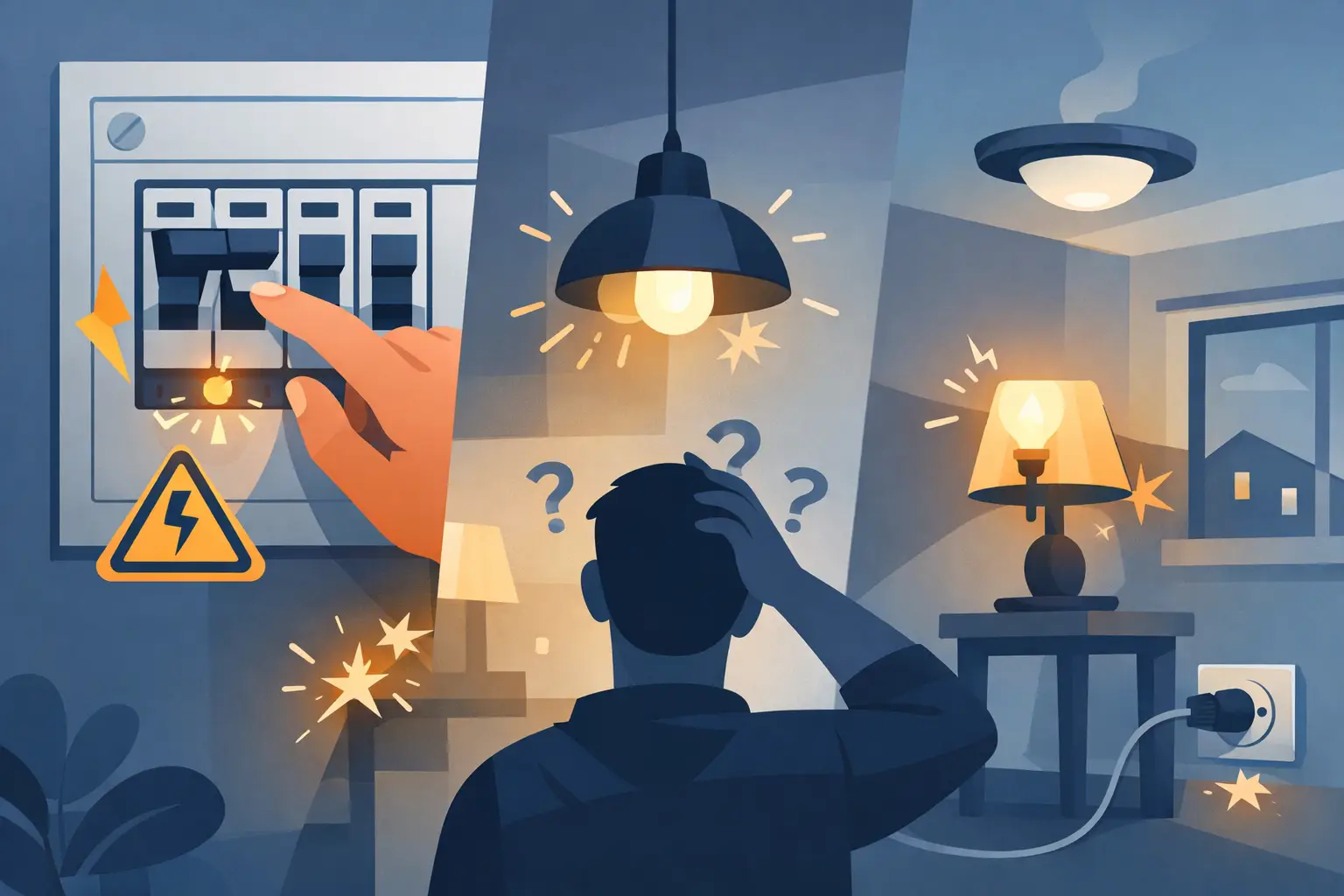
You flick the switch, the lights come on, and then everything cuts out again. Or maybe one lighting circuit keeps tripping the breaker for no obvious reason. If you are asking why do lights keep tripping, the short answer is that your electrical system is detecting a fault and shutting that circuit down to prevent overheating, electric shock, or fire.
That is the bit many people miss. Tripping is not usually the main problem. It is the warning sign that something behind the scenes is wrong. Sometimes it is a simple issue like a faulty bulb or a bad light fitting. Other times it points to damaged wiring, moisture getting where it should not, or a circuit that is no longer coping with the load placed on it.
Why do lights keep tripping in the first place?
Your breaker or safety switch is designed to cut power when it senses danger. That danger might be too much current flowing, a short circuit, or electricity leaking somewhere it should not. In plain terms, the system is doing its job.
Lighting circuits can trip for a few different reasons, and the exact cause often depends on when it happens. If it trips the moment you turn a switch on, that usually suggests a fault linked to that switch, fitting, or light. If it trips only after the lights have been on for a while, heat buildup or a failing component may be involved. If it seems random, the fault can be harder to pin down and may sit in hidden wiring, outdoor lighting, or one damaged fitting somewhere on the circuit.
The most common causes of lighting circuits tripping
A faulty light fitting is high on the list. Over time, connections can loosen, terminals can overheat, and older fittings can simply wear out. If the problem starts after a new light was installed, that is one of the first places to look. Poor installation, trapped wires, or incompatible parts can all cause repeated trips.
Bulbs can also be the culprit, especially if one has blown dramatically. A failing bulb can create a brief fault strong enough to trip the breaker. This is more common with certain older halogen setups, but it can happen with LED drivers and transformers too.
Moisture is another big one. Bathroom lights, exterior fixtures, garage lighting, and soffit lights are all more exposed to damp conditions. Water inside a fitting or junction box can cause leakage to earth, which often trips protection devices even if everything looked fine the day before.
Then there is damaged wiring. Rodents, DIY work, screws driven into walls, aging insulation, and general wear can all affect cables over time. Wiring faults are not always visible, which is why repeat tripping should never be ignored just because the problem seems to clear for a day or two.
In some homes and commercial spaces, overloaded circuits are still part of the story. Lighting circuits do not usually carry huge loads, but things change when extensions, converted rooms, outdoor systems, extractor fans, under-cabinet lighting, and added fittings get tied into older wiring. What worked years ago may no longer be enough.
A breaker trip is not always the same as a blown fuse
People often use the terms interchangeably, but the cause matters. A breaker trip means the protective device has switched off because it detected a problem. A blown fuse means the fuse element has failed due to excess current. In both cases, there is an underlying fault to investigate.
The more useful distinction is what kind of protection is operating. If a standard breaker trips, that can point to overload or short circuit issues. If a GFCI or other earth leakage protection trips, that often suggests current escaping somewhere it should not, which can happen with moisture, damaged insulation, or faulty fittings.
That is why the pattern matters. Does it trip only one breaker? Only when one switch is used? Only in wet weather? Only at night when outside lights come on? Those details help narrow things down quickly.
What you can check safely yourself
There are a few sensible checks a homeowner or business owner can make before calling someone out. The key word is safely. If anything looks burnt, smells hot, or involves opening live electrical components, leave it alone.
Start with the obvious. Switch off the lighting circuit, then remove and replace any recently failed bulbs once power is isolated. If the issue started after a new fitting, dimmer, or light switch was added, stop using that part of the circuit and take note of it.
It also helps to think back to timing. Did the trips begin after heavy rain, a bathroom renovation, loft work, or exterior decorating? Was a screw fixed into a wall shortly before the problem started? Has an old fluorescent fitting been flickering for weeks? Little bits of background often point straight to the fault.
If you have outdoor lights, disconnecting use of that switch can also be a useful clue. Exterior fittings are common trouble spots because seals fail, water gets in, and faults become intermittent.
What you should not do is keep resetting the breaker again and again to see if it holds. One reset to confirm the issue is reasonable. Repeatedly forcing a circuit back on can make the problem worse.
When the problem is a switch, fitting, or driver
Not every tripping fault is buried in the walls. A lot of callouts come down to one faulty component. LED drivers, transformers, dimmer switches, and older light fittings can all fail in ways that trip protection devices.
This is especially common when lighting has been upgraded in stages. For example, someone swaps in LED lamps but keeps an older dimmer not designed for them. Or a tired bathroom fan with a timer is sharing part of the same circuit and causing nuisance trips. These are the kinds of faults that can feel random until the right tests are done.
The trade-off is that replacing visible accessories without diagnosis can become guesswork. Sometimes changing the fitting solves it. Sometimes it does not, because the real problem is a cable fault upstream. A proper fault-finding visit usually saves time and money compared with replacing parts one by one.
Why older properties are more likely to have repeat trips
Older homes often have lighting circuits that have been altered over many years. A new kitchen here, a loft light there, an outside floodlight added later, maybe a garage conversion after that. On paper it still looks like one circuit. In reality it may be a patchwork of old and newer work.
That does not automatically mean the installation is unsafe, but age increases the chances of loose connections, insulation breakdown, and fittings reaching the end of their life. If lights have started tripping in an older property and there is no clear single cause, a wider inspection is often the sensible route.
Landlords and property managers should take this seriously as well. Intermittent electrical faults are exactly the sort of issue that turns into tenant complaints, emergency callouts, or larger repair bills later.
How an electrician usually finds the cause
A good electrician will not just reset the breaker and hope for the best. Proper fault finding involves testing the circuit, isolating sections, inspecting fittings and accessories, and checking whether the fault is overload, short circuit, or earth leakage.
Sometimes the issue is located quickly. Other times it takes more methodical work, especially if the fault is intermittent. That is normal. The aim is to find the actual cause, not just get the lights back on for one evening.
At BS Electrical, this kind of problem is approached in a straightforward way: identify the fault, explain what is causing it, and recommend the safest fix without dressing it up. For most customers, that honesty matters just as much as the repair itself.
When to call right away
If lights keep tripping and you notice buzzing, burning smells, scorch marks, warm switches, water near fittings, or complete loss of part of the installation, stop using that circuit and get it checked. The same applies if the breaker will not reset at all.
Commercial premises should move quickly too. Repeated trips in offices, shops, and small business units can affect lighting safety, security systems, emergency access areas, and day-to-day operations. What feels like a minor nuisance can become a wider risk if ignored.
The right fix depends on the real fault
There is no single answer to why lights keep tripping because the symptom can come from several different issues. Sometimes the fix is as small as replacing a failed fitting. Sometimes it is a damaged cable, moisture ingress, or a circuit that needs upgrading. That is why a proper diagnosis matters more than a quick guess.
If your lights have started tripping, trust what the system is telling you. Electrical protection trips for a reason, and dealing with it early is usually simpler, safer, and cheaper than waiting for the next outage.